
Training Attention, Memory and Emotional Regulation, Inside BRAINWORKS with Sarah Aman
In this MarcoPolis and Corporate Vision interview, Sarah Aman, Founder and CEO of BRAINWORKS, explains why mental health in Kuwait is still shaped by taboo, privacy, and misconceptions around medication, even as awareness grows through local media and stronger collaboration between NGOs and government. She links these dynamics to rising burnout in Kuwait, including work burnout and caregiver burnout, and increasing anxiety among children, adolescents, professionals, and especially women facing heavy cultural and family expectations.
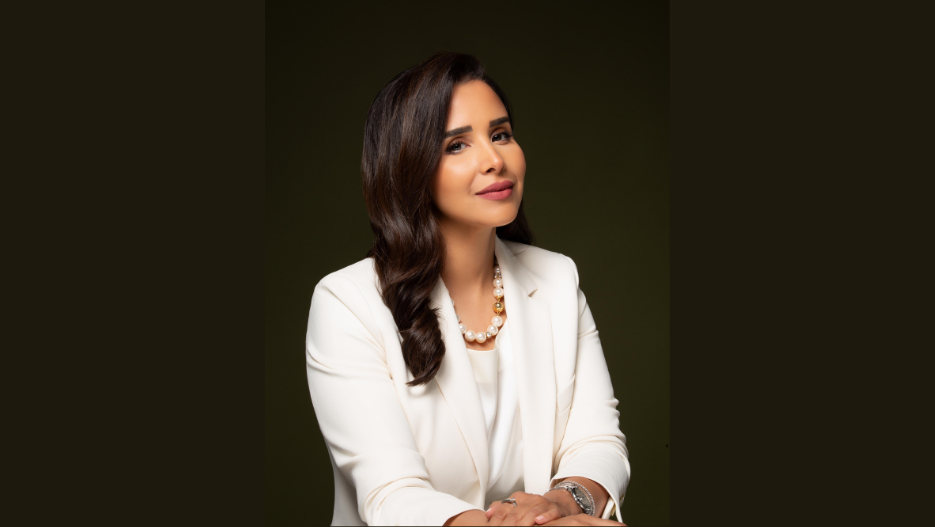
She then introduces BRAINWORKS Kuwait as a cognitive health and mental well-being concept focused on mental brain function and cognitive training to improve attention, processing speed, memory training, mental performance, and emotional regulation in a fast digital environment influenced by short-form content, digital well-being, and artificial intelligence. The interview breaks down cognitive assessment via the Gibson Test, which identifies specific attention challenges, working memory, long-term memory, short-term memory, processing speed, logic and reasoning gaps, and then guides a customised training programme delivered through one-to-one drills and digital training across roughly ninety-six hours.
Aman outlines key target groups, from preschoolers and children (from age four) to adults and elderly care in Kuwait, with relevance for learning disabilities, special needs education, inclusive learning in Kuwait, and the debate around ADHD in Kuwait versus broader attention training needs. She also discusses dementia prevention, Alzheimer’s prevention, and sustaining cognitive engagement in healthy ageing.
Finally, she highlights school wellbeing through teacher training and school leadership, plus corporate decision making in AI decision making contexts, arguing that emotional regulation, communication, and team building remain essential as Kuwait organisations adapt to rapid change, and she points to public awareness work including Yala Now, the Keshta summit at the Scientific Centre, and Irtiqaa, while reflecting on her inclusive education legacy through Dr Nora Al Dahery.
What are Kuwait’s key challenges when it comes to Mental Health?
One of the main challenges in Kuwait is that mental health is still viewed as a taboo, and medication is often perceived as addictive. Unfortunately, even when there are highly qualified psychologists or psychiatrists, referrals are not commonly discussed or shared. Unlike other areas such as physical fitness, where people openly recommend professionals, mental health remains extremely private. This is closely linked to culture and how strength is perceived in Arab societies and the wider region. Strength is often associated with keeping personal struggles to oneself, and privacy means that problems should not be shared, even with professionals.
One of the most important developments Kuwait has made is allowing medication to be prescribed through government hospitals and pharmacies, which means Kuwaitis do not have to pay for it. There is hope that this privilege will eventually extend to everyone living in Kuwait.
There has also been a noticeable increase in awareness. Mental health is being discussed more openly through local media channels, and collaboration between non-governmental organisations and the government has been ongoing for at least the past five years.
How has this increased support and awareness impacted the community and workplace?
This progress is important because there has been a clear rise in burnout cases, including work-related burnout and caregiver burnout. This is particularly significant when viewed within the context of Kuwaiti culture, family structures and social expectations. Studies and observations also indicate high levels of anxiety, especially among adolescents, children and working individuals. For women in particular, there is increasing pressure created by the expectation to be strong and independent while simultaneously maintaining extensive family responsibilities and cultural obligations. These demands often place women in restrictive roles where additional support is needed.
BRAINWORKS is a new concept you recently launched, please introduce us to this service.
BRAINWORKS focuses on cognitive health and mental brain function. It is centred on improving attention, processing speed, memory and overall mental performance in a world that is moving increasingly fast. There is a growing loss of focus on mental skills, and the brain is often neglected in comparison to physical health. If the brain were treated in the same way as muscles and physical fitness, people would think more clearly and live more balanced lives. This is the core purpose of BRAINWORKS.
Mental and emotional regulation is essential and can be developed through structured training. BRAINWORKS is a holistic concept that combines brain health, mental wellbeing and cognitive training.
What are your key target groups?
It targets all age groups, starting from four years old, including preschoolers, and extends to individuals well into older age. The core elements addressed are consistent across all ages and include attention, long-term memory, short-term memory, working memory, processing speed, logic, reasoning and emotional regulation.
Emotional regulation has become increasingly important, particularly in a high-speed digital environment. Emotions are often triggered and shifted rapidly, similar to the pace of short-form digital content. Exposure to distressing or emotionally charged content can be immediately followed by entertainment or advertising, creating emotional misalignment and desensitisation. This disrupts emotional balance and disconnects individuals from their values.
Emotional regulation requires training and conscious effort. There is a need to regain control over how technology and artificial intelligence are used, ensuring they serve humanity rather than diminish it. When the mind and brain are properly cared for, all other aspects of life begin to align and function more effectively.
Can you share more details on the programs you run at BRAINWORKS?
What we do is focus on an accredited programme for which I hold a licence, and it operates as a franchise. The programme is delivered on an hourly basis and requires commitment and discipline. The first step is to determine an individual’s level of cognitive functioning. This is done through the Gibson Test, which allows us to identify specific challenges rather than providing vague or general assessments.
For example, when someone says their memory is not as strong as they would like it to be, this does not refer to memory as a whole. It usually relates to a specific type of memory. Based on the Gibson Test, a detailed report is generated, and a customised training programme is developed to target that specific area of weakness in order to help the individual function at their best.
The programme typically runs for approximately ninety-six hours, at a pace of one hour per day. Half of the programme consists of one-to-one drills, while the other half is delivered digitally. Progress is measured throughout the programme, and the Gibson Test is administered again at the end to assess improvement.
I also like to challenge people by addressing the popularity of IQ tests in Kuwait. Many people value IQ testing, even though IQ represents only one aspect of cognition, as there are multiple forms of intelligence. For reassurance, individuals may choose to take an IQ test before starting the programme and again afterwards. However, the primary method of measuring progress is the Gibson Test, alongside the individual’s own experience of improvement. This includes the ability to multitask, maintain selective attention, retrieve information more easily, and process information more efficiently.
This work becomes increasingly important as we grow older. As the brain develops and memory changes over time, it is essential to keep cognitive functions active in order to help delay conditions such as Alzheimer’s disease and other forms of dementia.
What sectors are you primarily focus on?
Our targeted populations are focused on three main sectors. The first is the education sector, specifically schools. Within schools, we aim to start with senior administration, then work with teachers. This approach is intentional, as it is essential for facilitators, decision makers and educators to believe in the centre and experience the impact of the programme themselves before supporting students. Teachers need to feel and understand the benefits in order to effectively guide students, and the same applies to decision makers within the education sector.
The second sector of interest is the medical sector, where the focus is on elderly individuals, particularly those experiencing symptoms of dementia or Alzheimer’s disease. The objective is to preserve and maintain memory, cognition and attention for as long as possible.
The third sector, which is particularly important, is students themselves, especially students with learning disabilities and special needs. Having worked with families in the education sector for more than fifteen years, it has become clear that there is a significant gap in addressing emotional regulation and attention. This gap is one of the contributing factors to the increasing diagnosis of ADHD. Many people describe themselves as having ADHD, but in some cases the underlying issue may be related to attention and memory rather than a clinical diagnosis.
What is your future ambition for cogitative training in Kuwait?
Integrating cognitive training into government sectors, decision-making bodies and schools is essential. There is also a need to give greater attention to the elderly and to rethink how empathy and care are expressed. In many cultures, love for the elderly is shown by doing everything for them, speaking on their behalf, and making decisions for them. While well-intentioned, this approach can reduce cognitive engagement and make the brain less active, increasing vulnerability to disease. The goal is to help elderly individuals remain active and proactive members of the community, which can only be achieved through collaboration between the government and the private sector.
How important is participation in public awareness events for this field of work?
Participation in conferences, summits and collaborations with non-governmental organisations and government entities is critical for raising awareness. The more openly challenges and issues are discussed, the less taboo they become, making it easier for individuals to seek support and take action.
Our participation in Yala Now was a significant collaboration for BRAINWORKS, as it highlighted the need for cognitive support within the culture and society. Many people were already aware that cognition is often neglected and taken for granted until problems arise. This participation demonstrated the relevance and necessity of such initiatives.
Starting from tomorrow, there will also be participation in a collaboration with the Scientific Centre through a summit called Keshta, organised by Irtiqaa. Irtiqaa represents elevation, and the summit focuses on elevating humanity across cognition, mental health, physical wellbeing and fitness. The programme will run at the Scientific Centre for approximately ten days.
How does mental health influence decision-making in today’s rapidly changing business environment, especially as organisations adapt to technological and AI-driven change?
The world is changing rapidly, and there is a need to adapt. Even family businesses that have been successful and sustainable for decades must evolve to remain relevant over the next five years. Decision-making must adapt to global, technological and economic changes. While artificial intelligence plays an increasing role in decision-making, it is important to recognise that AI can also produce inaccuracies. Strong communication skills, clarity, team-building abilities and emotional regulation remain essential.
In the corporate environment, having a clear, strong and well-regulated mind supports better decision-making and prevents reliance on outdated methods. Change is constant, and organisations must adapt rather than operate solely based on past practices.
You are the daughter of an educational pioneer in Kuwait for inclusive learning, Dr. Nora Al Dahery, and so I’m curious how do you balance the privilege and responsibility of building on your mother’s legacy, while also setting an example for the next generation?
On a personal level, having a mother like Dr Nora has been a privilege. She has been a role model as a business leader, a mother and a woman. While this is something to be grateful for, it also brings responsibility. Maintaining, elevating and building upon what she has achieved is not easy. What makes her especially remarkable is her constant encouragement to grow beyond what she has already accomplished.
I often describe it as a road she has paved perfectly, encouraging others to move faster, go further and become stronger. This sense of responsibility extends to future generations. Looking at my daughter, the hope is to be a role model and to encourage her to go beyond the foundation that has been set.