
Baims: Building a Scalable EdTech and Online Tutoring Platform from Kuwait to the Global Market
This interview explores the entrepreneurial journey of Yousef Al Husaini, CEO of Baims. This online tutoring platform has become one of the most prominent EdTech startups in Kuwait and the wider Middle East. The interview traces the origins of Baims from its early days as an experimental online learning platform into a fully scaled digital education platform specialising in online tutoring for university students, particularly in engineering and technical fields.
The interview details how Baims identified inefficiencies in the private tutoring market in Kuwait, where demand for top tutors far exceeded supply. By digitising private tutoring, Baims created a scalable online tutoring platform that allows leading instructors to reach thousands of students while maintaining educational quality. This revenue-sharing tutoring platform model became the foundation of Baims’ success and strong unit economics.
A key focus of the interview is the evolution of EdTech in Kuwait, highlighting the challenges of building an education technology startup in a market often perceived as difficult for entrepreneurship. The interview provides insight into why Kuwait remains both one of the most demanding and one of the most profitable markets for EdTech companies in the Middle East, reinforcing the idea that it is possible to build a multinational EdTech company from Kuwait.
Baims’ regional growth, including its EdTech expansion to Saudi Arabia, Bahrain, Jordan, and later international markets such as Turkey and the United Kingdom. It explains the importance of localisation in EdTech, cultural adaptation, and market-specific pricing when scaling an online tutoring platform in MENA. The lessons learned from both successful expansions and strategic exits are presented as key milestones in building a resilient venture-backed EdTech company.
From an investment perspective, the interview offers a deep analysis of EdTech investment in the Middle East, addressing why education is often viewed as a challenging sector for investors despite its long-term impact. The interview highlight’s Baims’ journey from a bootstrapped EdTech startup to raising a Series A funding round, completing the region’s first acquisition between two venture-backed education companies, and transitioning into a diversified education technology group.
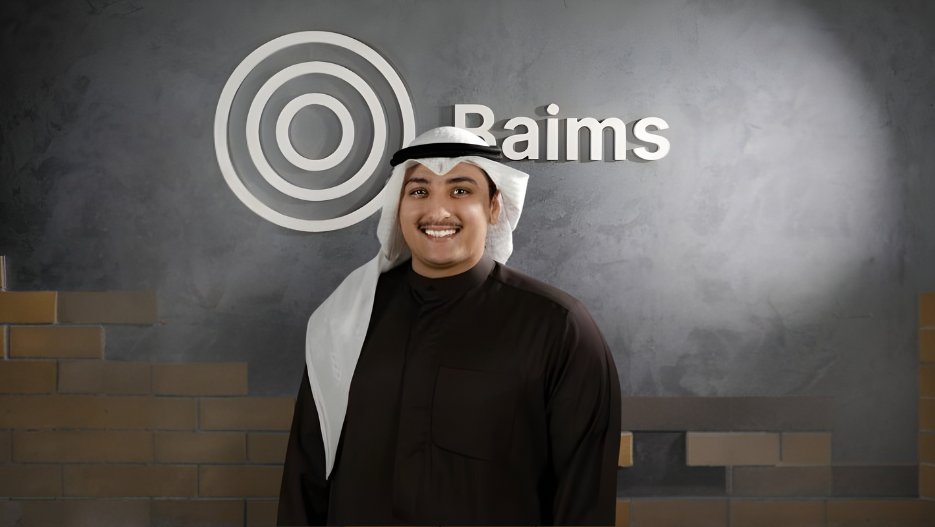
I had always wanted to start a business before entering university. During high school, I built applications for clients and negotiated development projects. At the time, there was a strong demand for mobile applications, and many people believed app development was simple. As a result, they spent tens of thousands of Kuwaiti dinars on products that could have been built at a much lower cost. Most people lacked sufficient knowledge about technology and development processes.
Because of this, several companies recruited me to review their development projects, reduce expenses, and ensure they were not being overcharged. I enjoyed this work because I witnessed a significant amount of fraud in the development space. I decided to continue building applications for clients. However, as a student, it was difficult to balance studying and development work, so I created a global team. I worked with a designer from Sri Lanka and developers from Hong Kong and other locations.
I managed client requests, coordinated with designers and front-end, back-end, and iOS developers, delivered the products, and sold them to clients. The work was very profitable, but the downside was that projects often took several months to complete.
I have always loved technology and building products. When I entered university, I decided to build something for myself instead of continuing client work. My development skills were entirely self-taught. I had attended a private school, but I recognised that not everyone has access to English-language resources, which dominate most global learning platforms. I noticed a lack of Arabic educational resources, particularly for subjects such as iOS development and graphic design. This gap led to the idea behind Baims.
Baims initially started as an online platform offering different types of courses. During this period, I met my co-founder, Badr Rashid, a computer engineering graduate with a four-point-zero GPA who had built applications and games with millions of downloads. We decided to partner. I focused on business, finance, and operations, while he led development and coached engineers.
Baims was first conceived in 2015. We planned to launch in 2016 but faced development challenges. The platform officially launched on 9 September 2016. Coincidentally, this date marked my parents’ wedding anniversary. For the first six months, the platform generated no revenue despite offering courses in health and development. I was discouraged and believed the model might not work.
At that point, my partner suggested a pivot. We observed that students were spending heavily on private tutoring and that we already had the technology to support learning at scale. We shifted our focus to digitising tutoring by partnering with top instructors. Our business model was simple: we signed exclusive revenue-sharing agreements with leading tutors who already had strong reputations, waiting lists, and large followings.
I personally experienced this demand when I attempted to join a popular tutor’s class and was told it was fully booked weeks in advance. It became clear that top tutors were in extremely high demand and earning significant income. We decided to digitise this experience. Instead of repeating the same lessons multiple times a day, tutors could record high-quality content once and reach many students without compromising quality.
We signed our first top tutor and launched at Kuwait University. Demand was immediate. This pivot occurred in March 2017, which marked the true beginning of Baims as a functioning business. Although the idea originated in 2015, 2017 was when the model began working. The platform was simple and functional, focused solely on acquiring paying users.
We served engineering students at Kuwait University, filming courses during summer breaks while balancing our studies. We built a small studio and spent hours recording, reviewing, and refining content. Growth accelerated rapidly. Revenue grew from hundreds of Kuwaiti dinars to thousands, then tens of thousands, eventually exceeding one hundred thousand. The business demonstrated strong unit economics, although it remained focused solely on the Kuwaiti market.
I graduated at the end of 2018. During this period, I travelled weekly to Egypt to recruit a technology team. Over thirteen consecutive weekends, I interviewed more than one thousand developers and established an office there. This expansion was funded entirely through Baims’ profits. I had not relied on financial support from my family since childhood, as my father taught me discipline and financial responsibility from an early age.
By graduation, the company was profitable. We distributed profits and travelled during the summer. However, the company lacked formal accounting and legal infrastructure. Operating during university was challenging, particularly due to regulatory hurdles such as obtaining a work-from-home licence, which took nine months and affected my academic performance.
One pivotal moment occurred when I skipped a university exam to pitch at ArabNet, a major startup competition in Kuwait. Although I received a zero for the exam, one of the judges later became one of our investors. The long-term return outweighed the short-term academic cost.
Baims was fully bootstrapped for its first three years, with profits continuously reinvested. After establishing success in Kuwait, we expanded to Saudi Arabia in 2019. I spent the summer in Riyadh, meeting over five hundred students to understand market behaviour and pricing. I learned that each university in Saudi Arabia functioned like a separate market, making expansion more complex than anticipated.
Our initial Saudi expansion failed because we assumed the Kuwaiti model would translate directly. We later realised that success required localisation, including local teams, cultural understanding, and dialect-specific marketing. Although some believed this approach was driven by regulation, it was essential for our business model to function.
Before the COVID-19 pandemic, Al-Wazzan Education Group became our first institutional investor. At the time, we lacked governance, accounting systems, and legal structures, but our strong unit economics and market demand convinced them. Additional investors included Seed Partners and the Sultan family.
Although the company was profitable and operating with a negative cash conversion cycle, I pursued funding to bring in strategic partners rather than capital alone. Each investor was selected deliberately for expertise in education, finance, and public markets.
Following further growth in Saudi Arabia, we expanded to Bahrain and Jordan. While both markets generated revenue, they did not justify long-term investment due to limited purchasing power and scalability. These markets were later exited.
We raised a pre-Series A round involving regional investors, making us the youngest founders in the region to raise venture capital at the time. This visibility encouraged many university students to pursue entrepreneurship.
At the next stage, international investors encouraged expansion beyond Arabic-speaking markets. I chose Turkey over Egypt due to its size and distinct culture. The expansion initially succeeded, supported by a strong local team and extensive tutor recruitment. However, despite revenue growth, the service was perceived as a luxury rather than a necessity. After one year, I exited the Turkish market due to timing and overestimated addressable market size.
The exit was handled responsibly, with severance support and job placement for all affected employees. Investors respected the decision, recognising the focus on long-term value.
In 2023, following this exit, we raised a four-million-dollar Series A round, led by families who had known me since childhood. The round was oversubscribed and closed within a week. With this funding, we transitioned from a single-product company to an education technology group. In 2024, we acquired Orkest, a one-to-one tutoring platform based in Egypt, in the region’s first acquisition between two venture-backed education companies. The acquisition was completed after extensive due diligence and negotiations. All investors and team members joined Baims.
Today, Baims operates multiple products across Kuwait, Saudi Arabia, the United Arab Emirates, Qatar, the United Kingdom, and other international markets, with further expansions planned. The company continues to grow as a diversified education group, covering higher education, one-to-one tutoring, and additional segments.
Our long-term vision is to build the first publicly listed education technology group in the region. The goal is to cover the full learning lifecycle, from early education to workforce development, while creating thousands of virtual jobs and delivering meaningful social impact through education.
How would you assess investment and development in the EdTech sector, and which areas are you most interested in investing in?
Kuwait is my country, and I owe it my life and everything I have achieved. We have received numerous offers from different countries to relocate our headquarters, with incentives amounting to millions of dollars. Despite this, our headquarters remains in Kuwait for several reasons.
There is considerable negative sentiment around starting a business in Kuwait, particularly regarding talent availability and investment. Globally, education is one of the least attractive sectors for investors due to its cyclicality and the limited number of successful exits. However, momentum plays a significant role. When companies raise funding or complete acquisitions, it builds confidence in the ecosystem.
When we acquired Orkest, I received messages from three founders operating in different countries who said that our acquisition helped them close their own investment rounds. Investors like to see activity and progress. This is what we are trying to demonstrate from Kuwait.
I strongly believe it is possible to build a multinational company from Kuwait. We have done this, and we are continuing to prove that companies can scale, acquire other businesses, exit successfully, and even list on the stock market despite existing challenges. It is a long-term journey. Building a company is a marathon, not a sprint.
Kuwait is not currently leading the regional startup ecosystem. Saudi Arabia, the United Arab Emirates, Qatar, Oman, and Bahrain are ahead. However, this also means there is significant room for improvement, and progress is already visible.
From an investment perspective, Kuwait may not appear attractive compared to other markets. However, my experience has shown that succeeding in Kuwait makes it easier to succeed elsewhere. The Kuwaiti market is demanding, competitive, and challenging. Customers are discerning and expectations are high. Kuwait remains one of our toughest markets, but also one of our fastest-growing and largest in terms of revenue contribution, despite its relatively small population.
The market has taught us valuable lessons. Today, it is possible to attract talent to Kuwait, build strong companies, and raise funding locally. Regulatory processes have improved significantly. Running a business in Kuwait today is far easier, faster, and more efficient than it was five or six years ago.
The government has recently launched a new stock exchange aimed at smaller companies. While this is a positive development, our long-term objective is to comply with and list on the main exchange, which would provide greater scale and credibility.
The ecosystem still needs optimism. Entrepreneurs need confidence and encouragement. While there have been shortcomings in past government initiatives to support startups, I hope that strengthening the startup ecosystem becomes a higher priority in the future.
Personally, I have not received funding or direct support from the government. Most of our support has come from the private sector. It can be discouraging to see companies with weaker products in other countries receiving extensive government backing, while stronger businesses in Kuwait do not receive similar support. However, this challenge has pushed us to work harder and build more resilient systems.
At our current stage, government support is not essential for us, but it would be invaluable for early-stage founders. The environment has improved, and I would encourage entrepreneurs to consider Kuwait seriously. Many founders instinctively choose to incorporate in Saudi Arabia or the United Arab Emirates, but it is entirely possible to build a successful and scalable business from Kuwait.
Kuwait has many positive attributes that are not widely highlighted. One of my personal goals is to place Kuwait on the map within the EdTech and startup ecosystems. I have spoken at major international events in Asia and the United States, and many people are unfamiliar with Kuwait. When they learn about its education system, scholarship programmes, and the companies built there, they are often surprised.
Many international founders who visit Kuwait describe it as a hidden gem. Some now visit regularly and express interest in launching businesses there. One of my objectives is to build bridges between Latin America, Asia, Europe, and the Middle East, with Kuwait as a key entry point.
I remain optimistic about the future. Despite the challenges, the ecosystem is improving, opportunities are expanding, and the outlook is positive.