
KFIC Invest on Market Reform, AI and the Future of Investing in Kuwait
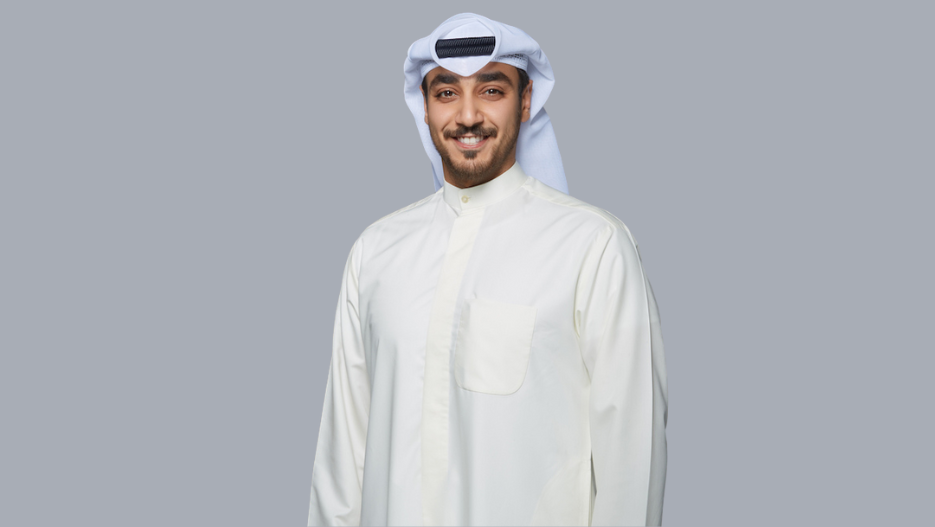
In this interview, the Marcopolis team, in collaboration with Corporate Vision, speaks with Hamad Nasser Al Sheikh Musaed, Director at KFIC Invest Company, about the evolution of the Kuwait investment market, investor behaviour, and the strategic direction of the Kuwait financial sector.
The discussion outlines how Kuwait’s capital markets have been influenced by global economic cycles, from the 2008 financial crisis to COVID-19, inflation, and recent geopolitical events. Kuwaiti investors, traditionally conservative, continue to favour real estate investment and income-generating assets, while increasingly allocating capital to blue-chip investments, listed equities, and ETFs, supported by improved access through technology and mobile investment platforms. Reforms led by Boursa Kuwait and institutions such as KDIPA have helped attract international investors to Kuwait and strengthen market liquidity.
The interview also explores AI investment trends, noting that while interest is high, real opportunities lie in AI infrastructure investment, including power grids, chips, and enabling technologies, rather than speculative narratives. Technology is reshaping how retail investors in Kuwait engage with markets, reinforcing the importance of accessible and liquid investment tools.
A key focus is the merger between KFIC Invest and Rasameel, aimed at creating a more competitive Kuwait investment company with both local and international capabilities, including private equity. In a small and competitive market, consolidation and a strong technology-enabled approach are presented as essential for long-term growth.
How has Kuwait’s investment market changed in recent years?
Kuwait is a country that is part of the world economic cycle. Kuwait has experienced ups and downs for the past ten to fifteen years, mostly because Kuwaiti investors have been international investors for quite a while. Kuwait has been innovative in its products and its way of thinking. This is evident through investments internationally, abroad, and locally. Having exposure within Kuwait and outside gives Kuwait a stronger effect than others, keeping in mind that the currency is a basket that is very unique, with a mixture that allowed international investment and market development. This means Kuwait has been within the cycle that occurred in the past five years with the COVID-19 virus.
When looking at Kuwait, specifically the 2008 crisis, the impact was immense. Investors who invested internationally were part of the subprime mortgage collapse. Afterwards, confidence in investment was low, which encouraged people to invest within Kuwait. Kuwait investors prefer to invest in conservative assets, particularly real estate. There was a significant increase in real estate investment between 2008 and 2018.
In 2010, regulation changed, and Kuwait began establishing regulators and ideas aimed at attracting foreign funds. Institutions such as KDIPA now encourage international investors to invest in Kuwait. This has enabled international players to enter the Kuwait market. However, Kuwait remains a small market with high competition, which tightens investment opportunities and returns. Due to these factors, international investors were not able to invest in Kuwait until recently.
When the market received upgrades in 2019, supported by Boursa Kuwait, there was an inflow of funds, and then COVID-19 occurred. Kuwait, being part of the global system, was affected. When COVID-19 hit, many things changed. At that time, there was a slowdown in the international market and a move towards a zero interest rate environment, which fuelled growth that was not rational. For instance, the balance sheet of the United States Federal Reserve in 2020 stood at 4.8 trillion from its establishment until 2020, and this amount doubled within five years. With increased money supply, inflation rose.
Since 2020, each year brought a new challenge: COVID-19, inflation, supply chain disruptions, and the wars between Russia and Ukraine, and between Palestine and Israel. Each year there were expectations of a market correction, but the cycle continued. Retail investors held significant cash and were unsure where to allocate it. NFTs appeared and disappeared. Cryptocurrencies emerged. Many trends occurred. However, real assets continued to deliver. All assets have their own majors and sub-markets. In real estate, income-generating properties remained important, and Kuwait investors have a preference for income-generating assets.
Zero interest rates inflated prices, and now there is a correction in the markets. Internationally, the correction is occurring across multiple levels. Banks that financed assets at high valuations are now undertaking devaluations. With interest rates rising, banks must either capture losses or wait, and most are waiting. This has led investors to focus on solid businesses, conservative investments, and blue-chip companies. Internationally, including in the United States, the major performers are the so-called Magnificent Seven, while others are not performing as well.
The market changes every year, and investors need to be ready to act, be strategic, and have cash flexibility. In the past year, many listed and capital markets have risen because other assets are not delivering strong returns. As a result, people are investing in liquid markets, such as Boursa Kuwait and international indices such as the S&P. These tools were not widely available before. In 2008, during the subprime mortgage crisis, individuals were not able to invest through mobile applications. Now they can. Retail investors have direct access, and ETFs were not as widely available previously. People now invest in large ETFs, which influence market movements locally and internationally. Technology has enabled broader access to investment tools, whereas previously, markets were primarily accessible to pension funds and portfolio managers.
Are investors in Kuwait shifting towards technology-driven investments, or are they remaining conservative?
The shift is also happening in Kuwait. Everybody needs to be aligned with international standards and expectations. The major topic at the moment is AI. Everybody is talking about AI and wants to invest in AI. However, when looking at the companies involved, there is no single major company that is exclusively focused on AI. It is either manufacturers of chips, manufacturers of agents, or companies that are linked to larger firms. When people refer to AI now, many comment that AI may become a bubble, because numerous companies are investing in AI research and development.
To power AI, there must be sufficient power grids, which are not yet available. There is a limit to how much progress can be made without the necessary infrastructure. Building power grid infrastructure is not easy. It requires significant capital, time, and may not be highly profitable. It also requires environmental conditions such as clean water and other essential resources.
In Kuwait, when investors express interest in AI, the focus is on investing in the infrastructure that enables AI. AI itself is an appealing idea, and supercomputers interacting with each other is impressive, but the question remains regarding what comes afterwards. A key area is investing in the agents that operate AI. These agents possess characteristics that can be trained with information and results, which are then processed to produce outcomes.
Banks and large companies are currently using AI as a tool, but actual development requires multiple components. It requires infrastructure, developers, microprocessors, and chips. It is a full-scale ecosystem rather than a single element.
What is happening between KFIC and Rasameel?
Rasameel had very good business units, and KFIC also has business units. Merging will allow the creation of a new entity that can compete locally and internationally. KFIC is focused on investing in the local market, while Rasameel has international expertise, including private equity. Having this full scale of investments will provide strong positioning for the future and offer a good product mix for clients. It is very exciting.
In the past, the investment scene in Kuwait experienced many mergers, and these mergers made sense because the market is small. Now, international players are entering, and the competition is difficult, especially against firms managing five to six trillion. To do that, there must be added value. The added value is being present for clients, offering innovative ideas, and providing accessibility that others may not have. There is also a technological aspect. Without it, companies cannot compete.
Ten to fifteen years ago, watching a football match on a phone was groundbreaking. Now it is the norm. When opening a bank account, if the bank does not have an application, customers will not consider it. The minimum standard is very high, and the minimum barrier to entry is high. KFIC and Rasameel understand this. Having strong fund managers, portfolio managers, advisers, and a technology-enabled approach will position the new entity as a leader in Kuwait in the future, inshallah.
How does KFIC Invest cultivate and develop talent within the organisation?
Companies are led by people, and having a vision is crucial. Having a Chief Executive Officer and a management team that provide confidence enables employees to take that leap of faith. Having this mixture is essential for future growth.
It is very difficult to find good talent. This is not a problem specific to Kuwait; it is a global issue. The reason is that it has become easier to find information. For example, an employee can search for information online. In the past, they needed two or three hours of work to produce a figure. The tools are now available, so employees are not required to spend hours gathering information. What is needed are employees with critical thinking, employees who have their own perspectives, and employees who have a solid educational background. Education is crucial.
This is why KFIC has initiatives such as boot camps, training programmes, and invitations for college and high school students to visit. The hope is to attract talent from these initiatives. When hiring from the market through curriculum vitae submissions alone, it is difficult to evaluate candidates. It is better to see them directly. In investment companies with smaller teams, it is clear who is performing well and who is not. Employees must justify their roles.
The company is owned by shareholders who expect returns. If these returns are not realised, accountability follows. Talent is crucial and it is difficult to find. The Human Resources team can elaborate extensively on how challenging it is to find the right people.
How do your experience and leadership shape your approach to business development at Rasameel?
My approach is to do good business with good people. I prefer to work closely with successful individuals, and this is what I emphasise to my team. New products can be created, but without a full understanding of the market, they cannot be realised. Two people can create an excellent product, but without market sounding or understanding market needs, it will not work.
Our approach is to meet people, speak with them locally, understand their needs, and develop ideas from clients and partners to create products or investments that suit them. This approach is more appropriate than product pushing. Product pushing worked in the past when financial literacy was limited, but now it is different. People have access to applications and information. Conversations regarding stocks and investments were not common ten or fifteen years ago. People now understand the market and have access to it.
Therefore, the role is either to provide better access to areas that are not easily accessible or to offer a human relationship. Both elements go together. If there is no one who remains present during difficult periods, clients will not return during favourable periods. This has been evident, especially during the last five years. The supply chain challenges were significant, and inflation became a constant topic. Educating and engaging with people is essential.
Our role is not limited to office work or investment activities. It includes giving back to the community, speaking with people, and supporting those who require guidance during the first years of their journey so that growth can occur together. The landscape continues to change. Kuwait has undergone significant reforms in the past year, which have had a direct impact on the market. The Kuwait local market, specifically listed equities, has been the best performing in the GCC, supported by the reforms.
It is essential to remain present and to speak with people. After completing one discussion, it is necessary to continue engaging with others, because each person has a perspective based on individual experiences.
Is there anything you would like to add, or anything we did not cover?
Thank you for taking the time to come to us. At KFIC, we are positioning ourselves to be one of the leading investment companies managed by Kuwaitis, with aspirations and standards aligned with international players in the local market. We are sector agnostic and seek opportunities as they arise, understanding that opportunities may exist today and not next year. We are continuously evolving, and the talent within the organisation will support this direction.
We encourage people to get to know us better under the new management, following the merger, and with the new product mix we offer. We also welcome anyone who wishes to speak with us, even informally, as we are open to engaging and sharing our perspectives.