
Kuwait’s Technology Investment Climate in the Age of Artificial Intelligence
This interview with Fahad Al Sharekh, Founder and Managing Partner at TechInvest, explores the evolving technology investment climate in Kuwait, the GCC, and global markets, with a strong focus on artificial intelligence investment and venture capital opportunities in the Middle East.
The discussion highlights how institutional investors, including sovereign wealth funds, have long played a central role in global technology investing, participating in major technology IPOs and backing leading innovation platforms. In contrast, family offices and retail investors in Kuwait have traditionally favoured real estate and public equities, although the post-COVID shift has accelerated interest in alternative investments and early-stage venture capital.
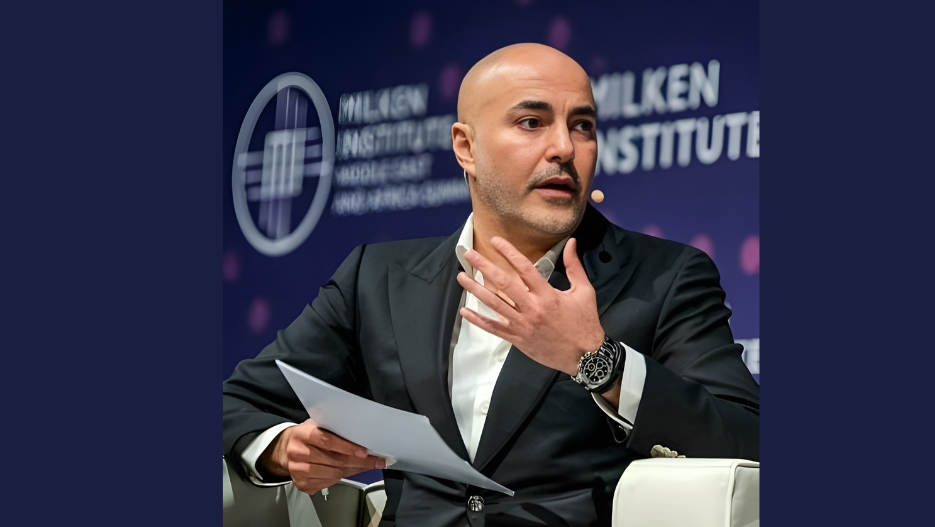
Mr. Al Sharekh explains why technology investments outperform traditional assets over the long term, despite higher risk, and why early-stage technology investing remains largely insulated from macroeconomic volatility, geopolitical risk, and short-term market noise. The interview examines Kuwait’s understated yet significant role in global technology investment, supported by strong digital connectivity, early adoption of 4G and 5G, and a capital-friendly regulatory environment within the wider GCC tech ecosystem.
A major focus is placed on AI infrastructure investment, including data centres, GPU demand, and the parallels between today’s artificial intelligence boom and earlier fibre-optic investment cycles. The article also details the rationale behind the JEDI Fund and the forthcoming JEDI Opportunity Fund, designed to access oversubscribed global technology companies through disciplined follow-on investments.
Finally, the interview explores how artificial intelligence is transforming venture capital decision-making, using talent data signals, advanced analytics, and coding education insights to identify high-growth startups, while positioning Kuwait as an underestimated yet influential technology investor in the global innovation landscape.
How would you describe the current technology investment climate locally, regionally, and globally, particularly with the rise of artificial intelligence?
Institutional investors have done a commendable job in investing in technology. In Kuwait, sovereign institutions have been leaders in this space, not only recently with artificial intelligence, but historically through investments in companies such as Apple, Google, and several major technology initial public offerings. This approach is not new. These institutions maintain long-standing relationships with global asset managers that provide access to such opportunities. As investment rounds increase in size, participation increasingly becomes the domain of institutional investors, where they remain serious and influential players.
In contrast, retail investors and family offices tend to be more risk averse. Their focus is largely limited to local markets, particularly public equities and real estate, with some exposure to international real estate. However, following the COVID-19 pandemic, there was a significant shift in perspective. Investors observed that traditionally reliable revenue-generating real estate assets ceased producing income and, in some cases, became cost centres. Meanwhile, online businesses such as e-commerce platforms and virtual communication tools experienced substantial growth.
This period highlighted the reality of an increasingly digital world. Communication occurred through messaging platforms, meetings moved online, and transactions were conducted through e-commerce. With the emergence of artificial intelligence and the growing relevance of tools such as GPT in everyday life, there is now a broader awakening. Investors are beginning to consider technology investments more seriously.
What drove your early conviction to found Tech Invest in 2015, ahead of the current technology and artificial intelligence boom?
Technology has always been part of our family background. We have been involved in technology sales and reselling since the 1970s, starting with mainframes, desktop computers, and office equipment. This early exposure provided insight into how technology evolves. From the 1980s, we acted as agents for companies such as Dell, Intel, and Microsoft, which further reinforced our understanding of the sector’s trajectory.
I was in school during the dot-com era and became both an enthusiast and an active user of the internet. I strongly believed that technology would change the world. My first professional role was on Wall Street at the start of the technology boom, where I witnessed companies such as Netscape, Yahoo, and AOL go public. At the time, these were among the largest initial public offerings in history.
Over time, technology companies increasingly dominated major indices. The S&P 500 gradually shifted towards technology, with technology companies now accounting for more than 30 to 40 per cent of the index. In hindsight, recognising this trend early would have generated significant returns. Today, similar dynamics can be observed. If SpaceX were to go public at a valuation of USD 1.5 trillion, Peter Thiel alone would reportedly realise USD 50 billion in personal value, exceeding the annual returns of many sovereign wealth funds.
Technology remains where substantial value is created. It is a complex and high-risk asset class, but the potential rewards are considerable. These companies often require years of heavy investment before reaching sustained profitability. As a result, technology investing is not suitable for risk-averse investors, particularly those who prefer liquid, income-generating assets.
How do you see Kuwait’s role in global technology investment, particularly in artificial intelligence and infrastructure?
Several years ago, I discussed why Kuwait is an attractive place to establish technology-driven businesses. One of the key advantages is its advanced communications infrastructure. Connectivity pricing in Kuwait is among the most affordable in the GCC and internationally, which encourages competition among multiple telecom providers. Consumers often use multiple SIM cards and benefit from competitive pricing models.
The rollout of 4G and 5G networks occurred early and efficiently, outperforming many developed markets. Even in major technology hubs such as San Francisco, connectivity issues persist due to legacy infrastructure, regulation, and geographical constraints. In Kuwait, and the region more broadly, the environment is capital-friendly and less constrained by such legacy challenges.
The current artificial intelligence boom in the United States is tangible. Companies such as NVIDIA have secured sales pipelines extending several years ahead due to overwhelming demand for GPUs. While competition will increase, demand for processing power will continue. These developments mirror the 1990s investment cycle in fibre optics, where early overcapacity eventually became essential infrastructure once digital adoption accelerated.
A similar pattern is likely with large-scale data centres. There may be periods of oversupply, driven by rapid investment and speculation, but long-term demand will emerge as artificial intelligence becomes embedded in everyday life. Individuals under the age of ten today will grow up dependent on artificial intelligence systems, creating demand from billions of users. Infrastructure investment is therefore a foundational requirement.
While some projects may fail, history demonstrates that these are transitional phases. Ultimately, a robust industry will emerge, enabling innovation at a scale that is difficult to imagine today.
What was the rationale behind co-founding the JEDI Fund after leading over USD 1 billion in technology investments?
I am particularly drawn to alternative investments. While they carry higher risk, the returns are demonstrably superior. Data consistently shows that early-stage venture capital delivers the highest returns across five-, ten-, and fifteen-year horizons. This is evidenced by companies such as Uber, Google, SpaceX, Tesla, and OpenAI, most of which are less than fifteen years old and now rank among the most valuable companies globally.
Despite this, there was no dedicated product serving this strategy in the region. With the support of Kamco and KIPCO, we developed the JEDI Fund, which stands for Joint Emerging Managers and Direct Investments. The core thesis is to access top-performing companies through a network of emerging managers and then increase exposure to the most successful portfolio companies.
Without this structure, investors are exposed to adverse selection. High-quality companies are typically oversubscribed, and access is only available to investors who are already embedded early. The strategy ensures pro-rata rights, allowing for meaningful follow-on investments as companies mature.
The JEDI Fund, at USD 45 million, was designed as a minimum viable product to demonstrate execution capability. It proved that investors in this region can access leading global technology companies remotely and participate meaningfully in subsequent growth rounds. Validation comes through follow-on investments by institutions such as Sequoia, Goldman Sachs, and Google.
Having established this foundation, we are now scaling into a growth fund focused on the strongest breakout companies, increasing exposure through larger follow-on investments. This approach creates a disciplined private equity pipeline and reflects how alternative investments should be structured.
Does this strategy extend to the new USD 150 million JEDI Opportunity Fund?
Yes, subject to market conditions, that is the intention. We are preparing to raise the fund, although the current environment is challenging. Oil prices remain weak, geopolitical conditions are difficult, and global markets are experiencing volatility driven by tariffs and shifts in United States economic policy. There is significant uncertainty, and only time will determine how these factors play out.
From our perspective, there is always an opportunity to invest. This is why early-stage investing remains attractive. It is largely insulated from short-term political and macroeconomic fluctuations. Currency movements, elections, geopolitical tensions, or global crises have little relevance to the long-term trajectory of a high-quality technology company. If a company such as OpenAI was founded seven years ago, its growth trajectory is independent of political leadership or global events.
One of the key lessons I have learned is the importance of investing in asset classes that operate independently from macroeconomic noise. Venture capital has its own internal dynamics. Liquidity events do not always require waiting ten to twelve years. In strong portfolios, harvesting can begin as early as year five or six, with more substantial distributions occurring in years eight, nine, and ten.
In many cases, investors choose to hold rather than sell. When companies go public and continue to grow significantly after listing, investors often prefer to retain their positions. A good example is Palantir. Some positions were exited early due to fund structures, while others were transferred directly into client accounts. Those investors have since benefited from substantial appreciation.
This approach differs from traditional investment models such as dividend-paying equities or income-generating real estate. While those strategies have created significant wealth, venture investing offers exposure to companies that are more independent, scalable, and globally impactful.
Are you continuing this strategy, or exploring new markets and approaches in future funds?
The investment landscape is evolving rapidly. We are increasingly integrating artificial intelligence into our investment process to improve data analysis and decision-making. While sourcing remains critical, the challenge is assessing performance and momentum across multiple portfolio companies at similar stages of development.
For example, when backing several Series A companies led by highly credible founders with experience at leading global technology firms, traditional evaluation methods become insufficient. Artificial intelligence allows us to analyse what we refer to as talent data signals. This includes evaluating hiring velocity, the calibre of engineers being recruited, their professional backgrounds, and whether senior talent is leaving established companies to join early-stage ventures.
These data points provide measurable indicators of company momentum. Using advanced analytics, sometimes referred to as quantum analytics, we can identify signals of growth earlier than the broader market. This allows us to differentiate between strong opportunities with greater precision. This is an approach we were not using two years ago, and it has become an important component of our investment strategy.
Are there any notable startups or founders emerging locally, and how does your role at CODED inform this perspective?
My decision to invest in CODED as an angel investor and to serve on its board was driven by several factors. One was data. I wanted insight into who is learning to code, where the strongest talent is emerging, and which countries are investing most heavily in digital education. Whether this growth is occurring in Egypt, Algeria, Saudi Arabia, or elsewhere provides valuable indicators of where future innovation may originate. This served as a form of market intelligence beyond the surrounding hype.
Another motivation was giving back to the community by supporting broader access to coding education. There is also a personal dimension. My father founded the AlAlamiah Training Institute in the 1980s, focused on programming and technical training, so this felt like a natural continuation of that legacy.
The region is currently at an inflection point. The ecosystem has been established, but there are clear disadvantages. There are no large-scale technology institutions graduating tens of thousands of engineers annually, comparable to IIT in India or leading universities in Europe and the United States. Talent depth remains a challenge. Additionally, there have been very few meaningful exits, which limits mentorship, capital recycling, and founder-to-founder knowledge transfer. Successful ecosystems take decades to form, as seen with the PayPal alumni or more recently with former OpenAI employees founding leading artificial intelligence companies.
That said, the advantages are significant. The regulatory and business environment in much of the GCC is highly attractive. Unlike parts of Europe, which are constrained by legacy regulation, infrastructure, and political systems resistant to change, the Gulf markets are capital-friendly and designed to encourage company formation and growth. Cities such as Abu Dhabi, Dubai, Doha, and Riyadh offer safety, stability, access to capital, and high quality of life, all of which matter to founders.
Global dynamics are also playing a role. Increasing restrictions on visas, rising social tensions, and structural challenges in other regions are pushing talent to seek alternatives. The GCC has positioned itself as a welcoming destination. In parallel, advances in artificial intelligence and remote work reduce the need for large, localised engineering teams, further lowering barriers to entry.
Kuwait’s role in this ecosystem has historically been understated. Its primary exports have been oil and capital, and Kuwait has been one of the most consistent global exporters of capital through institutions such as the Kuwait Investment Authority. Kuwaiti entities are significant investors in global technology, both directly and indirectly, including participation in major initiatives involving data centres, artificial intelligence infrastructure, and global technology leaders.
Kuwait tends to operate quietly, unlike some neighbouring markets that are more vocal about their initiatives. However, its presence is consistently felt in major global transactions. This positions the country well within a broader GCC ecosystem that is becoming increasingly aligned around technology and artificial intelligence.
Is there anything you believe is particularly important for people to understand about technology investing in Kuwait and the region?
There is a growing realisation among young people in Kuwait that technology is transformative and unavoidable. Technology adoption is accelerating, and the level of awareness among the youth is encouraging. This shift is influencing family offices, where younger generations are beginning to question traditional allocations concentrated in real estate and public equities and are increasingly open to alternative investments.
It is also encouraging to see more local groups investing in venture capital beyond a single platform. At the regional level, sovereign wealth funds such as QIA, Mubadala, ADQ, and PIF are investing heavily in technology while also facilitating knowledge and technology transfer. This places the region in a strong strategic position.
From our perspective, this aligns well with our background. Our experience spans investment banking, technology development, and taking companies public. Sakhr Software, founded by my father, holds multiple patents in Arabic natural language processing. Today, global and regional artificial intelligence models, including those developed in the United States, China, and the Gulf, are increasingly focused on Arabic language capabilities.
All these factors point to a region that is fertile for technological growth. The opportunity exists to build something enduring, but it requires execution. As someone working in venture capital, optimism is essential, and I remain highly optimistic about what lies ahead.