
Built for African Terrain: How Kibo Africa Limited Designs for Real Off-Road Conditions
In Africa’s mobility landscape, where infrastructure gaps remain one of the most persistent barriers to economic participation, Kibo Africa Limited has carved out a distinct position. Rather than importing or lightly modifying global motorcycle designs, the company has built its strategy around a simple but powerful premise: vehicles operating in Africa must be engineered for Africa. Focused on the 125cc to 300cc segment, Kibo’s motorcycles are designed not as consumer lifestyle products, but as working assets, machines expected to deliver reliability, endurance and cost efficiency in some of the world’s most demanding operating environments.
For investors, development institutions and policymakers, Kibo’s model highlights a broader shift towards localisation in industrial design, where success is defined not by brand recognition but by performance in real conditions and long-term value creation.
Engineering for Real Off-Road Conditions
The defining feature of Kibo’s motorcycles is not aesthetic or technological sophistication, but functional durability. Across many African markets, road networks are incomplete, inconsistent or deteriorated. Riders frequently encounter unpaved roads, rocky tracks, mud paths and seasonal disruptions that render standard vehicles ineffective.
Kibo’s engineering approach addresses these realities directly. Its motorcycles are designed with reinforced chassis structures capable of absorbing repeated mechanical stress over long distances. Suspension systems are strengthened and calibrated for uneven terrain, ensuring stability even under heavy loads. High ground clearance is prioritised to navigate obstacles that would immobilise lower-built models.
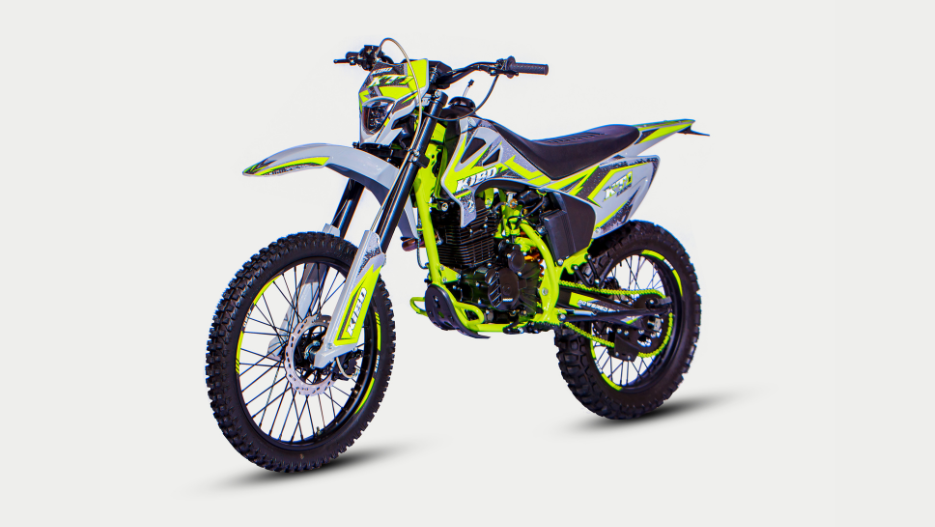
Equally important is mechanical simplicity. In regions where access to specialised maintenance services is limited, Kibo prioritises straightforward, robust mechanical systems that can be repaired quickly and affordably. This reduces downtime, a critical factor for users whose livelihoods depend on daily vehicle availability.
This approach reflects a clear understanding of total cost of ownership. While many low-cost imported motorcycles offer attractive upfront pricing, they often incur high maintenance costs and frequent breakdowns. Kibo’s design philosophy shifts the equation towards long-term reliability and predictable operating costs.
The Strategic Importance of the 125cc to 300cc Segment
Kibo’s concentration on the 125cc to 300cc category is a deliberate strategic choice. This segment represents the backbone of Africa’s motorcycle economy.
At 125cc, motorcycles offer affordability and fuel efficiency, making them accessible to individual entrepreneurs and small-scale operators. At 300cc, they provide increased power and load capacity, suitable for more demanding applications such as security operations, logistics or rural transport.
By covering this range, Kibo is able to serve a wide spectrum of use cases while maintaining a consistent engineering philosophy centred on durability and utility. The company avoids overextending into higher displacement categories that may not align with the purchasing power or practical needs of its core markets.
This focus also aligns with broader industry trends. Across Africa, demand is gradually shifting from ultra-low-cost motorcycles towards more durable, mid-range options that deliver better lifecycle value. Operators are increasingly aware that reliability directly impacts income generation, particularly in sectors such as delivery services and passenger transport.
Product Line Designed for Functionality
Kibo’s product lineup reflects a disciplined approach to design. Rather than offering a wide array of models differentiated primarily by styling, the company focuses on a targeted range of motorcycles optimised for specific operational contexts.
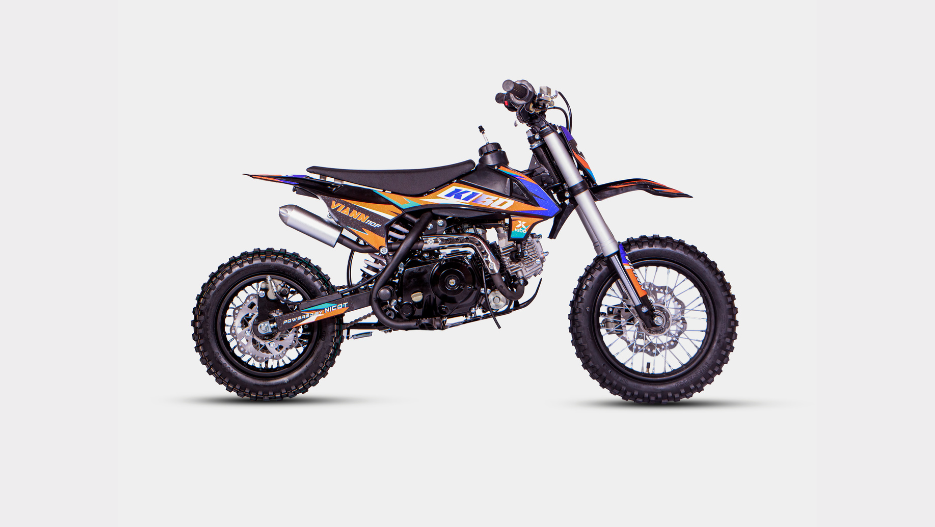
Each model is developed with real-world use cases in mind:
- Urban and peri-urban delivery: where high utilisation rates require consistent performance and fuel efficiency
- Rural mobility: where poor road conditions demand durability and adaptability
- Security and patrol operations: where reliability and endurance are mission-critical
- Agricultural transport: where motorcycles are used to carry goods, equipment and personnel across difficult terrain
Field performance is central to Kibo’s development process. Motorcycles are tested in environments that replicate actual operating conditions, rather than controlled laboratory settings. This ensures that design improvements are grounded in practical feedback from riders and operators.
The result is a product range that prioritises uptime. In markets where a single day of mechanical failure can translate into lost income, this focus becomes a decisive competitive advantage.
Market Context: Motorcycles as Economic Infrastructure
To understand Kibo’s relevance, it is essential to view motorcycles not as consumer goods, but as infrastructure. In many African countries, motorcycles serve as a primary mode of transport, particularly in areas underserved by formal transit systems.
They enable:
- Last-mile delivery for e-commerce platforms
- Passenger transport in urban and rural settings
- Access to markets for agricultural producers
- Mobility for security forces and emergency services
This functional role has driven sustained growth in the motorcycle sector. Urbanisation, digital commerce and population growth are increasing demand for efficient, flexible transport solutions. At the same time, infrastructure development is not keeping pace, reinforcing the importance of motorcycles as a practical alternative.
Within this context, the 125cc to 300cc segment stands out as the most commercially relevant. It combines affordability with sufficient performance to handle diverse operational demands.
Kibo’s positioning directly addresses this structural demand. By focusing on durability and operational efficiency, the company aligns its value proposition with the core economic function of motorcycles in Africa.
Competitive Differentiation: Built for Africa
Kibo’s competitive advantage lies in its commitment to localisation. While many global manufacturers treat Africa as an extension of existing markets, Kibo treats it as a primary design environment.
This distinction has several implications:
- Higher reliability in local conditions: Motorcycles are designed specifically for African terrain, reducing the risk of mechanical failure
- Lower maintenance requirements: Simplified systems allow for easier servicing and reduced dependency on specialised parts
- Stronger brand trust: Users associate the product with performance and resilience rather than short-term affordability
- Institutional appeal: Government agencies and corporate clients prioritise reliability and lifecycle cost over initial purchase price
In addition, Kibo’s regional presence and understanding of market dynamics enable it to respond more effectively to customer needs. This agility is particularly important in markets characterised by diverse operating environments and rapidly evolving demand patterns.
Strategy and Expansion: Scaling with Purpose
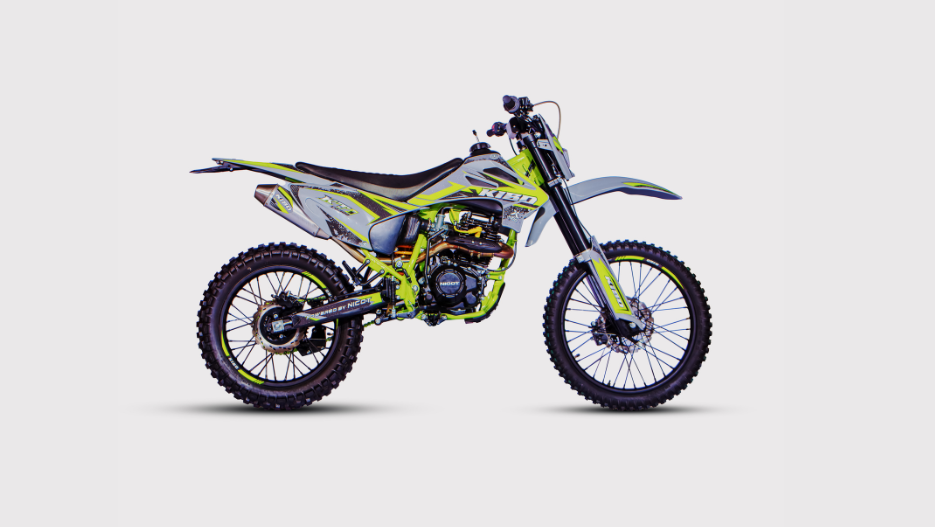
Kibo’s growth strategy is built around scaling its presence across key African markets while maintaining its core focus on durability and functionality.
The company is targeting sectors where motorcycles are not optional, but essential:
- Security and law enforcement: where dependable mobility is critical for operational effectiveness
- Logistics and delivery: where efficiency and uptime directly impact profitability
- Agriculture and rural transport: where access to markets depends on reliable vehicles
- Corporate and institutional fleets: where total cost of ownership is a key decision factor
Expansion is approached with a balance of ambition and discipline. Rather than pursuing rapid, uncontrolled growth, Kibo prioritises markets where its value proposition is clearly differentiated.
At the same time, the company contributes to broader economic development through local assembly initiatives and skills transfer. This not only strengthens supply chains but also aligns with government priorities around industrialisation and job creation.
Insights from the Field: Performance as Proof
One of the most compelling aspects of Kibo’s positioning is the emphasis on real-world validation. The company’s motorcycles are not marketed based on theoretical specifications, but on demonstrated performance in demanding environments.
In operational contexts such as security patrols or rural logistics, reliability is not a marketing claim, it is a requirement. Motorcycles must function consistently under stress, often in remote areas where support is limited.
Feedback from these use cases informs ongoing product development. This iterative approach ensures that improvements are directly linked to user experience, reinforcing the company’s commitment to practical innovation.
A New Standard for Mobility Design
Kibo’s approach represents a broader shift in how mobility solutions are conceived for emerging markets. Rather than adapting existing products, the company is defining a new standard based on local realities.
This has implications beyond the motorcycle sector. It highlights the importance of designing products that reflect the specific conditions in which they will be used, rather than relying on universal models that may not translate effectively across different environments.
For Africa, this approach supports greater self-reliance in industrial development and encourages the creation of solutions tailored to local needs.
Conclusion: A Strategic Opportunity in a Growing Market
Kibo Africa Limited is not simply manufacturing motorcycles. It is addressing a fundamental challenge in African economies: the need for reliable, accessible mobility in environments where infrastructure remains uneven.
By focusing on the 125cc to 300cc segment and designing for real off-road conditions, the company has positioned itself within a high-growth, high-impact market. Its emphasis on durability, simplicity and field performance aligns directly with the operational needs of its customers.
For investors, Kibo represents an opportunity to engage with a company that combines industrial capability with deep market understanding. For governments and institutions, it offers a solution that supports mobility, economic activity and service delivery.
In a continent where terrain often defines opportunity, Kibo’s strategy is both practical and forward-looking. It is building not just motorcycles, but a foundation for more resilient and efficient mobility across Africa.