
Inside Ghana’s Real Estate Market: Denya Developers on Luxury Apartments and Investment Opportunities in Accra
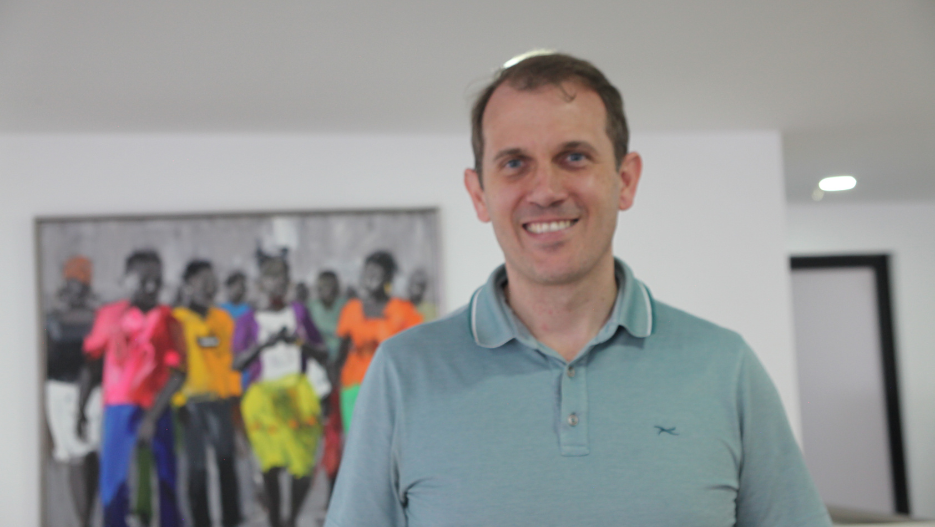
This interview with Scott Murray, CEO of Denya Developers Ghana, provides a detailed overview of the Ghana real estate market, with a particular focus on Accra property investment, luxury apartments in Ghana, and the evolution of residential apartments in Accra. The discussion centres on Denya’s flagship developments, such as The Pavilion in Cantonments and the upcoming Sky Loft Accra project in Ridge, both positioned within prime Cantonments real estate and Ridge Accra property locations.
Murray explains how Denya Developers has capitalised on unique urban constraints, such as building height limitations in flight path zones, to deliver high-rise apartments in Accra with ocean views and expansive greenery. These projects are designed around resort-style apartment living in Accra, Ghana, incorporating features such as large balconies, floor-to-ceiling windows, co-working spaces, and some of the most distinctive amenities in the market, including the longest lap pool in a residential development in Ghana and expansive pool decks. This reflects broader modern apartment design trends in Ghana and highlights what defines high-end residential developments in Accra today.
A major theme in the interview is the growing importance of diaspora property investment in Africa, particularly in Ghana’s real estate for overseas buyers. With roughly 60% of buyers coming from the diaspora, the company is deeply aligned with buying property in Ghana as a diaspora investor and the increasing demand for apartment investment in Ghana. The conversation also explores rental yield in Ghana property and how investors compare real estate investment in Ghana with returns in more mature markets such as the United States or United Kingdom.
However, Murray also raises important concerns about the rise of serviced apartments in Accra and hybrid hotel-style units. He discusses the difference between hotel-style apartments and residential units, highlighting the risks of over-reliance on short-term rental models and the potential impact of regulatory changes. This provides valuable insight into property investment trends in Ghana 2026, including the challenges of apartment investment in Ghana and the future of the real estate market in Ghana.
Denya Developers differentiates itself by focusing on long-term liveability rather than purely investment-driven products. Their developments are designed for both owner-occupiers and investors, addressing the balance between living in Accra versus investing in apartments. The company prioritises flexibility in layouts, offering options such as open-plan or enclosed kitchens, and personalised floor plans, which align with evolving buyer expectations in the Accra housing market.
From a construction and quality perspective, the interview highlights Denya’s unique approach, including the use of poured concrete structures instead of traditional blockwork. This ties into broader discussions around how developers ensure quality construction in Africa and how to build long-lasting residential buildings in Africa. The company reinforces its positioning through strong guarantees, offering a 10-year structural warranty in real estate in Ghana, which stands out in a market where shorter liability periods are the norm.
The upcoming Sky Loft Accra development further illustrates Denya’s ambition to create iconic yet timeless apartment buildings in Ghana, featuring private lift access directly into apartments, integrated commercial spaces, and enhanced resident amenities. These elements respond to increasing demand for luxury apartments with pools and amenities in Accra and emphasise the importance of community living in apartment complexes in Ghana.
Ultimately, the interview positions Denya Developers as a key player among property developers in Ghana, combining real estate investment opportunities in Accra, Ghana, 2026 with a strong focus on trust, transparency, and long-term value. It also reinforces why the Accra real estate market is growing, driven by limited prime land, sustained diaspora demand, and rising interest in investment in stocks versus real estate in Ghana, with property continuing to offer compelling returns.
This conversation offers valuable insights into what makes a good real estate developer in Ghana, how to choose a property developer in Accra, and what investors should consider when evaluating opportunities in one of Africa’s most dynamic property markets.
Could you briefly update us on the company’s current status since our last discussion, including any key developments or new lines of business?
We have been quite busy with our flagship development, The Pavilion, located in Cantonments. It sits within Rangoon, which has long been one of the most prime areas in Cantonments. One of the key factors that attracted us to this location was the opportunity to build up to eight storeys, whereas much of Cantonments lies within a flight path, which typically restricts buildings to no more than five floors. We recognised that developing in this particular area and reaching eight or nine floors was a significant opportunity. Ultimately, we reached approximately 33 metres, which afforded us unbelievable panoramic views across Cantonments and extending to the ocean.
This formed the basis of our initial brief to the architects: to create a building that fully capitalises on the uniqueness of both the site and its surroundings.
We focused on delivering a resort-style living experience. The development features large, spacious balconies designed to support both outdoor living and dining. We completed and handed over the first phase of the project approximately a year and a half ago, and we are now very close to completing the second phase. Naturally, this has led to increasing enquiries about what comes next. As a result, we have been receiving a great deal of interest in what comes next.
We are yet to formally unveil our newest development, which will be located in Ridge. The plan is to develop a taller structure that once again maximises the available sight lines towards the ocean. Should we secure one final adjoining parcel of land, the project will evolve into a multi-phase development. This will allow us to standardise the level of amenities introduced at The Pavilion, which we believe are essential for clients seeking a resort-style living experience within the city.
What distinguishes The Pavilion development, and how does it set itself apart from other projects?
I would not say that there was anything unique about phase two that had not already been unveiled in phase one. However, the key advantage of delivering both phases together, given their proximity, was the scale it provided, allowing us to offer a more comprehensive range of amenities. This enabled us to incorporate facilities such as a co-working space, an in-house café, and a grocery store. We also developed an expansive pool deck, measuring approximately 0.3 acres, which is notably large by local standards. To our knowledge, we also have the longest lap pool of any residential development in Ghana, measuring 25 metres in length.
Interestingly, certain features like this may not seem immediately important, yet there is a subset of residents who choose to live in the building specifically because of the lap pool. For instance, we consistently observe some residents swimming laps each evening for regular exercise, demonstrating the importance of these specialised amenities.
Is The Pavilion development primarily intended for rental or for sale?
This is an important question and one we consider carefully. As a developer, it is unrealistic to expect that 100 per cent of buyers will intend to occupy their units on a full-time basis.
There will always be a segment of buyers from the diaspora who wish to invest in residential properties. However, if the focus shifts too far away from the actual living experience within the building, it serves neither those buying for investment nor those buying to live. Our approach to these trade-offs is to focus primarily on the experience of those who will live in the development, whether as homeowners or tenants.
We aim to design spaces that function as genuine homes where residents can live comfortably over the long term. We do not want apartments where one would feel comfortable for five days but could not imagine living in for 50 or 500 days. From a development perspective, this requires striking the right balance. Units must not be so large that they become impractical as investments, nor so compact that they only appeal to short-term occupancy and cannot function as a genuine home.
This balance is something we believe we achieved successfully at The Pavilion, and it is a principle we intend to carry forward into all future developments.
There appears to be a growing trend toward rental apartments. Could you share your perspective on the industry more broadly?
The reason the opportunity existed for so many people to invest in apartments and generate rental income is that there was fundamentally a dearth of high-quality hotels, and that gap has begun to be filled. A new airport hotel, Four Points by Sheraton, has recently opened, and the Marriott also opened within the last few years. The Kempinski has now been open for approximately seven or eight years, and before that, there was the Mövenpick. There are, therefore, more hotels entering the market. Despite this increase in supply, demand for hotel rooms during peak periods remains exceptionally high.
It is not uncommon to see room rates fluctuate significantly, for example, from around $300 at quieter times of the year to as much as $850 or $900 during peak seasons such as summer and Christmas. This variation reflects a persistent shortage of available accommodation during high-demand periods.
In response, real estate developers moved to address this gap, recognising they could design units that functioned as hotels during peak periods and as residences at other times of the year. These hybrid concepts proved highly appealing to both local investors and those in the diaspora, who recognised that they could purchase a property, rent it out, and achieve yields far exceeding what they might obtain from property investments in the United States or the United Kingdom.
This trend has remained consistent over the past seven to eight years. As more of these developments enter the market, interest in Ghanaian real estate has continued to grow, such that supply is, in effect, rising to meet demand, while demand simultaneously continues to rise.
The concern I have with these types of apartments is the risk of regulatory change. Should the government decide to tax apartments below a certain size in the same manner as hotel rooms, the impact would be significant. The compounding issue is that hotel rooms typically range between 23 and 27 square metres, while larger suites may extend to approximately 35 to 38 square metres. These are dimensions that are simply too small for full-time living, as evidenced by those confined to hotel quarantines during the COVID-19 pandemic, such spaces simply do not offer enough room for comfortable, extended living.
The difficulty with these types of units is that when they cannot also function as a home, they are, in effect, simply hotel rooms. A hotel room derives its value entirely from the demand of those seeking short-term accommodation, and such a product will inevitably become commoditised. The newest additions to that market may perform well, but older stock will inevitably decline in value.
As a result, at Denya Developers, we have deliberately avoided focusing on that product type. We have included some studio and one-bedroom units that are relatively compact, but none approaching the dimensions of a typical hotel room.
Does Denya Developers focus exclusively on apartment projects, or do you also develop homes?
On occasion, we have undertaken the development of individual homes for clients for whom we have previously delivered apartment projects. However, this is not a dedicated line of business for us. In all honesty, every time we undertake such a project, we find ourselves declaring it will be the last, given how demanding the process is.
The advantage of apartment development lies in standardisation. A single design for a two-bedroom unit can be replicated multiple times within the same building. This allows for efficiencies in procurement and construction. For example, if one additional window is required as a contingency, it can serve multiple identical units.
By contrast, individual homes are highly customised. Components such as windows often vary in size and specification, making it difficult to achieve similar efficiencies or maintain spare inventory. As a result, the development process for standalone houses is significantly more complex than for large-scale apartment projects.
For this reason, we have a clear preference for apartment developments over individual residential builds.
Considering current trends in 2026, what defines a standard apartment building, and what key features do you believe it should include?
If you are going to develop an apartment in this part of the world, it is essential to fully capitalise on what Ghana has to offer. First and foremost, Ghana possesses extraordinary greenery, and this is something many people do not immediately appreciate. When driving through Accra at street level, views are often obscured by boundary walls. However, from as low as the second floor, one begins to appreciate the surrounding treetop landscape. This is one of the reasons we have elevated the base of all our buildings so that residential units typically begin from the third floor. This ensures that every apartment benefits from expansive views, regardless of its position within the building.
To achieve this, a key design priority has been the incorporation of large windows. Where possible, these are floor-to-ceiling or otherwise occupy a substantial portion of the external wall, allowing for maximum natural light and uninterrupted views. In addition, we have prioritised generous balconies designed as functional outdoor living spaces, suitable for both relaxation and social interaction, rather than merely serving utilitarian purposes. Our approach is centred on creating homes that are both liveable and enjoyable, with spaces that encourage comfort and social engagement.
At the same time, we recognise that buyers have diverse preferences. As such, we incorporate flexibility into our designs. For example, purchasers may choose between open-plan kitchens and enclosed kitchen layouts, depending on their lifestyle and cooking habits. Many of our customers from the United States and the United Kingdom are very comfortable with open-plan living. For those who prefer a more enclosed kitchen for practical cooking purposes, we plan ahead so that this level of customisation is available to those who want it.
Similarly, wherever possible, we build in opportunities for buyers to personalise the floor plan, and this is invariably well received. This may include selecting between two equally sized en-suite bathrooms, or opting instead for a larger primary bathroom complemented by a smaller bathroom and a guest powder room.
Simply offering buyers this degree of choice proves enormously valuable. In some cases, buyers may choose to repurpose smaller spaces for storage, while others may prefer features such as shared ‘Jack and Jill’ bathroom arrangements. The delight on buyers’ faces when they are involved in shaping the home they are about to receive is, ultimately, what makes this work so rewarding.
Let’s turn to your upcoming projects, particularly the one in Ridge. Could you tell us more about this development and what stakeholders can expect?
We have recently decided to bring our entire architecture function in-house, an effort we began approximately a year and a half ago. As part of this process, we appointed an exceptional head of architecture, who then helped us build a dedicated team, enabling us to integrate design thinking with our existing engineering and execution expertise from the outset of each project.
The team has already identified several key priorities for our upcoming development, many of which are central to their design vision. A particular focus has been the creation of an iconic façade. However, we have taken care to define what “iconic” means in this context. Our objective is not to pursue something garish or ostentatious, but rather to create a building that will stand the test of time. We are aiming for an architectural language that reflects quiet confidence, with a minimalist approach that still conveys a sense of richness and quality.
It has been a genuinely enjoyable process working through how that vision will take shape, and we are now very close to unveiling the final concept.
Could you outline the amenities included in the Ridge project and highlight any features that residents can look forward to?
The development will be delivered across two phases, with a lobby and commercial space situated on the first floor. All residents and visitors will enter through this shared access point, which will house a pharmacy, café and business centre within an open communal space.
The second floor will be dedicated to resident amenities. This level will provide access to a large pool deck, as well as a range of private facilities exclusively for residents, enhancing both comfort and community within the building.
The residential towers will rise above this level. We are also working on what would be a particularly compelling feature: designing the building so that lifts can open directly into the apartments. For those who value privacy, which accounts for a significant proportion of our buyers, this would mean being able to park, step into a lift, travel directly to their floor and arrive straight into their apartment, without passing through any public corridor. This will require certain security customisations to be implemented correctly, but we believe it will represent a genuinely distinctive addition to the value we offer our residents.
What is the profile of your typical clientele? Do you primarily serve diaspora clients, or is there a strong local market presence as well?
Roughly 60 per cent of our clients are Ghanaians living in the diaspora, with the remaining 40 per cent being Ghanaians based locally. It is relatively rare for us to sell an apartment to a non-Ghanaian buyer. Notably, compared to some other developers, a higher proportion of our purchasers choose to live in their apartments rather than treat them purely as investment properties. This has remained fairly consistent across our last three developments, with owner-occupancy rates reaching no less than 40 per cent in any single development.
This meaningfully shapes the character of each development, as residents who share a living environment naturally come to know one another, giving rise to gatherings at the pool deck, children’s birthday celebrations and a genuine sense of neighbourliness. At the Pavilion, for instance, a kickboxing instructor visits weekly to train residents. These are the kinds of activities that organically take root when a genuine sense of community develops within a development.
Ultimately, our focus is centred on lifestyle. This principle is integral to our design philosophy. By beginning with a clear understanding of the intended living experience and working backwards to inform design and construction, we are able to deliver developments that align closely with our original vision.
What is the name of the Ridge project, and how was it chosen?
The development will be called Sky Loft, a name that reflects its elevated position and architectural character. The design incorporates high ceilings and expansive windows, creating a strong sense of openness and maximising natural light.
Located in Ridge, the site benefits from its naturally elevated setting. As a result, the development will offer far-reaching views across the surrounding area, extending towards the ocean.
Will the apartment development offer a balance between rentals and sales, or is it designed primarily for individual buyers?
This is an important consideration and one we have examined carefully at the board level. Some developers adopt a hybrid model, selling a portion of a development while retaining the remainder for rental purposes. We have never been drawn to that model, as it can create an inherent conflict of interest by placing the developer in direct competition with its own buyers.
Our strategy is to develop, sell, and remain involved in the ongoing management of the property, ensuring that all owners are treated equitably. We do not seek to prioritise one group over another. Instead, we aim to create a level playing field for all purchasers, whether they are owner-occupiers or investors.
All units within the development will be made available for sale, with full transparency around design and layout through the publication of detailed floor plans. In some cases, we may offer developer financing on selected units, which could result in a temporary retained interest. However, this will not alter our commitment to ensuring a level playing field for all those purchasing units as investments, ensuring they are able to generate returns equivalent to those of every other owner in the building.
What is the anticipated timeline for completing the project?
Drawing on our experience of completing five developments in Ghana, we have refined our approach to project timelines. Rather than setting expectations from the initial groundbreaking stage, we establish our delivery schedule from the point at which the structure reaches podium level. This is because, if delays are to occur at any stage of the development programme, they are most likely to arise during the foundation phase. Encountering hard rock, for instance, may necessitate dynamiting or jackhammering before work can progress. The most prudent approach is to communicate a confirmed ground-breaking date to buyers, and then, once the podium level is reached, commence a firm two-year timeline to completion. In our experience, the delivery timeline is rarely the primary concern for the majority of our buyers. Instead, they place greater emphasis on the assurance that the final product will meet the standards promised, namely a high-quality residence with the full range of amenities outlined in our marketing materials.
What is Denya Developers’ unique selling proposition, and how does it differentiate you from competitors?
If I were to identify what is most distinctive about Denya Developers, I would point to our openness in communication and, in turn, the trust we build with each individual buyer. Many developers can build what a buyer might be looking for. Fewer, however, will take the time to be as open and transparent about the process as we are. As a result, we invest considerably more effort in understanding and responding to what each customer genuinely wants, rather than directing them towards something they might not have chosen had they been better informed.
Some years ago, we ran an advertising campaign built around the idea that a 30-minute conversation with Denya Developers would change the way you think about real estate. We meant it sincerely. When people take the time to engage with us, we might find that they are unfamiliar with how land ownership works in Ghana, and we walk them through it. It may be that they have never considered how space translates from a two-dimensional floor plan into a lived environment. We help them understand, for instance, how the bedroom dimensions in one unit compare with those in another. We might even mark out those dimensions on the ground so that a buyer can physically walk through the space and appreciate the difference firsthand. These are the things that we believe fundamentally and culturally set us apart.
From a construction standpoint, we have adopted a distinctive approach to quality control. Rather than relying on traditional blockwork, we construct our buildings using a poured concrete system. This is not the standard approach in places such as the United Kingdom or Germany, where established supply chains and strong reputational accountability ensure materials are consistently produced to a high standard. What we found, however, is that sourcing and monitoring the quality of blockwork on site consumed so much time and resource that it detracted from the quality of execution. We therefore made a definitive shift: we now design our entire buildings around metal moulds into which concrete is poured, forming not only the ceiling slabs and columns, but all interior walls, window and door openings, and perfectly right-angled corners throughout.
The third defining aspect of our approach is our refusal to compromise on the fixtures and fittings we specify for our developments. Across every development, we have partnered with Kohler, installing their ceramics and fittings throughout. As an American, I have long been familiar with Kohler as a Wisconsin-based company renowned for quality. We were the first developer to introduce Kohler into Ghana, doing so with our inaugural development in 2016. We also source kitchens and appliances from Germany, and wardrobes from Italy, ensuring that all components meet high international standards. These choices are made with long-term durability in mind, as we design our buildings to perform well over decades, not just in the short term.
This leads to a final point that is worth understanding about the value proposition of investing in Accra. From an investment perspective, the underlying fundamentals of the Accra property market remain strong. Demand from Ghanaians in the diaspora continues to play a significant role, particularly in prime areas of the city. With Ghana’s economy growing at a rate of at least 6% per year, and with sustained demand from the diaspora concentrated in a finite number of prime locations, the trajectory for property values in neighbourhoods such as Labone is compelling. Over time, these neighbourhoods will only become more desirable, given that the supply of prime land is finite. As the underlying value of this land increases and demand for these locations intensifies, the inevitable consequence is upward pressure on property prices.
The only factor that could undermine a particular investment at that point is the fundamental quality of the structure and the residence itself. We have therefore made deliberate decisions to ensure our buildings not only endure but remain highly desirable 20 to 30 years from now. We have gone further than any other developer in this regard. In the absence of mandatory warranty regulations in Ghana, we voluntarily provide a 10-year, 100% structural warranty on all our buildings, along with a 5-year, 100% warranty covering waterproofing and leakages.
While other developers typically offer a defect and liability period of one year, the reality is that relatively few issues present themselves within the first 12 months. Furthermore, many residents will not have moved in and begun living in the building until several months after handover. There is an inherent lag between handover and full occupancy, and our warranties are designed to account for this. If we are making a promise of superior quality, we must give residents sufficient time to experience and verify that quality. We stand fully behind that commitment, and it is our responsibility to rectify any issues that arise.
As a final question, what is your vision for Denya Developers over the next few years, and how do you see the company evolving in the longer term?
Rather than describing it as a vision, I would define it as our most critical priority. As we grow and expand, we must ensure that scale does not come at the expense of the core principles that define us. Growth pursued at the cost of quality or integrity is not growth worth pursuing. The priority is to maintain the quality, integrity, and attention to detail that we take pride in, regardless of the number or size of projects we undertake.
One of the key challenges in a rapidly developing market such as Ghana is the need to build a strong and resilient organisation. This requires consistent standards and discipline at every level, from leadership through to on-site execution. When operating across multiple construction sites simultaneously, each with consistent quality controls in place, it is no longer sufficient to rely on a handful of talented individuals overseeing the process. What is required instead are robust systems and processes that operate consistently across every site, ensuring standardised outcomes wherever the Denya Developers name is attached. That is the challenge we are most focused on as we continue to grow.
Is there anything else you would like to add that we may not have covered?
We are always available and happy to spend time speaking with anyone who wishes to reach out. People come to us seeking advice, wanting to know whether we are aware of a property that might suit their needs. Sometimes what they are looking for is something we are developing. On other occasions, their requirements fall outside our current portfolio, and we offer what guidance we can before pointing them in the right direction.
We are very open to dialogue and genuinely interested in getting to know our prospective buyers and understanding what they are looking for. Wherever we are able to help, we are more than happy to do so.