
B5 Plus Reaffirms Commitment to Ghana’s Industrial Growth and National Revenue
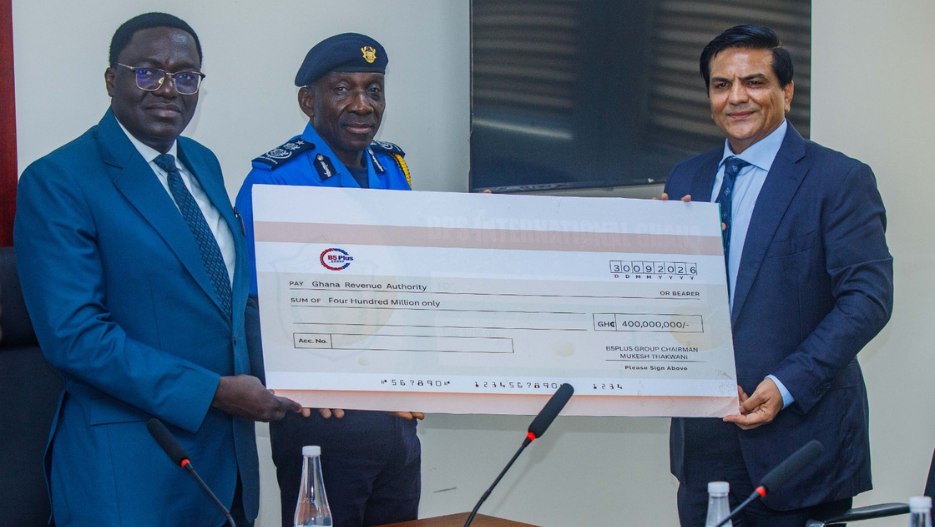
B5 Plus Reaffirms Commitment to Ghana’s Industrial Growth and National Revenue
B5 Plus has contributed one billion Ghana cedis to the National Treasury, and our commitment is to ensure that this contribution continues to grow year after year.
That commitment is reflected in our continued investment in Ghana, the progressive expansion of direct and indirect employment, the development of Ghanaian skills, deeper local value addition, responsible recycling, and the increased use of locally available raw materials wherever feasible. It is also reflected in our efforts to substitute imports, expand exports across West Africa, conserve foreign exchange, and maintain the highest standards of tax and regulatory compliance.
B5 Plus is already one of Ghana’s larger private sector employers. We do not regard this position as a level to maintain, but as a foundation upon which to build further.
For us, a stronger domestic manufacturing sector and a stronger national revenue base are closely connected. Manufacturing creates employment, develops supplier ecosystems, transfers knowledge and technical skills, retains greater value within the country, and ultimately broadens the national tax base.
As B5 Plus continues to expand its manufacturing capacity, our objective is for our contribution to employment, local value addition, industrial development and the National Treasury to grow alongside it.
Importantly, this industrial capacity is being built here in Ghana. B5 Plus today operates West Africa’s largest prefabrication line, demonstrating the scale of manufacturing capability that can be developed locally when industry is supported by long term investment and a competitive business environment.
Strengthening Market Access for Ghanaian Manufacturers
We respectfully encourage the Government of Ghana to continue translating its 24H+ Economy and industrialisation agenda into practical market opportunities for domestic manufacturers.
Government, public sector and state funded procurement can play a particularly important role. Within applicable procurement regulations and value for money requirements, genuine priority should be given to quality products manufactured in Ghana whenever domestic producers can meet the necessary standards, specifications, production capacity, delivery timelines and competitive pricing requirements.
Public procurement is more than a purchasing mechanism. It can be a powerful instrument for industrial development, job creation, skills development and the expansion of Ghana’s future tax base.

The opportunity is significant and immediate. Ghana’s steel industry is currently operating at less than fifty per cent of its installed capacity. Every portion of unused capacity represents unrealised employment, unrealised local value addition, unrealised economic activity and unrealised government revenue.
Where products can already be manufactured in Ghana to the required quality standards and in sufficient volumes, we respectfully believe that continued importation of those products should be reconsidered. Exemptions granted for the importation of products that are already competitively manufactured locally should similarly be reviewed.
The objective should be to ensure that Ghanaian industrial capacity is fully utilised before the country relies unnecessarily on imported alternatives.
Ensuring Fair Competition at Ghana’s Ports and Borders
Equally important is the maintenance of a fair, transparent and consistently enforced competitive environment at Ghana’s ports and borders.
Continued and even handed action against undervaluation, under invoicing, misdeclaration, misclassification, abuse of exemptions, dumping and other forms of non compliance is essential.
Such practices can make imported products appear artificially cheaper than locally manufactured alternatives, placing compliant domestic manufacturers at an unfair disadvantage. They can also deprive the Government of legitimate customs duties and tax revenues.
Addressing these practices therefore serves two important objectives. It protects national revenue while ensuring that responsible Ghanaian manufacturers are able to compete on a level playing field.
This is not a call to protect Ghanaian industry from fair competition. Competition is healthy and necessary. Rather, it is a call to ensure that all businesses and products compete under the same transparent and lawful conditions, with applicable duties, taxes, regulations and product standards enforced consistently.
Ghanaian Industry Must Continue to Earn Government Support
We also recognise that domestic industry has responsibilities of its own.
Government support for local manufacturing must be matched by continuous improvements in quality, productivity, competitiveness, innovation and operational efficiency.
B5 Plus therefore remains firmly committed to quality manufacturing, competitive pricing, innovation, timely delivery, skills development, sustainability and full regulatory compliance.

Our manufacturing operations are ISO certified and supported by a Kaizen driven production system focused on continuous improvement. We hold our products to standards that compare favourably with international equivalents manufactured anywhere in the world.
Our ambition is not simply to manufacture in Ghana, but to demonstrate that products manufactured in Ghana can compete successfully on quality, efficiency and reliability at both regional and international levels.
We remain ready to work constructively with the Ghana Revenue Authority, Government Ministries and other public institutions to strengthen compliance, deepen local manufacturing and support Ghana’s transition towards a more industrial, export oriented and resilient economy.
Manufacturing More, Importing Less and Exporting More
The economic logic is straightforward.
When Ghana produces more of what it consumes and exports more of what it produces, the benefits multiply throughout the economy.
More domestic manufacturing means more jobs.
It means more technical and professional skills.
It means stronger Ghanaian suppliers and domestic value chains.
It reduces unnecessary pressure on foreign exchange reserves.
It creates additional opportunities for exports.
And, importantly, it generates greater and more sustainable tax revenues for the Government.
Building a strong manufacturing economy therefore benefits far more than individual manufacturers. It strengthens the wider national economy.
B5 Plus once again expresses its appreciation to the Ghana Revenue Authority, the Government of Ghana, our employees, customers, suppliers, business partners and the communities in which we operate for their continued confidence and support.
Our commitment to Ghana remains unwavering.
We will continue manufacturing in Ghana, adding value in Ghana, developing Ghanaian skills, creating employment and business opportunities, expanding Ghana’s industrial capacity and contributing continuously to the country’s economic development.
Our contribution of one billion Ghana cedis to the National Treasury is an important milestone.
Our objective is to ensure that it is only the beginning.