
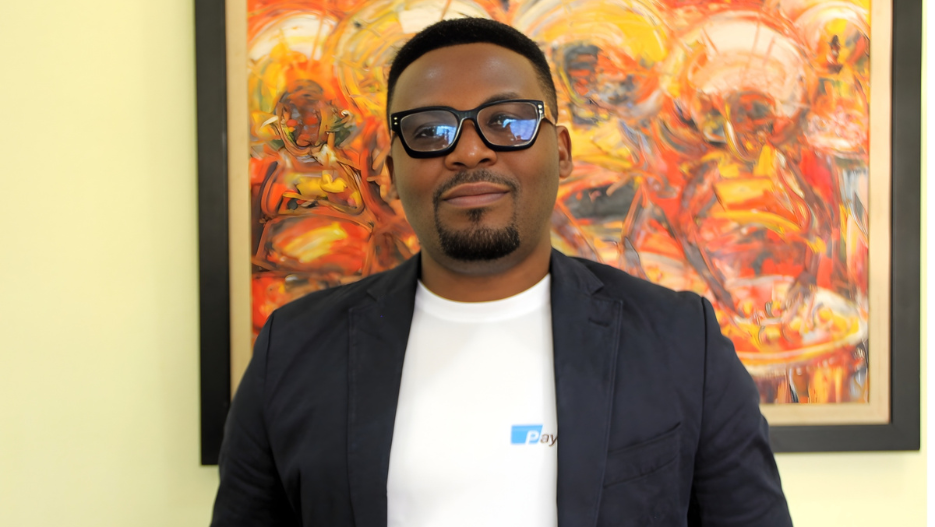
Executive Profile: AaronDemenu, CEO of PaySwitchCo. Ltd.
Aaron Demenu is a visionary leader with a proven track record of driving growth and transformation. As CEO of Payswitch Co., Ltd., he leverages a unique blend of strategy, technology, and process expertise to empower founders and SMBs to thrive. Empowering businesses to achieve scalable growth through tailored solutions, Aaron partners with organizations to transform fragmented operations into streamlined systems, unlocking diversified revenue streams and propelling businesses forward.
The Long Game & Stay of Value:
Why Aaron Demenu Builds Systems, Not Just Companies-It is not common to find a fintech CEO who speaks as much about both structure and infrastructure than about disruption. Aaron Demenu is that uncommon leader who believes the latter two when done right, organically creates the potential for sustainable chain disruptions.
When you sit with him, he will likely start a sentence with: “The foundation has to hold & the relevant moving parts need to be well orchestrated.” It is an ideal and phrase he carried from his early days as a telecommunications engineer at Vodafone, where he worked on Core Systems for both mobile and fixed network transformations; the invisible backbone that keeps millions of people connected.
That background shaped him in a way that a purely business school path never could. He learned early: if the infrastructure is brittle, no amount of marketing can save you in the long term.
A Builder Who Knows What Breaks
Aaron’s journey through fintech was not a straight line. It was a series of deliberate steps through product, operations, business development, and technology, often holding one but passionately two or three of those roles at the same time to assist with the smoothest of transitions and successor-capacity building. At PaySwitch, he moved from Head of Business Development to Head of Products & Projects to Chief Technology Officer before stepping into the CEO role. That sequence matters. It means he has sat where his product managers sit. He has carried the weight of a sales target. He has been the one called at 2 a.m. when a platform behaved unpredictably.
“I don’t ask my teams to do anything I wouldn’t do myself if I find myself in their position, I drive and demand excellence I would have aimed for myself,” he says quietly. “And I encourage the Team to develop a posture of ‘don’t build things you can’t explain to a regulator.” That last point is central to how he leads and turns intra self-regulation into deeper product design exercises to ensure the final product is worth the grandest of stages.
Credibility with Institutions: not a marketing Line
In an industry where “partnership” often means a logo on a slide deck, Aaron takes a different approach. He has spent years in direct engagement with the central bank, industry bodies, and compliance teams, not as a lobbyist, but as someone who believes that regulation, done well, is a competitive advantage.
His work in areas like digital lending governance and driving responsible AI use in finance, and optimizing partnerships did not come from a classroom. It came from sitting across the table from regulators who wanted to understand the approach, how fintech-focal ecosystems could grow without creating systemic risk. He learned to translate technical complexity into trust.
“A lot of fintechs build fast and hope the regulator doesn’t notice,” he reflects. “That’s short-term thinking. I, with my team, approach it differently; and that is to build things that regulators trust, because that trust is what allows you to scale without hitting a wall.” That mindset Positions PaySwitch as a trusted counterpart for institutions that are often sceptical of fast moving fintechs. He does not sell them a vision; he shows them how the infrastructure works to generate value and revenue.
Practical Innovation, Not Hype
Innovation, in Aaron’s vocabulary, is not about buzzwords. It is about solving real problems with discipline. Under his leadership, the company has focused on governance frameworks for digital lending, AI adoption and integration into Ops, Product Design and the creation of sustainable new Revenue Lines. He has pushed for systems that empower and protect consumers while enabling
access, often drawing from his engineering background to design processes that are both robust and adaptable.
He believes in dispatched solutions going beyond just being convincing enough to be chosen by the end-user , but to also be able to intentionally add value and advancements to the end-user’s operations to ultimately feed back into more business on the rails being created.
That builder’s instinct extends beyond product. He has quietly led initiatives that bridge fintech with social impact, not just as CSR, but as a core strategy. He believes that the most sustainable growth comes when technology serves real human needs, especially in markets where access to finance and Infrastructure required to support even light-tech has been historically difficult.
Ghana Depth, Selective Expansion
Rooted in Ghana, Aaron understands that local depth matters more than superficial scale. He has built relationships across the Ghanaian fintech ecosystem, with regulators, with partner banks, with the informal sector that still moves most of the country’s value. But he is not provincial.
His background includes work in the Middle East and ongoing engagement with partners across Africa and other continents. He expands selectively: only where the infrastructure can hold, and only where the institutional environment allows for long-term commitment.
“I lead a Team that is not just interested in opening offices but most importantly, ensuring that as they are opened, we also build operations that last. That means going deep in places where we can earn trust, not just acquire customers.”
The Trust Builder
Aaron Demenu is not the loudest voice in the room. He does not dominate conversations. But when he speaks, people listen because he speaks from a unique and rare perspective of experience. His leadership is not about charisma; it is about consistency, technical depth, and a quiet insistence on doing the hard work of governance before celebrating growth.
For partners and institutions, that makes him something rare: a CEO they can trust to build something that will still be standing long after the hype cycle moves on.