
New Heights Pharma: Strengthening Pharmaceutical Distribution in Nigeria
In this MarcoPolis interview, Ogheneochuko Omaruaye, CEO of New Heights Pharma, discusses pharmaceutical distribution in Nigeria and the company’s development into an integrated healthcare business. He explains the roles of New Heights Pharmaceuticals, New Heights Wholesales and NHP Healthcare within the pharmaceutical supply chain in Nigeria, covering pharmaceutical imports, contract manufacturing and distribution.
The discussion highlights pharmaceutical wholesalers as medicine suppliers for pharmacies and hospitals. The company provides pharmacy supplies, hospital medicines, healthcare products, medical devices and diagnostic devices through offices in Lagos, Abuja, Port Harcourt and Ibadan. Flagship brands include Omron Healthcare, HealthCheck, Wassen and Efamol. Pharmaceutical partnerships involve Atrion, Truth Pharmaceuticals, Ernest Chemists and PharmAlliance, whose Moxie brand is also distributed. Pharmaceutical warehousing and distribution in Nigeria: pharmaceutical logistics and CEU Logistics support medicine delivery.
Omaruaye describes an online ordering platform for pharmacies in Nigeria that also supports online pharmaceutical ordering for hospitals, highlighting pharmacy technology, pharmaceutical e-commerce, and digital healthcare. SAP Business One supports operations, while PharmacyOS handles internal activities. Healthcare AI is already used internally, with WhatsApp AI customer service planned.
As PWDAN chairman, he discusses pharmaceutical supply chain integrity in Nigeria, good distribution practices, drug regulation and drug distribution guidelines in Nigeria. He stresses quality medicines and accountable sourcing in tackling counterfeit medicines and substandard medicines. The interview examines challenges facing Nigeria’s pharmaceutical industry, including funding, infrastructure, and skilled labour shortages. Looking ahead, Omaruaye outlines plans for local pharmaceutical manufacturing, including essential medicines, and explores opportunities in Nigeria’s pharmaceutical sector.
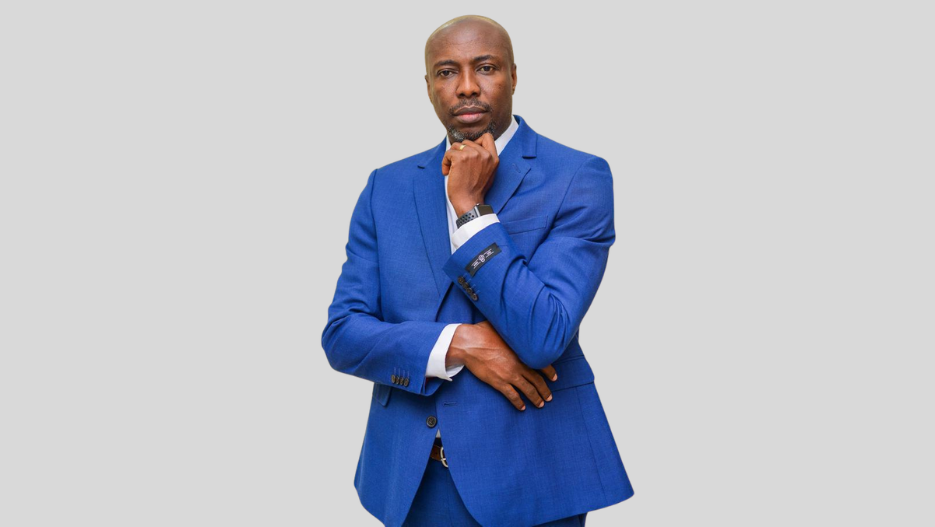
Could you introduce New Heights Pharmaceuticals? Please take us through the company’s history and tell us where it stands today.
New Heights Pharmaceuticals is a healthcare company in Nigeria. We started business on 1st February 2005, which means we will be 23 years old in a few months. We began as a pharmaceutical wholesaler, but over the years we have evolved into an integrated healthcare company offering services across the pharmaceutical supply chain. We have subsidiaries in the distribution of pharmaceutical products and subsidiaries focused on wholesaling alone. We also have an interest in retail, and we maintain a position as an importer and contract manufacturing organisation, so we have our own brands of products in Nigeria as well. It is a complete package.
The Nigerian pharmaceutical supply chain is segmented into three broad areas, which I call the upstream, the midstream and the downstream.
In the upstream you find the manufacturing and importing companies, the people who provide the products. In the midstream you find the distribution and wholesale companies. In the downstream you find retail pharmacies, clinics and hospitals.
Because of the nature of our business, we are present across all three segments.
Currently, we have a workforce of over 150 employees and offices in four locations across Nigeria: Abuja, Port Harcourt, Lagos and Ibadan.
These offices are strategically positioned to give us extensive coverage across the country. Our Abuja office provides a platform for reaching organisations across much of northern Nigeria, while our Port Harcourt office enables us to serve organisations in the South-South and South-East regions. Our headquarters is in Lagos, which accounts for approximately 55 to 60 per cent of the pharmaceutical business in Nigeria. We also have a smaller office operation in Ibadan.
Collectively, these offices position us to provide quality healthcare products and services to roughly 80 to 90 per cent of pharmaceutical businesses in Nigeria. I do not say 100 per cent because parts of the country still face limitations arising from political issues.
We achieve this through our business relationships with over 4,000 retail stores and more than 1,500 hospitals across Nigeria. These relationships enable us to provide products and services to a significant proportion of the Nigerian population.
I believe that gives a good summary of what New Heights Pharmaceuticals represents today.
Congratulations on 23 years. That is a big feat for a business. What are the flagship brands or medications that you carry?
As I mentioned earlier, although we started as a wholesale company, the wholesale business is now a subsidiary of the main organisation. The beauty of the wholesale business is that it allows us to interact with practically every organisation that manufactures locally or imports finished pharmaceutical goods into the country.
As a wholesaler, we do not necessarily have one specific flagship brand. Instead, we carry a large range of stock-keeping units (SKUs) from several companies manufacturing in Nigeria, as well as companies importing pharmaceutical products into the country.
From that perspective, we are what you would call a one-stop centre for the pharmaceutical needs of retail stores and hospitals.
From our import and distribution business, however, we represent a number of international companies and some key local ones, and we distribute their brands across Nigeria.
The first brands we introduced into Nigeria was a UK brand called Wassen/Efamol. We have represented the brand in Nigeria for approximately 15 to 16 years.
Another major brand, which is also one of our flagship brands, is Omron Healthcare, a Japanese medical device company with offices across Europe. We have represented them for over 15 years.
We also work with Atrion, a medical device company specialising in diagnostics. They undertake contract manufacturing for us.
In addition, we have contract manufacturing agreements with companies in Europe that manufacture products under our own brands.
We also represent a number of local brands, including the Moxie brand from PharmAlliance, manufactured by local companies. We also work with Truth Pharmaceuticals as a distribution partner, alongside several other brands.
Essentially, we have our own brands, as well as distribution partnerships through which we move products across the country.
In terms of flagship brands, I would highlight Omron Healthcare, HealthCheck and the Wassen/Efamol brands.
I imagine the company’s vision has evolved over the years. What is New Heights Pharmaceuticals’ vision today?
We started primarily as a pharmaceutical wholesaler, and somewhere along the line we began to see needs and opportunities along the supply chain. Today, our vision is to be an integrated healthcare company that manufactures, distributes and wholesales, and that manages its own chain of retail stores and clinics. Ultimately, we want to make the brand and the business part of the fabric of healthcare in Nigeria, so that we touch lives without necessarily being at the forefront making noise.
We came into this industry because we found that the supply chain for pharmaceutical and healthcare products was a big problem in Nigeria. It was chaotic, and quality was being compromised at many points. We felt that our company could bring some credibility and sanity to the industry. That is also why, as Chairman of the Pharmaceutical Wholesalers and Distributors Association of Nigeria (PWDAN), I encourage similar businesses to take charge of the pharmaceutical supply chain. It is the only way to bring integrity and transparency, and to make sure that at the last mile, people receive the right products in the right condition, able to do what they are meant to do. If you pay for a medication or a device and receive the wrong one, or one whose contents are compromised, that is a very big problem. We fight it with every resource we have.
The vision has changed, but only to accommodate the need to secure the entire supply chain with businesses that do things the way we do. The more of us there are in the supply chain, the safer it becomes. When we started 22 or 23 years ago, few people were focused on bringing integrity to the supply chain. Today more organisations have joined, and the quality of the supply chain has improved. We are not there yet as a nation, but there is light at the end of the tunnel. Anyone who truly wants to run a legitimate retail business, and who wants to be sure that what they stock is the right product, knows whom to work with. New Heights Wholesales, NHP Healthcare and New Heights Pharmaceuticals are all subsidiaries of our group, and each plays a role along that supply chain.
Given your contribution to the sanity of the supply chain, how would you define your competitive advantage?
One of our major competitive advantages is trust. If you deal with New Heights Pharmaceuticals at any level, with any of our subsidiaries, you can be sure that what we say we are doing is what we are doing, because of the transparency and openness with which we do business. From the way we source our products to the way we distribute them, everything aligns with good distribution practice. We do not cut corners. We are not 100 per cent perfect, but we are deliberate, and integrity is our watchword, and building trust with our clients so that they can have peace of mind.
Beyond that, we have invested in our people. We have made deliberate efforts to ensure that they can deliver quality healthcare products and services to our clients. One of our core values is to wow our customers, so we go out of our way to deliver not just on time but at the right quality. We build honest relationships with customers. Whatever you see is what it is; there are no two images of New Heights.
These are our real competitive advantages, because anything else is not unique. If I tell you we have 8,000 to 10,000 different products, any company with the resources can match that. No company can simply match the trust and integrity we have built, or the way we treat our customers and our staff. We provide a conducive work environment that promotes teamwork and career goals, and that in turn enables our staff to satisfy customers by meeting them at the point of their needs.
New Heights has developed a platform through which pharmacies and hospitals can place orders. Tell us about it and its impact so far.
There is a saying that every organisation will eventually become a technology company, irrespective of what it does. Eleven years ago, we saw the impact that technology was making and began investing in it. We run SAP Business One, which is a very robust platform. We then built a platform where retail pharmacies and hospitals can go online, place their orders, and have us deliver to them.
In the past, most retail pharmacies went to a wholesale facility to buy their medication. Over the years that has gradually reduced. In many developed countries, particularly in the UK and other parts of Europe, pharmacies fax their orders or send them through a computer platform. As I said earlier, Nigeria faces infrastructure and regulatory challenges, and it does not have that kind of infrastructure. A pharmacy cannot simply fax its order to us or network its computers into our backend. The internet allows us to bypass that and create a platform where retail pharmacies and hospitals place orders online, which we receive, process and deliver immediately.
We started this process about 10 to 11 years ago, and today, we are pleased with the progress we have made. We are not yet where we want to be, but we have come a long way from where we were a decade ago.
Adoption of technology varies: some people adopt it almost immediately, while others take their time. We are evolving as a country, and everything I tell you must be put in the context of the Nigerian environment. We try to implement best practices, but we are mindful that we operate in Nigeria and must contend with the challenges of our nation.
Overall, the platform has transformed our business. Previously, our major customers were in Lagos. Now, we can serve customers across Nigeria, who simply go on the platform, place their orders, and we put them together and send them. We have a technical partnership with FedEx/Red Star in Nigeria, as our logistics partner, and we have our own logistics business, CEU Logistics. Technology has helped both our logistics and our wholesale businesses to reach more retail pharmacies, hospitals and clinics across the country.
Are you incorporating AI into your operations?
I did not talk about AI, but yes, we use AI internally. At the beginning of this year, we conducted an organisation-wide AI training because we wanted to deploy AI across as many operational activities as possible. We use a software called PharmacyOS to run some internal operations that do not involve customers or suppliers, to enhance those operations. Recently, we utilised AI to help design marketing materials, so AI is an integral part of our business.
We are also about to introduce an AI customer service platform. Our business opens at 8 am and closes at 5 pm, but customers still ask questions between 5 pm and 8 am. Healthcare is a 24-hour business. Hospitals sometimes call at night needing emergency medication, and we come back to the office to supply them. The AI-powered WhatsApp platform will be able to answer questions over the weekend and outside our opening hours. It is an evolving technology, and we do not know to what extent it will develop, but we are embracing it wherever it makes our work easier.
What are the biggest challenges facing the pharmaceutical industry in Nigeria, and where do you see opportunities?
I have already mentioned infrastructure and regulatory inequality. Funding is also a challenge.
I am speaking here in my capacity as Chairman of the association, rather than specifically on behalf of New Heights.
Interest rates in Nigeria are steep, so many businesses cannot simply go to a bank and obtain funding, and when they do, the interest rate often makes little sense. Healthcare is not a high-margin business. I am a pharmacist by training, and when you graduate from pharmacy school you take an oath to serve, with money not as your primary motivation. Physicians take a similar oath. Even though I am no longer in routine pharmacy practice, at heart I am a pharmacist. At the heart of our business is saving lives and making sure people get quality medicines, healthcare products and medical devices. Because margins are thin, you tend to run short of the funds to do the things you would have loved to do. The government has tried to find solutions, but it remains a problem.
The second challenge is skilled labour. Over the last three or four years, Nigeria experienced a huge exodus of professionals because of economic upheaval. Replacing them was initially difficult, but people are rising to the occasion and filling those spaces, and we are almost back to normal in the quality of skilled labour the pharmaceutical industry needs.
So, in summary: infrastructure, regulation, funding and labour. These are common challenges in almost every country. Some countries have lower interest rates but face their own peculiar difficulties. Western manufacturers, for example, often move production to India, and business owners there tell us about their own struggles. Challenges are common to every business environment, and, as you rightly say, there are opportunities inside them. We recognise the challenges, but they do not stop us from achieving what we want as a business. Instead, we find ways to work around them and continue moving forward. My advice to other businesses is the same: in spite of the challenges, you must make progress. We have made progress over the last couple of years in spite of all of them. The list is endless, but you have to do business.
Counterfeit medicines are often discussed as a major challenge across Africa. What is your perspective?
Counterfeit products are a challenge, but a challenge of the country, of West Africa and of Africa. It is not a business challenge per se, which is why I did not mention it. It affects the entire system. But inside that challenge is the reason we build trust and integrity in our business. Falsified and substandard medicines do not pass through businesses that do the right thing. They pass through unregulated channels. Nigeria has regulated and unregulated sectors, which is why I say regulation is unequal. If regulations were equal, the problem of substandard and falsified medicines would reduce or even be eliminated. Because some people distribute illegally without being stopped, those become the channels through which such medicines flow.
The regulators are doing their best, but their capacity is limited, and Nigeria is a huge country with many factors at play. That is why we encourage people to trust their source and to do business with people who are accountable both to them and to the regulatory authorities. Nigeria is a developing country, and it does not have the capacity for everything yet. But in the midst of these challenges, we are making progress.
Tell us about some of the key activities and partnerships New Heights Pharmaceuticals has undertaken this year.
This year our organisation has split into three broad businesses. New Heights Wholesales Limited is the wholesale business. NHP Healthcare Limited is the distribution business, and it entered into the contract with Truth Pharmaceuticals to distribute their products. We also distribute the Moxie brand for PharmAlliance, we distribute for Oak-Faith Manufacturing, and we distribute for our parent company, NHP Healthcare. The parent company holds franchises for Omron Healthcare, Wassen/Efamol and HealthCheck products, among other brands, and NHP Healthcare distributes for them too.
We have run a number of campaigns this year. Although New Heights Pharmaceuticals is not in the marketing forefront as a business, you will see a lot of activity around the products we promote over the last six months. These include our Wassen/Efamol campaign, where we engaged an influencer to promote the brand, our Omron Healthcare campaign and our HealthCheck campaign. We have also been involved in many conferences and exhibitions. In October we were actively involved in the conference of the Pharmaceutical Wholesalers and Distributors Association of Nigeria, where we hosted the African Distribution Organisation in Nigeria. That was very visible on social media, especially LinkedIn. Earlier in the year, we also partnered with the Pharma West Africa Conference held in Lagos. We have done a great deal this year, and there is more to do before the year ends.
Are there new partnerships currently in the pipeline?
CEO: Yes, quite a lot, though we do not want to talk about it yet. Since setting up NHP Healthcare as a mega-distribution arm of the business, we have attracted a lot of interest. Companies, both local and international, are reaching out to us to take up their franchises and distribute their products, because they see what we have done with partners over the last 15 years and are convinced we are the right partner. Companies from Europe, Asia and Nigeria want to work with us, and we are taking our time to choose, because anything worth doing is worth doing well. We do not want to embrace organisations just for the sake of it.
We recently signed a contract with a company in Ghana, which I did not mention earlier. You may have heard of Ernest Chemists. We are now their distribution partner in Nigeria. Many companies across the globe are looking at Nigeria, especially because the country’s economic indicators are improving. As far as the pharmaceutical industry is concerned, we are something like the beautiful bride who gets to select her suitors, and I say that on a lighter note.
As Chairman of the Pharmaceutical Wholesalers and Distributors Association of Nigeria (PWDAN), what are your key priorities?
As Chairman of the Pharmaceutical Wholesalers and Distributors Association of Nigeria, which we call PWDAN, our first major focus is to restore integrity to the supply chain. Our second is to encourage and support the regulatory authorities to implement a document that has been sitting in some offices for many years, which used to be called the New Drug Distribution Guideline. It has existed since 2012, so we need to change the nnomenclature. It is no longer new, and after more than a decade it has still not been fully implemented.
Because of our strategic role in the middle of the pharmaceutical supply chain, we interact with both the manufacturers and the retailers. In all our engagements with the regulators, we keep telling them to implement this document, because we believe it would help fight the circulation of falsified and substandard medicines. The document has been implemented by default, but we need the regulators to be more deliberate. We engage with them on many levels. Most importantly, we encourage members of the association to step up their game and imbibe best practice, which means aligning with good storage and distribution practices. We have pursued this aggressively since the association was formed, and we intend to continue until we bring some level of sanity to the pharmaceutical supply chain in Nigeria. That way, we can have peace of mind that the medicines flowing through that chain are the right medicines, reaching the right patients and are ultimately delivering the intended benefits.
Looking ahead over the next three to five years, what would you like New Heights Pharmaceuticals to achieve?
We have a 20-year business plan that we are running as an organisation. After 10 years of running the business, in 2015, the board of directors and management sat down and drew up a 20-year plan. The first 10-year portion ended last year, and we are now running the next 10 years.
Over that period, I see New Heights Pharmaceuticals helping to bring sanity to the pharmaceutical supply chain in Nigeria by positioning itself to influence the quality of the medicines produced. Today we do not produce medicines ourselves. We rely on other manufacturers to produce them, and we distribute them to retail stores and clinics. In the next 10 years, we hope to be involved in the actual production of some of those medicines, even if only the essential ones. That way, we can bring our desire for quality and excellence into local manufacturing, and control the narrative from manufacturing down to the end user. We also want to weave ourselves into the fabric of the Nigerian healthcare system so that we can influence it across all the touch points where we operate.
The only reason we do all this is to bring integrity, quality and excellence to the medicines that the everyday Nigerian uses. We deserve the best wherever it is available, and we do everything we can to make sure that is what is made available to the average Nigerian. We cannot do it alone. We collaborate with other organisations, but we have a role to play, and we intend to play it to the maximum.
We wish you all the best. Perhaps we will interview you again in future to see how much of the vision has been accomplished.
One of our goals for the first 10 years was to set up a warehousing and distribution hub, the first of its kind in Nigeria, meeting international best practice. We achieved it. Today our distribution and warehousing facility is one of the best in the country, comparable to facilities in more developed markets. Because we achieved that, we believe the manufacturing facility and the other parts of our vision will come to pass one day, and I look forward to updating you in the near future.
Is there anything you would like to add before we conclude?
Nigeria is an evolving country, and it holds very strategic importance, not just for Africa but for the world. In spite of our challenges, Nigeria has a lot to offer, and the rest of the world should support it, because that will benefit everyone. Nigeria has suffered negative publicity in some instances, but every country has its negative publicity. The world should look at the hard-working, honest Nigerians who are doing the right thing and upholding the integrity of this country, and play down the negatives.
If you want to do business in Nigeria, do your due diligence, and you will find more than enough Nigerian businesses doing the right thing. If you do not, then just as in any country, you may fall into the trap of doing business with fraudsters. When that happens, the usual storyline is that someone has been defrauded by Nigeria. No. You were defrauded by your greed and your lack of due diligence before entering a business relationship. We have done business with some partners for more than 15 years, and we are just one company. Many other Nigerian companies do business internationally and do the right thing. Nigeria is a place the world should pay attention to, and they should look at how to partner with a population of over 220 million people.