
Inside Euracare Ghana with Professor Sarkodie: Building a World Class Medical Hub in Accra
In this interview with the Marcopolis team, Professor Sarkodie discusses how Euracare is positioning itself as a leading private multi-specialist hospital in Ghana and an emerging medical tourism destination in West Africa. The conversation highlights Euracare’s commitment to international standard healthcare in Ghana through advanced diagnostics, cutting-edge infrastructure, highly specialised consultants, and innovative digital healthcare systems.
Professor Sarkodie explains how the hospital has transformed access to advanced stroke treatment in Ghana, including the ability to provide emergency stroke intervention and stroke reversal treatment around the clock. He details Euracare’s expertise in minimally invasive brain surgery in Ghana, brain aneurysm treatment, AVM treatment, interventional neuroradiology, and catheter-based procedures performed through advanced angiography and catheter laboratory technology. The hospital also offers fibroid embolisation in Ghana, liver cancer interventional treatment, intra-arterial chemotherapy for eye cancer treatment, and a broad range of interventional radiology services in Ghana.
The interview further showcases Euracare’s advanced healthcare technology in Ghana, including MRI machines, CT scanners, ultrasound systems, mammography units, AI diagnostics, and the Siemens biplane angiography system, one of the most advanced cath lab setups in West Africa. Professor Sarkodie also outlines Euracare’s long-term vision to become a major healthcare hub, expand medical research and clinical excellence in Ghana, strengthen multidisciplinary patient care, develop a comprehensive oncology centre, and eventually establish a medical school in Ghana to train the next generation of doctors and specialists.
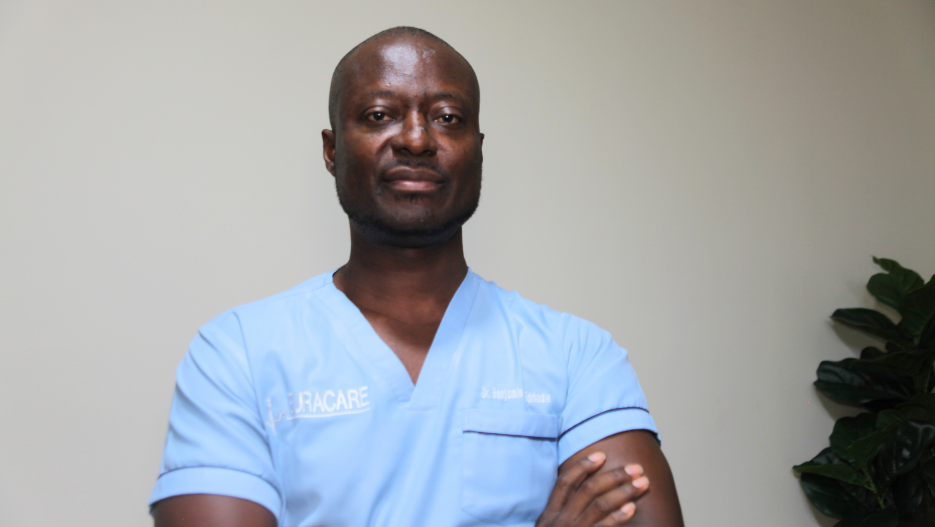
In your capacity as Medical Director of Euracare, how do you define your role in advancing clinical excellence and maintaining consistently high standards of patient care across all departments?
My role is quite significant and very challenging. Euracare came into existence primarily to address specific gaps we identified in the healthcare sector. These included limited access to complex treatments and insufficient provision for emergency care, such as acute heart attacks, strokes, and other critical conditions.
As a result, many people had to travel outside the country to seek certain medical care. Even with immediate access to private air travel, it would take at least six hours to reach destinations such as London or South Africa, by which time valuable treatment time would have been lost. We therefore asked a simple question: why not establish a facility in Ghana that can manage these complex cases locally?
As you can imagine, the standards are quite high. As Medical Director, ensuring that all clinical operations align with these standards is demanding. We benchmark our standards against international best practices.
We also focus closely on key indicators such as mortality and morbidity rates, which are critical measures of quality in any hospital. In addition, we ensure full compliance with accreditation requirements set by the relevant authorities, while maintaining a consistent focus on patient welfare.
Clinical care and governance are demanding areas, but we work diligently to uphold high standards, eliminate gaps, and deliver internationally comparable care here in Ghana.
Building on that, as a multi-specialist hospital, how does Euracare translate its commitment to high clinical standards into tangible practices that enhance patient care delivery and drive excellence across all services?
To maintain these standards, several key factors must be in place. One of the most important is infrastructure. To remain competitive and aligned with global benchmarks, it is essential to invest in state-of-the-art facilities and equipment. We have therefore made significant investments in this area. Much of the equipment in use here is the same as that found in leading international hospitals, often sourced from the same suppliers.
Equally important is having the right people. We place great emphasis on recruiting high-quality human resources, carefully selecting our specialists and consultants. We prioritise individuals with international exposure who understand global standards and best practices. As a result, we are able to offer access to leading specialists across a range of fields.
Beyond infrastructure and personnel, robust systems are critical. Efficient patient flow and well-structured clinical processes are essential to maintaining high standards of care and operational efficiency. These elements form the core pillars of our competitive approach.
At the same time, innovation plays a vital role. It is not possible to deliver care at an international standard while relying on paper-based processes. We therefore invest heavily in hospital information systems and digital solutions that help to minimise human error and improve overall efficiency. The integration of artificial intelligence into some of our diagnostic equipment further strengthens our capabilities. Together, these initiatives enable us to remain competitive on a global scale.
It is clear that your standards align with international benchmarks. Could you highlight a few areas of care where this is especially visible in practice?
Let me begin with a story. About ten years ago, one of my mentors in the medical field faced a difficult situation when his sister was diagnosed with a leaking brain aneurysm. At the time, there was no available treatment in Ghana. He had to fly her from Accra, via Dubai, to India to receive care. During the journey, when they reached Dubai, she developed a blood clot in her lungs. This was an emergency on top of an already critical situation.
Upon arrival in India, the cost of treatment had increased significantly, as her condition was more complex than initially anticipated. In addition to medical expenses, there were substantial costs related to airfare and accommodation, all because the required care was not available locally.
Today, I am pleased to say that over the past eight to nine years, we have been providing such treatments here in Ghana. A leaking brain aneurysm is a life-threatening condition, with a high mortality rate if left untreated. We are now able to manage and treat these cases locally on a regular basis.
For example, we treated a 33-year-old man who had just finished playing tennis when he suddenly developed weakness on one side of his body and lost his ability to speak, clear signs of an acute stroke. He was brought to our facility, and within approximately two hours, we were able to intervene and reverse the condition. This is the level of care we are now delivering, including advanced stroke treatment involving the brain.
Importantly, many of these procedures are performed without open surgery. Using advanced technology, our specialists can access the brain through minimally invasive techniques, often via the wrist or the groin, to carry out highly complex interventions.
We also treat conditions such as arteriovenous malformations (AVM), where arteries and veins connect abnormally. In a healthy system, these do not mix directly. When they do, it can lead to serious complications. We can correct them without open surgery, using endovascular techniques.
In another case, we treated a two-year-old child diagnosed with eye cancer. After one eye was removed, the second eye became affected. To preserve the child’s vision, we administered targeted chemotherapy directly into the eye through a catheter inserted via the groin. Such treatments were non‑existent in Ghana ten years ago.
These are treatments that were not available in Ghana a decade ago. Our aim has been to close these gaps while maintaining standards comparable to those anywhere in the world.
It is worth mentioning the technology that makes much of this possible. The angiography system we use, often referred to as a catheterisation laboratory, is among the most advanced in the region. We have two such systems, including the first biplane system of its kind in West Africa, supplied by Siemens. This technology enhances both accuracy and efficiency. It is equipped with 3D capabilities that allow us to map and simulate procedures in advance. We can plan interventions in detail before carrying them out, effectively creating a blueprint that guides the actual procedure. This significantly reduces the risk of error and improves outcomes.
If this level of care is available in America or England, why should they not be available in Ghana? Our goal is to remain competitive and provide world‑class care locally, eliminating the need for patients to travel abroad for procedures that can be performed right here.
To define Euracare’s competitive advantage, could you outline the main medical issues and specialties you address, and explain how these areas strengthen the hospital’s patient care?
I have already mentioned several conditions, one of which is a brain aneurysm. This occurs due to a weakness in the blood vessels of the brain. Once this weakness develops, it becomes a vulnerable point from which patients can bleed quite easily. It is often described as being like a balloon, and in many cases, we refer to it as a time bomb, as it is simply waiting to rupture, particularly once it reaches a certain size. Without intervention, it can begin to leak, and when that happens, blood accumulates in the brain, leading to a range of serious complications and, ultimately, death if left unmanaged.
This is one of the areas in which we have made a significant contribution over the past eight years. The procedure involves inserting a sheath into the groin and navigating it, under the guidance of the imaging equipment I mentioned earlier, all the way to the brain. Depending on the case, we then deploy titanium coils or stents into the affected area to seal the point of weakness and reconstruct the vessel, effectively stopping the bleeding.
In some instances, we are able to identify the condition before any bleeding occurs and treat it preventatively. This is particularly important, as a rupture can result in severe and lasting consequences for the patient.
Another condition I mentioned is arteriovenous malformation, which occurs when arteries and veins connect in an abnormal way. In such cases, we sometimes need to separate these vessels. What makes our approach particularly remarkable is that we are able to do this without opening the skull. Working through the groin or the wrist, we navigate catheters, guide wires, and other specialised devices into the brain to correct the problem. Most of these procedures are lifesaving. Left untreated, patients can suffer seizures, strokes, or even death. Once treated, however, they are able to return to a normal quality of life. I have seen many patients benefit significantly from these procedures.
I also spoke about a treatment for children with eye conditions. It is called intra-arterial chemotherapy, or IAC, a procedure in which we navigate directly into the artery supplying the eye and deliver chemotherapy treatment to that specific area.
Beyond these, we offer the full range of services known as interventional radiology, which involves treating diseases using imaging-guided technology without making any surgical incisions. For instance, in patients with certain conditions such as liver cancer, we are able to navigate directly to the tumour and deliver chemotherapy to it, effectively controlling its rate of growth. Almost every part of the body through which blood flows is accessible to us, and we are able to address a wide range of conditions in this way.
We also treat patients with uterine fibroids. Fibroids can cause excessive bleeding and anaemia in women, significantly affecting their quality of life. We perform a procedure known as fibroid embolisation, which takes approximately one hour. It is carried out through the wrist, and patients are able to return home the same day. The procedure works by blocking the arteries that supply blood to the fibroids, essentially cutting off their source of nourishment. This causes them to shrink and lose their ability to cause further problems. The results are highly effective, and the procedure has been well received by our patients.
We treat fibroids as well as many other conditions through this approach. In total, I have pioneered over 20 such procedures in Ghana for the first time. When we performed the first brain aneurysm coiling in the country, it was covered by the BBC, and that was in 2019. Since then, we have continued without pause, completing a significant number of cases in this area.
It is clear that advanced technology is central to Euracare’s approach. Could you highlight some additional equipment or innovations that play a key role in your service delivery?
As you saw in our diagnostic unit, we have some of the most advanced equipment available, including MRI machines, CT scanners, mammography units, and ultrasound machines, all of which represent some of the latest technology in the country.
We are particularly proud of our catheter laboratory (cath lab) and its setup. It is not simply about the laboratory itself, but about the full capability it represents, including access to all the specialised devices required for complex procedures. This has enabled us to occupy a unique position in the market, as we are the only facility in Ghana that operates as a ready centre for acute stroke patients around the clock, with the ability to reverse a stroke at any hour of the day. These are some of our strongest areas of distinction, in addition to the diagnostic equipment that other centres may also have. However, these represent our flagship capabilities and set us apart in a meaningful way.
You mentioned reducing the need for medical travel by offering services locally. What impact has this had over the years for Euracare and your patients?
The impact of what we do extends well beyond Euracare. It is, in every sense, a national impact.
Consider the fact that we can reverse a stroke in a 33-year-old man, someone in the prime of his life with a great deal still to contribute to the Ghanaian economy. Had we delayed his treatment, he would very likely have lost the ability to return to work or resume his normal activities. When you treat an individual like that, you are, in effect, contributing to the country’s GDP by ensuring that such talent is not lost to stroke. Without timely intervention, that young man could have faced years of rehabilitation, with no guarantee of ever returning to his working life.
In this particular case, we were able to reverse the stroke almost immediately, and the results were transformational. He has since returned to work and is back to playing tennis.
This is not simply a success for Euracare. It is a success for that young man and his family. In many cases, patients like him are also breadwinners who support their households, which makes their recovery all the more significant.
It is therefore vital that we bring such individuals back on track so that they can continue to contribute to Ghana’s economy. And it is not only him. Many others have benefited from these treatments. As I mentioned earlier, there are people who have lost their lives to brain aneurysms that we are now able to treat.
When you consider the number of lives we are able to restore, the impact becomes clear. We are putting smiles back on the faces of families and ensuring that these individuals are able to continue pursuing their purpose in life.
As we near the end, what would you say builds trust in Euracare, and why should patients choose your facility for their care?
That is a very important question. For a patient to walk through our doors and trust us with their health is, in itself, an act of courage. I always make a point of thanking my patients for placing their trust in me and in this facility.
But why should they trust us in the first place? We have a track record, and we have living witnesses, people who have been here, experienced the quality of our work, and can speak to it firsthand. These days, wherever I go, whether on the golf course, at church, or elsewhere, I encounter people who say, “Thank you, you saved my life,” or “Thank you, you saved my husband.” That, for me, is a source of immense joy.
The trust our patients place in us is not something we take lightly. It is earned. We have invested heavily in this facility, in our infrastructure, and in our people. Even our recruitment process is rigorous. You do not simply walk in and secure a position at Euracare. Every member of staff you encounter here has gone through multiple rounds of interviews, training, and orientation, in addition to holding the relevant professional qualifications.
At Euracare, the patient is at the heart of everything we do. Their safety and their well-being are the driving forces behind our recruitment decisions, our investments, and our commitment to delivering the highest standard of care. We are determined to give our patients nothing short of the best.
As Euracare positions itself as a medical hub, what is your vision for the next three to five years, and what key milestones would you hope to achieve within that period?
I am proud and pleased to say that on a weekly basis, we receive patients from across the West African subregion for various interventions and treatments. During the West Africa College of Surgeons conference, held here in Ghana, nearly a hundred doctors from across the subregion visited our facility, having heard about the work we are doing here. A number of them have since referred patients to us. This facility stands as a testament to what we have built, a truly outstanding centre of which we are immensely proud.
This investment was made for the people. If we had gone to these lengths and seen no patients come through our doors, it would have amounted to a waste of resources. We have therefore made deliberate efforts to engage doctors across the subregion, inviting them to see what we have here. Over the past eight years, several of them have been referring patients to us consistently, and they have been very satisfied with the outcomes, which is why they continue to do so.
Looking ahead, over the next three years, we hope to scale up significantly in terms of medical tourism. We anticipate further investment and are working towards establishing a dedicated oncology centre, so that patients requiring cancer care can receive comprehensive, 360-degree treatment right here at Euracare. We look to the future with great hope and excitement, and we eagerly anticipate a thriving centre with all departments working in close collaboration.
There is a growing recognition within the medical field that no single practitioner can know everything, and this is why collaboration is so essential. Multidisciplinary teamwork is another area in which we take great pride. By the time a patient leaves this facility, their case will have been reviewed and discussed by a team of doctors who have collectively determined the most appropriate course of treatment.
We therefore look forward to even greater activity and deeper collaboration amongst our healthcare professionals, all in the pursuit of delivering the very best outcomes for our patients across every area of care.
Before we wrap up, is there anything you would like to highlight or share with our audience?
You have drawn out responses from me across a number of key areas. I have spoken about innovation, infrastructure, and human resources. One area I have not yet touched on, though it is by no means a small one, is research, as it is something we invest considerable effort in here at Euracare.
Our research begins at the front desk, where we ask patients directly whether they are satisfied with the service they are receiving. When a patient leaves the facility, we follow up with a patient satisfaction survey to identify any gaps or areas for improvement.
Beyond that, research is very much alive in our clinical space as well. Several members of our team hold professorial positions at universities, and our specialists work collaboratively, continually asking what more can be done to improve patient outcomes.
Research is therefore another significant pillar of what we do here, and it underpins our ongoing commitment to excellence.
You are already involved in clinical work that often aligns with teaching hospitals. Is there a long-term vision for Euracare to become a teaching hospital or expand into medical education and training?
One of our long-term aspirations is to establish a medical school here at Euracare, where we can train the next generation of doctors. I do not believe there is any private institution in Ghana that currently possesses the kind of infrastructure we have here. It is therefore something we are very serious about pursuing.
We already have the human resources and the infrastructure in place. Establishing a medical school would be a natural next step, one that would allow us to impart the knowledge and standards we hold dear to the doctors of tomorrow. Several universities have already recognised what we have built here and have partnered with us, sending their students to learn, observe, and gain practical exposure to the procedures and practices we carry out on a daily basis.
In the medium to long term, we are firmly committed to the vision of having a fully operational medical school right here at Euracare.
On a personal note, I serve as an Associate Professor at the University of Ghana Medical School, and many of my colleagues here hold affiliations with various universities across the country. This has created meaningful research collaborations between Euracare and these institutions. We learn from them, they learn from us, and together we contribute to the advancement of medical knowledge and practice. It is very much a mutually beneficial relationship.