
Andersen Consulting Nigeria: Olaniyi Yusuf on Business Transformation, AI and Economic Growth
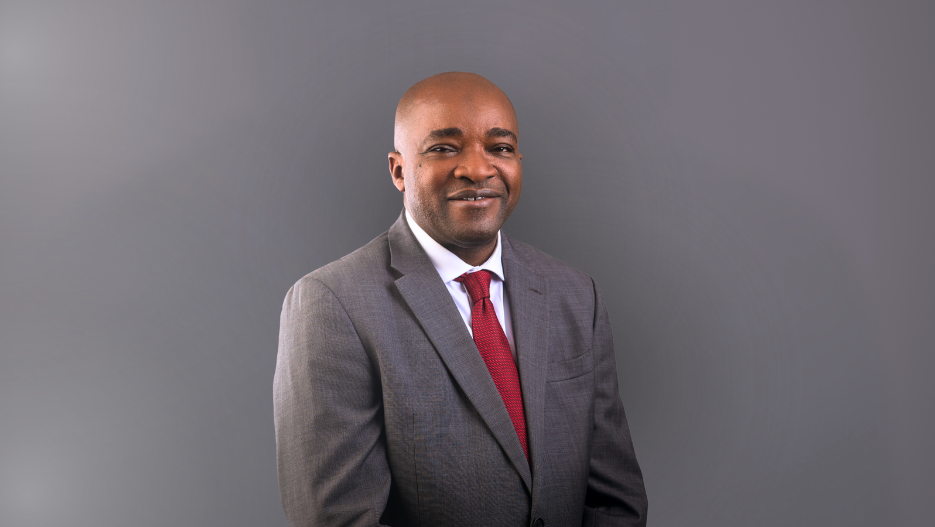
In this exclusive MarcoPolis interview, Olaniyi Yusuf, Managing Director of Andersen Consulting Nigeria, discusses the transition of Verraki to Andersen Consulting, the firm’s expansion across Africa and its role in driving business transformation, digital innovation and economic development in Nigeria.
Olaniyi Yusuf highlights Andersen Consulting Nigeria’s expertise in management consulting, business advisory services, corporate strategy, technology consulting, operational efficiency, organisational development and business transformation consulting in Nigeria. He explains how artificial intelligence, AI adoption, cloud solutions, cybersecurity, technology strategy and digital transformation are reshaping Nigerian businesses. He also examines AI adoption challenges in Nigeria, including data sovereignty, AI infrastructure development, data centres, talent shortages and responsible AI.
The interview explores banking transformation in Nigeria, focusing on electronic KYC, centralised KYC systems for Nigerian banks, fintech innovation, digital banking, customer onboarding, banking cybersecurity, AI governance and digital resilience. Andersen Consulting’s work on shared banking infrastructure and technology standards demonstrates its commitment to financial services consulting and banking modernisation.
Discussing the Nigerian economy and investment opportunities, Olaniyi Yusuf identifies infrastructure investment, electricity generation, power transmission, manufacturing in Nigeria, agro-processing, local cocoa processing, ports, railways and AfCFTA as key drivers of economic growth. He also highlights Nigeria’s potential as a gateway to West African markets and African trade.
Finally, the interview addresses supply chain management, supply chain resilience, import substitution, local production, vertical integration, SME financing and technology adoption among Nigerian SMEs. Olaniyi Yusuf outlines Andersen Consulting’s long-term strategy to support Nigerian business competitiveness, innovation, cross-border expansion and economic transformation across Africa.
Verraki has evolved from an independent Nigerian business solutions firm into an affiliate of Andersen Consulting. What does this transition mean for Verraki’s long‑term strategy, and how does it strengthen your ability to serve businesses in Nigeria and across Africa? First, can you give us a brief background on Verraki and what the transition means?
Verraki is a business solutions company focused on clients in Africa, including government, private sector, and public/not‑for‑profit development partners that are based in Africa or work in Africa. We support clients mainly in Nigeria, but we also have clients in East Africa and in Central and West Africa.
We help them deliver business solutions, which could be a combination of technology, strategy, process, people, operations, using whatever mix is required to either exploit an opportunity or respond to a challenge. We have been doing that for the last six to seven years.
Now we are transitioning to Andersen Consulting to become part of a global firm because, increasingly, the capabilities required are changing. Our clients are expanding beyond Nigeria, and many global firms are also trying to come into the continent. Several firms are coming into Nigeria. Clients are increasingly requesting global affiliations and trusted platforms.
Being part of a global platform gives us three things. First, credibility, through a trusted brand listed on the New York Stock Exchange. Second, access to a platform present in more than 187 countries, which gives us access to more capabilities, talent and expertise across the world. Third, a higher standard of client service, which also helps with staff engagement. It is good for us as a practice, for our staff and for our clients.
Interviewer: With this transition, you already operate across technology and operations. What are your core services today? Will they change? Are you adding more now that Andersen is on board? And how will these help Nigerian businesses improve operational efficiency and manage costs?
In terms of services, there are what I will call our core services as Andersen Consulting, and then there are extended services we can provide by virtue of being part of the Andersen group.
From our perspective as Andersen Consulting, there are four critical service domains (client platforms):
The first is business transformation and technology which focuses on using digital technology, AI, cloud solutions, and related tools to transform the business and fundamentally change its business or operating model. This is our biggest platform.
The second is risk and resilience, which includes cyber risk. As businesses adopt technology, they must also invest in cybersecurity and resilience to ensure their technology systems are robust and reliable, with increased uptime.
The third platform is strategy, covering corporate strategy, technology strategy, marketing strategy, and new growth strategy.
The last is people and organisational development. This covers the organizational structure, operating model, talent, leadership skills, training, and capabilities required to deliver the strategy.
Across the Andersen platform, we also have access to Andersen group companies that provide tax, business valuation, legal services, financial advisory/transactions, and mobility (cross‑border movement of people and services).
So it is a broader bouquet of services we can bring to clients in Nigeria and across borders as they engage in international products, exports, imports, and expansion. It is valuable because clients can access strategy, technology, people, risk, tax, legal, valuation, mobility, and financial advisory, not just in Lagos, but in over a thousand other cities across the world.
Nigeria is widely seen as a digital hub in West Africa, with a lot of competition. What opportunities do you see for Nigerian companies in AI adoption? And what challenges prevent organizations from turning digital investments into measurable business results?
Nigeria is one of the four major hubs for startup investment and activity on the continent, including Kenya, Egypt, Nigeria, and South Africa. Nigeria dominates West and Central Africa, and we have produced over six unicorns.
But AI adoption is still in its early stages. We are beginning to see FinTechs, banks, and professional services organizations using AI and AI agents in some form, and I expect adoption to increase. However, there are challenges.
First is data sovereignty. The Central Bank has rolled out a policy requiring payments data to be localized from January next year. That affects AI, because local data needs to be used to train AI models.
Second is infrastructure. We do not have enough data centre facilities or compute power to run much of the AI infrastructure. So today we are still dependent on platforms in China or the US. Many companies use AI models and LLMs from the US or China, and the question becomes: how do you train them on local data to reflect local context?
Third is talent. We do not have enough AI engineers, data scientists, and machine learning engineers who understand local context and are readily available.
That said, these are also opportunities. Companies are investing massively in data centres, especially around Lagos, and there are companies focused on training software engineers. The direction is clear: AI adoption is important, but it must be done responsibly and in a way that respects data sovereignty.
The transition to Andersen seems designed to make the firm more formidable. What competitive advantages do you see in Nigeria’s competitive business landscape?
First, we are part of a global firm with a multi‑dimensional capability. Many competitors are either pure strategy, pure technology, or audit and tax. The Andersen group has virtually everything apart from audit.
Second is geographic diversity. We are in 187 countries. For any country a client wants to expand into, there is an Andersen firm, meaning a partner we can work with directly within the same global network.
Third is the depth and diversity of skills. We have experts across 187 countries and over 1,001 cities. That diversity includes technical skills, functional skills, and geographic context.
Fourth is entrepreneurial agility. We are nimble and have devolved authority at the local level. We are not waiting for approvals from New York; we can make decisions locally and tap the global pool when needed. That is different from firms that require multiple layers of global approvals.
During this transition period, are there projects you are undertaking or embarking on?
Yes. We started transitioning in July. There are projects in Nigeria, and also projects we are working on with other Andersen firms in Africa. We already have people on the ground in Angola and South Africa supporting projects there. In Nigeria, we have major projects in banking and telecoms, and we are about to close one in oil and gas.
Is it possible to share details?
Some are confidential, but I can describe a few.
In banking, we are working with a group of banks and the Central Bank on electronic KYC. Today, every bank does its own KYC/KYB (Know Your Client/Know Your Business). We are working on a shared, centralized KYC for the entire industry, so if a customer has been KYC’d and profiled by Bank A, that profile is available centrally. When the customer opens an account with Bank B, the process does not have to be repeated. This improves convenience, onboarding speed, and security.
We are also working on technology standards for the banking industry, especially around AI, including what responsible AI should look like in banking.
At the same time, we are working on digital resilience: how to ensure banking infrastructure and services remain stable, resilient, and recover quickly from failures, especially given Nigeria’s varied infrastructure across regions (electricity, internet connectivity, etc.).
Based on your experience across sectors, what are the strongest growth opportunities in Nigeria? Where should investors be looking?
Over the last four or five years, Nigeria has worked hard to stabilize the macroeconomy. Inflation is trending down and is now below 15%. The Naira exchange rate has been stable, and FX reserves are well over $55 billion.
In terms of opportunity areas:
Infrastructure, especially electricity. Nigeria does not generate enough power. Installed capacity is about 13,000 megawatts, compared to Egypt’s 80,000+ megawatts. There is major opportunity across generation, transmission, and distribution.
There is also opportunity in roads, rail, ports, and deep-sea ports, which are infrastructure that supports import/export and movement of goods and people across the country.
That ties into manufacturing and agro-processing, which is also a huge opportunity. Nigeria has a population of over 200 million and significant arable land available for cultivation. But we are still weak on agro-processing, such as turning cocoa into chocolate, for example. We export too much raw cocoa. There is opportunity across the value chain to process locally and add value.
Manufacturing. Nigeria’s population is a strong consumer base, and personally, Nigeria is a gateway to West Africa, a market of about 500 million people, with roughly half in Nigeria. Manufacturing in Nigeria can serve both the domestic market and the wider African market, especially as the African Continental Free Trade Area (AfCFTA) deepens.
With global disruptions, including conflict, oil shocks, and more, how can Nigerian companies improve supply chain management and logistics efficiency, including through technology?
The first thing is diversification. Diversify your input and output sources so that you are not overly concentrated in one area. We have seen what happened with the Russia-Ukraine war and the US-Iran tensions, which disrupted access to fertiliser, wheat and crude oil.
The second is the message the country has been preaching: we must produce and process more locally, and consume more of what we produce. Our import dependency was high before the foreign exchange reforms. We do not yet have a trade surplus, but before the reforms there was a huge trade deficit because we were buying almost everything. Now, with the new exchange rate, there is more local production, and with local production you reduce your import risk and your dependency on trade beyond your borders.
The third is vertical integration. Some companies today are now vertically integrated. Producing a large share of your own inputs, processing them and selling the output may also be important.
Lastly, be more strategic. Build long-term relationships with strategic buyers and sellers, so that in a crisis you are prioritised, as opposed to being a spot transaction. If you do that, you can also hedge as much as possible.
Lastly, be more strategic: build long‑term relationships with strategic buyers and sellers. During crises, long‑term partners are prioritised more than spot transactions, and you can hedge risks better.
SMEs are critical to the economy. Do SMEs really have access to finance and technology to improve their businesses? And how can this be improved?
Access to technology for SMEs has improved dramatically, thanks to mobile devices, mobile networks and mobile internet services. Many SMEs use mobile applications to market their products on platforms such as Instagram and Facebook. They use mobile payments to get paid and mobile apps to manage inventory. That has improved, especially where there is network coverage and smartphone ownership, and more than 100 million Nigerians now have smartphones.
What we still need to work on is access to credit. Access is limited and the cost is high. For most SMEs, the cost of credit is above 30%, and for some it is as high as 40%, because loans are priced at 4% or 5% flat on a monthly basis. Work needs to be done to build a consumer finance culture. However, in a country where inflation is in double digits, it is understandable that credit costs will be in the high 20s or 30s. Access to finance still needs to be improved.
Should it be “Andersen Consulting Nigeria” or simply “Andersen Consulting”?
The legal name is Andersen Consulting Nigeria Limited, but the trade name is Andersen Consulting.
Looking ahead three to five years under the Andersen Consulting platform, what are your strategic priorities? Where do you want to take the firm in terms of Nigerian business competitiveness, innovation, and economic transformation?
From the Andersen Consulting standpoint, we have a few priorities over the next four to five years.
First, we want to be a major part of the ongoing modernization and transformation of the Nigerian economy. We are already doing that in banking through shared services like centralized KYC, and we expect to do similar work across key industries, including banking, insurance, oil and gas, telecoms, and the Nigerian economy at large.
Second, we want to be an employer of choice, especially for local talent, undergraduates, and Nigerian diaspora professionals who want to return with technology or consulting experience.
The third is our ability to bring the best of Anderson worldwide into Nigeria and the continent, so that Nigeria and Africa play an important part in the Andersen global network. Africa is a very small percentage of global trade. We want Andersen Consulting Nigeria to be a significant part of Anderson globally, through our contributions, our innovation and the value we create for our clients. As clients expand, there is an opportunity for us to grow with them and scale our support. Today, Nigerian banks operate in well over 20 countries on the continent.
In the next five years, I would like to see us as an important part of the transformation and growth of the Nigerian economy and of our clients as they expand within Nigeria and across countries, and as a big part of the growth of Andersen globally.