
One-stop center for investors in Ethiopia by Ethiopian Investment Agency
Ethiopian Investment Agency is working hard to become a one-stop investment center for investors in Ethiopia. It has already started providing about 29 services.
List of all articles filed under “africa-reports” category.
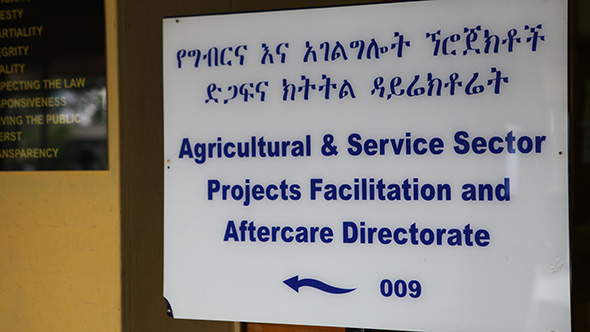
Ethiopian Investment Agency is working hard to become a one-stop investment center for investors in Ethiopia. It has already started providing about 29 services.
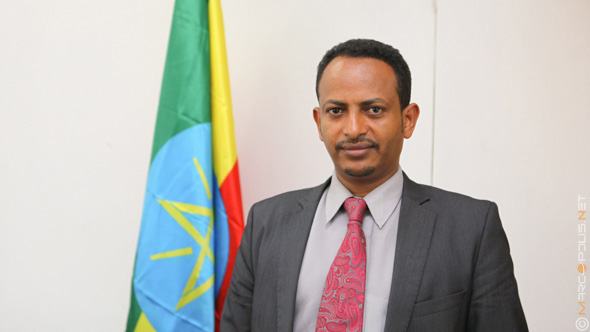
“The policy has been reviewed many times to suit the requests of different investors,” explains Fitsum Arega, Director General of Ethiopian Investment Agency.

Ethiopia Sector Analysis
Ethiopia’s agriculture: Analysis of agriculture production and its trends in Ethiopia
In Ethiopia, where over 82% of the total population lives in rural areas, agriculture is the major means of earning a living. Taking about 43% of the country’s overall GDP, agriculture has been leading Ethiopian economy for years.
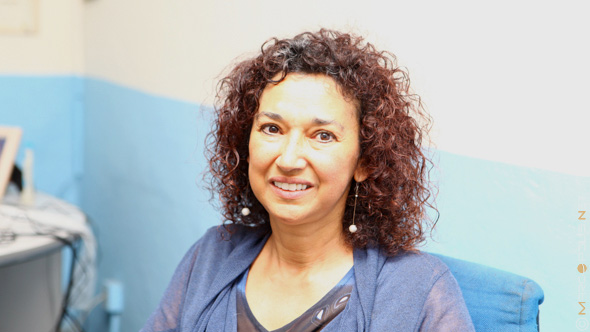
Sonia Pasqua, General Manager of Pasqua Giuseppe
Pasqua Giuseppe will be celebrating its 50th anniversary next year. Its segment is the metalwork; it manufactures aluminum and steel products and components. The company constructs everything from the canopy to the tankers underground. Pasqua was the first company in 2000 to receive the quality certification for the production of oil tankers and it has so far received multiple quality certifications from international giants like Shell and Total.

Top Travel Companies in Ethiopia
In Ethiopia, where tourism potential is immense, there about 370 tour and travel agencies, some of them mainly involved in car rentals. The following travel companies are the top travel companies in Ethiopia in terms of the number of tourists they attracted to Ethiopia and the total amount of money they earned. The ranking was devised with respect to a recent report compiled by the Ministry of Culture and Tourism for the 2012/13 fiscal year. Even though the ranking remains subjected to fluctuations, the list of the top travel companies in Ethiopia will always include Green Land Tours & Hotels, Jacaranda Tours, Grant Express Travel and Tours Services and Travel Ethiopia. Green Land Tours & Hotels ranks as the best travel company given their history and experience in the tourism industry in Ethiopia.
Green Land Tours & Hotels – the top travel company in Ethiopia
The top travel company in Ethiopia—Green Land Tours & Hotels— is present not only in Ethiopia but also in neighboring countries such as Tanzania, Kenya, Sudan and Djibouti. The top travel company in Ethiopia managed to attract 1,225 tourists to Ethiopia during the 2012/13 fiscal year. Green Land Tours & Hotels owns its own hotels in the southern part of Ethiopia and was able to collect about 3.6 million USD and 47,140 Euro during the last fiscal year.
Jacaranda Tours
Jacaranda Tours ranks second in terms of the number of tourists it was able to attract during the 2012/13 fiscal year (about 1,700 tourists). When it comes to the revenue it earned throughout the same period, Jacaranda Tours was surpassed by Green Land Tours & Hotels by a large margin; Jacaranda earned 1.8 million USD.
Grant Express Travel and Tours Services
According to the report by the Ministry of Culture and Tourism, Grant Express Travel and Tours Services attracted 2,050 tourists to Ethiopia in the 2012/13 year and collected a revenue of roughly 1.6 million USD and 75,959 Euro.
Travel Ethiopia
Travel Ethiopia is run by experienced professionals like Samrawit Moges, a woman who had been working for the sole tour and travel agency in Ethiopia (state-owned) during the military socialist Dergue regime. Travel Ethiopia attracted 1,342 tourists in the 2012/13 fiscal year and earned a total of 1.6 million USD during the same period.
Top Real Estate Companies in Ethiopia
Following the high demand for the housing and the rise of the middle class in Ethiopia, the real estate sector is now flourishing more than ever. During the last decade, more than 200 new real estate developers have emerged. The following real estate players represent the top real estate companies in Ethiopia, among them GIFT Real Estate and Flintstone Engineering, two well-known and well-established real estate companies in the country.
GIFT Real Estate
GIFT Real Estate has been present in the real estate market for a decade and has established itself as one of the most popular real estate developers in the country. GIFT Real Estate is currently working on a project in the east of Addis where the company is building villa houses, townhouses and apartment houses for their clients.
Flintstone Engineering
Flintstone Engineering has been involved in the construction sector in Ethiopia since 1991 and recently joined the real estate sector (Flintstone Homes). Within those five years Flintstone Engineering grew into one of the top real estate developers in Ethiopia.
Ayat Real Estate
Ayat Real Estate is another key real estate developers in Addis Ababa. There is an area in Addis called Ayat following the development of a large number of real estate properties in that specific area.
Habitat Real Estate
Habitat Real Estate was the first one to introduce real estate development in Ethiopia, when it receiving a large plot of land during the socialist regime of Dergue.
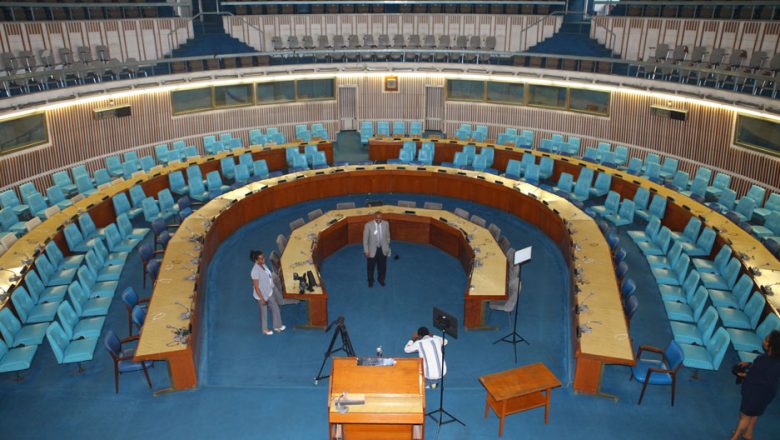
Key Ministries in Ethiopia
Ministry of Foreign Affairs
Ministry of Culture and Tourism
Ministry of Communication and Information Technology
Ministry of Finance and Economic Development
Ministry of Trade
Ministry of Industry
Ministry of Agriculture
Ministry of Health
Ministry of Education
Ministry of Mines
Ministry of Water and Energy
Ministry of Women’s, Children and Youth Affairs
Ministry of Labor and Social Affairs
Ministry of Justice
Ministry of Federal Affairs
Ministry of Defense
Ministry of Civil Service
Ministry of Transport
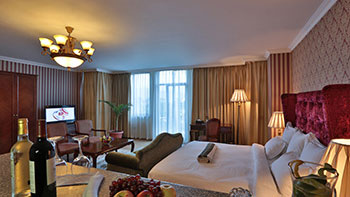
Best Hotels in Ethiopia
The hospitality industry in Ethiopia is indeed flourishing even though it remains to be labelled as ‘infant’ when compared to the huge demand that emanates from the fact that Ethiopia—and especially its capital Addis Ababa—is progressively becoming a hub for (political and economic) conferences and meetings in Africa.
We have put down a list of the best companies in the hospitality / hotel industry in Ethiopia. The first two best hotels in our best hotels list could be labelled as newcomers while Hilton Addis has already been in business for almost half-century.
The best hotels in Ethiopia include Intercontinental Addis, Residence Suite Hotel, Radisson Blu, Hilton Addis and Sheraton Addis.
Intercontinental Addis Hotel
Intercontinental Addis Hotel has joined the network of hotels in Addis Ababa only two years ago and it is one of the few five star hotels in the country. Intercontinental Addis Hotel is currently expanding its base in Addis and will be soon opening new branches in other parts of Ethiopia.
Residence Suite Hotel
Residence Suite Hotel is a very new addition to Addis hotels as it only opened in May 2013. Residence Suite nevertheless became one of the best and most popular places to stay in Addis Ababa and is very valued for its high quality services. The hotel offers luxury accommodation in spacious suites, and therefore is suitable for both short-term and long-term staying guests.
Hilton Addis
Sheraton Addis
Radisson Blu Hotel, Addis Ababa
Top Construction Companies in Ethiopia
The construction sector in Ethiopia is certainly booming following the huge public investment. A number of privately owned construction companies have emerged as a result. The following list summarizes the top construction companies in Ethiopia, which are involved directly in construction and engineering and usually offer multi-disciplinary services. Among the leading construction companies are MIDROC Ethiopia Construction, Sunshine Construction, Saba Engineering and Flintstone Engineering. We have also included the top provider of construction machinery in Ethiopia—Baraton Trade.
MIDROC Ethiopia Construction
MIDROC Ethiopia Construction is a MIDROC Group affiliate and represents one of the largest construction companies in Ethiopia. MIDROC Ethiopia Construction was established in 1993 with a total investment of 500 million Birr. Ever since its inception, the company has been engaged in a wide range of construction activities, including the construction of Sheraton Addis Hotel, African Union Conference Hall & Office Complex, Ethiopian Airlines Cargo Terminal and others.
Sunshine Construction
Saba Engineering
Being present in the construction sector in Ethiopia for about two decades, Saba Engineering is now participating in huge projects inside the country and the company also works in the neighboring countries such as Kenya and South Sudan. Saba Engineering offers multi-disciplinary engineering services and is mainly known for its water drilling services as well as its involvement in huge public projects, e.g. the Ethiopian Grand Renaissance Dam.
Flintstone Engineering
Top Provider of Construction Machinery in Ethiopia
Baraton Trade
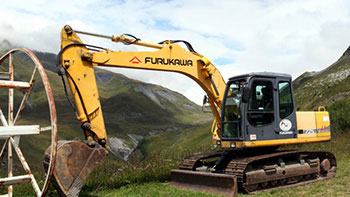
In addition to the construction companies above, there are some companies which are limited to supplying construction machinery such as bulldozers, excavators, mixer trucks, etc. Baraton Trade is at the forefront in this particular area of construction business. Baraton Trade is an agent for Furukawa, a provider of drilling machinery from Japan. The company is the top provider of construction machinery not only in Ethiopia but also in other states in East Africa.
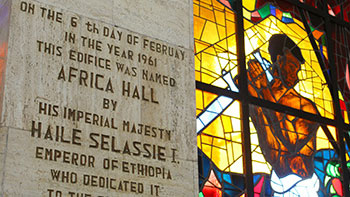
Top Conference Centers in Ethiopia
Ethiopia is gradually becoming a political hub for Africa and the current supply of conference services is relatively inadequate when compared to the huge demand. For the time being the number of conference centers remains rather limited. The top conference centers in Ethiopia are the United Nations Conference Center, the African Union Conference Center and Office Complex and the Addis Ababa International Convention and Exhibition Center. All of them offer services for local, regional and international conferences and meetings.
United Nations Conference Center
African Union Conference Center
Addis Ababa International Convention and Exhibition Center