
Princess Layo Bakare Okeowo on FAE Limited, Nigerian Manufacturing and African Expansion
In this interview, Princess Layo Bakare Okeowo, CEO and Chairman of FAE Limited, discusses the growth of FAE Nigeria into the largest envelope manufacturer in Nigeria and a leading name in Nigerian manufacturing. She explains the company’s journey in envelope manufacturing, paper conversion, security packaging and sustainable manufacturing, highlighting security envelopes, tear resistant envelopes, RFID protection, RFID sleeves, barcoded products and Eco Fine paper, a biodegradable A4 copier paper proudly Made in Nigeria.
The interview explores manufacturing in Nigeria, the Nigeria manufacturing industry, African manufacturing and the challenges and opportunities facing Nigerian manufacturers and manufacturing companies Nigeria. Princess Layo also discusses paper manufacturing, the paper industry Nigeria, paper manufacturing Nigeria and plans to establish a paper mill Nigeria through international partnerships. FAE is seeking paper manufacturing partners Nigeria, machinery and technology to develop local paper production and reduce Nigeria’s dependence on imports, creating significant industrial investment Nigeria and manufacturing investment Nigeria opportunities.
FAE’s African expansion covers Ghana, Côte d’Ivoire, Burkina Faso and wider ECOWAS trade, with opportunities for ECOWAS manufacturing, contract manufacturing, Nigerian exports, African expansion and ECOWAS business opportunities.
Princess Layo also addresses women in manufacturing, women entrepreneurs Nigeria, women in business Nigeria, female leadership Nigeria and Nigerian business leaders, advocating greater opportunities for women. The discussion covers digitalisation in Nigeria, the Nigeria postal system, technology and sustainable manufacturing.
Finally, she discusses the Lagos Chamber of Commerce, LCCI, Lagos International Trade Fair, Nigeria trade fair and Africa trade fair, highlighting B2B opportunities, ECOWAS partnerships, African business and Nigeria business opportunities.
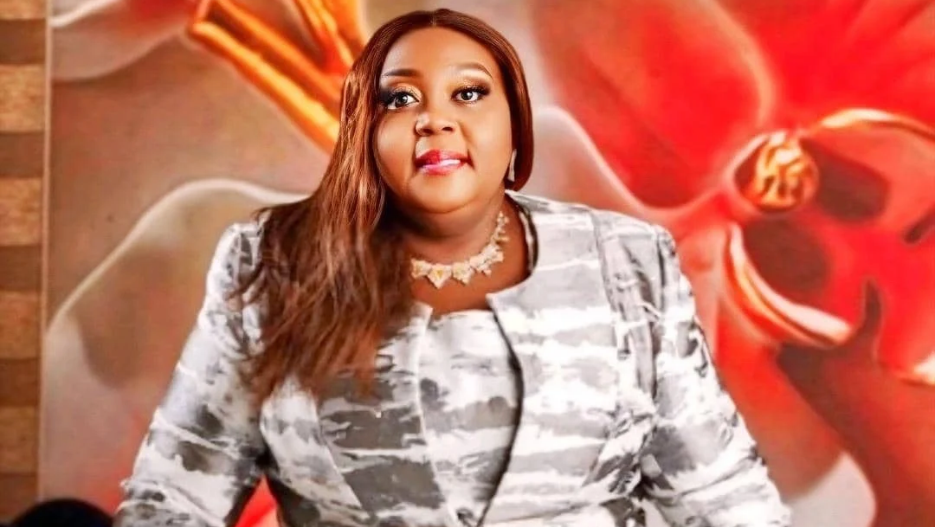
FAE Limited has been in business for more than 50 years, which is a significant milestone. Could you tell us about the company, its journey and the scope of its business?
Thank you very much. I am the CEO and Chairman of FAE Limited. We are the largest envelope manufacturer in Nigeria. I joined the company more than 40 years ago. The company was established by my late mother, Princess Florence Iyabode Adu Bakare. She was a teacher and was also merchandising biros and pencils. Whenever I was on holiday, I was always at her beck and call, trying to find out how I could help her. She was a single mother, and I felt for her. Whenever I had some free time at school, I would return home to see how I could help.
On one of those occasions, I visited Wale Adenuga Productions. Papa Ajasco was very popular at the time. They were talking about IPEX, the international printing exhibition in Birmingham, and I became interested. I usually spent my holidays in England, but that year I decided to forgo my holiday and make it a business trip. When I got there, I met several envelope manufacturers, printers and other companies exhibiting at IPEX. I looked at the machines and asked about their prices.
I was involved in the accounting side of our business at the time, although I am not an accountant by profession. I looked at our balance sheet and, when I returned home, I told my mother, “Why do we not start making these envelopes ourselves?”
The first thing she said was, “Layo, you are too ambitious. Let me remain the way I am.”
I said, “No, I do not want you to remain the way you are. I want you to become a manufacturer because manufacturing is the bedrock of every economy.”
She was reluctant, but I insisted. I suggested that, if she did not want to go directly into manufacturing, we could begin by importing paper.
At that time, you had companies such as Apex Mill, Pyramid, and Thomas Wyatt. The normal practice was that, if you needed a consignment, you might deposit about NGN 2 million. Imagine NGN 2 million about 40 years ago. When the consignment arrived, they might give you materials worth only NGN 1 million and tell you to wait for another consignment.
I looked at the return on investment and saw that too much capital was being tied down. You could deposit NGN 2 million for approximately six months and, when the consignment arrived, receive only NGN 1 million worth of materials. It did not make sense.
My mother still had reservations, and I told her, “Why do you not look at me as a prodigal daughter? I will come back whenever I go wrong.”
At that point, she agreed and gave me the money. I had approximately USD 20,000. At the time, the exchange rate was around NGN 4.50 to USD 1. I imported the paper, and even before it reached the shores of Nigeria, I had sold it. That was when she started trusting me and agreed that we should go into manufacturing. When I entered manufacturing, I started by buying second-hand machines. Unfortunately, I was defrauded. People often talk about Africans defrauding others, but in this case it was a white man who defrauded me. It was very difficult for me to accept. I was a young woman and lacked experience. Then another shock came when I lost my mother in 1989.
I looked at myself and wondered whether I was capable of running the company. But I had to pick up the pieces, build confidence in myself and travel back to England.
I had paid the man GBP 58,000. He told me that he was sorry, that he had gone bankrupt and that I should file a claim in the bankruptcy proceedings. I rejected that. He said he would call the police. I told him he could call the police because the British Government knew I was in the country and had issued me a visa. All I knew was that I had paid him and expected him to supply what I had purchased.
There was a great deal of back and forth. The police became involved, and the Federal Ministry of External Affairs became involved. To cut a long story short, I never recovered my GBP 58,000.
I returned to Nigeria extremely upset. However, I had a great passion for manufacturing and did not want to live on pity or say, “Please pity me because this happened to me.”
I started speaking to banks and eventually contacted the old Owena Bank. It has since been absorbed into larger banking institutions, but at the time the bank lent us the money we needed.
We brought in the machinery and successfully started manufacturing. Today, we are the largest envelope manufacturer in Nigeria. That was the beginning of our manufacturing journey.
What is the scope of the business today? What products do you manufacture, and what differentiates FAE Limited within Nigeria’s manufacturing industry?
When I tell people that I manufacture envelopes, they are often surprised and ask where we sell them. However, envelopes generate a reasonable turnover for FAE.
We have created a niche by producing products that are not common. We manufacture conventional white and brown envelopes, but we also manufacture tear-resistant envelopes.
We were the first to introduce this type of product into Nigeria’s manufacturing space. The envelope is tear resistant and waterproof. If somebody opens it, the word “VOID” appears, showing that it has been tampered with. It is useful for elections. There are many election-related litigations. We do not have a problem with card readers, but those systems still depend on internet connectivity. This product does not depend on the internet. You simply place the ballot papers inside and seal the envelope.
When it reaches the collation centre, it can be opened. If it has already been opened before arriving at the collation centre, you immediately know that it has been tampered with and the contents should no longer be regarded as secure.
That is one of our niches. We manufacture security envelopes and supply them across the ECOWAS region. Another area is RFID protection. For example, ATM and payment cards contain chips carrying information. We manufacture RFID-protective sleeves for cards. If somebody with fraudulent intentions has equipment capable of accessing a card nearby, an RFID-protective sleeve helps protect the card.
We therefore do not focus only on conventional envelope manufacturing. We operate on the security side of the business. When customers do business with us, we want them to think about the security of their business as well.
For companies dealing with significant inventories, we also produce barcoded products that can help them control stock and reduce the risk of items being stolen by staff or others.
That is what makes us different. At the same time, we continue to manufacture conventional products such as plain white envelopes, brown envelopes and window envelopes.
Window envelopes are particularly useful for banks and microfinance banks. You do not have to write the address on the envelope by hand. You can print the document, place it inside, and the address is visible through the window. They are useful for statements of account, annual reports, dividend warrants and similar documents.
We therefore serve different segments of the market, with banks among our highest-volume customers because of their emphasis on security.
You recently launched Eco Fine A4 Copier Paper. What makes that product different?
That is correct. The beauty of Eco Fine is that it is biodegradable.
Across the world, there is much greater awareness of the need to protect the environment and keep it healthy. FAE brought this product into the Nigerian market, and we are producing it proudly in Nigeria.
It is smooth, it does not jam, and the quality of the printing is very sharp. It is proudly produced by FAE.
Technology is also becoming increasingly important to the company, particularly with products such as RFID protection and your security packaging solutions. What impact has technology had on FAE Limited and its growth?
I also want to use this opportunity to appeal to the Federal Government of Nigeria. In countries such as the United Kingdom, the United States and Canada, the postal system is still functioning. In Nigeria, our postal system is not functioning as it should. We have adopted the idea of digitalisation, but in some respects we have adopted it incorrectly. Without technology, we would not even be having this interview. Technology is one of the best things that has happened to the world. We have nothing against technology or email.
However, approximately two years ago, federal parastatals were told to go digital. What happens to retirees who have worked for us for many years and are living in remote areas?
Does the Federal Government have the resources to install fibre-optic infrastructure and internet connectivity throughout Nigeria? The answer is no.
Even in the United States and the United Kingdom, there are remote areas where postal services still help people receive information. It is partly because of the inactivity of our postal system that companies such as DHL and FedEx are doing well. There is revenue being lost because we do not have a sufficiently effective postal service. I say this without prejudice to NIPOST. Much of this depends on policy.
This is why private companies have created their own niches. We are appealing to the Federal Government to make our post offices work. Life is about equity. What happens to an elderly man in a remote village? What happens to an elderly woman who wants to communicate with her son in Paris and cannot afford to send a courier? We want our post offices to work. Digitalisation is one of the best things that has happened to the world, but we should not kill one business, or multiple investments, because of the inactivity of another.
For example, with annual general meetings, several years ago we had printed annual reports. Today, we could have 50 per cent of annual reports in physical form and the remainder online. We are not complaining about digitalisation.
The Government should not cry more than the bereaved. We have invested heavily in machinery, running into billions of naira. We want to survive. We do not want to be suffocated, and we do not want to die.
FAE distributes products across African markets. Which countries are you currently supplying, and what are your expansion plans?
We are expanding. We currently sell to Ghana and other countries, and we supply envelopes to a number of organisations in Ghana.
At present, we are in Ghana, Côte d’Ivoire and Burkina Faso, among other markets.
We are also looking for partnerships across the ECOWAS region. Nigeria is hosting the Intra-African Trade Fair next year, so I am open to signing memoranda of understanding and agreements with partners in other ECOWAS countries.
We have not signed an MOU in Ghana. We simply supply customers there, and we are doing well. However, it would also be interesting to explore contract manufacturing for the ECOWAS region because we have the facilities to do it.
Let us talk about your leadership role. As a manufacturer and a leader within the Lagos Chamber of Commerce and Industry, what are the biggest challenges currently facing businesses in Nigeria, and how is the organisation trying to address them?
I want to make it clear that I am speaking here as Princess Layo Bakare-Okeowo. I am still the Vice President of the Lagos Chamber of Commerce and Industry, but these are my personal comments.
At the Lagos Chamber of Commerce and Industry, we undertake a great deal of advocacy on issues that create obstacles to doing business for our members.
On some issues, the Federal Government listens. On others, we are still talking, and we will continue talking.
Women make up a significant part of FAE’s workforce, and you have been a strong advocate for women and women’s leadership. What have you learned about female leadership and women’s participation in Nigeria’s manufacturing sector?
Thank you very much. I enjoy this question. First and foremost, with due respect to men, women are very detailed. If you look at my story from the beginning and all the obstacles I went through before getting to where I am today, I am not sure everybody would have continued. If you look at many Nigerian banks, you will also find women in senior leadership positions.
If you lend money to 10 women, almost 90 per cent will come back and repay it. When it comes to men, perhaps around 60 per cent will come back and repay. I say that without prejudice. Women are strong and intelligent. There is even science suggesting that a 40-year-old woman can be more intelligent than a 60-year-old man.
If you look at businesses run by women, you will find women who are leaders. We are an unstoppable train that is moving and will keep moving.
My appeal to men, not only Nigerian men but men everywhere, is to give women a chance.
I am not the kind of advocate who says women should always live on grants. No. We want to borrow. We want to pay interest. We want to be honest in whatever we are doing, and we want to demonstrate that we are strong and agile.
Women are now holding one another’s hands. We are also supporting rural women in villages and helping them come on board.
We want women to rise. We want women even in the corridors of power. We want a woman to lead Nigeria one day.
Looking ahead over the next five years, what is your vision for FAE Limited? After more than 50 years in business, what would you like the company to achieve in Nigeria and across Africa?
I want to have a factory in the United Kingdom. I want FAE to have approximately 10 manufacturing operations across the ECOWAS region, and also in Europe and the United States. I inherited this company from my late mother. After she died in 1989, I carried the business forward. My son has also been working with FAE for approximately 16 years. Before I retire, I intend to establish these additional manufacturing units abroad.
I am 65, so I am getting closer to retirement. My son, Adeleke Adeleye, has been with us for 16 years. He also studied in the United Kingdom, and he is capable.
What other projects are you currently working on as a business?
We have been at our present location for many years. Hopefully, before the end of next year, we will relocate our factory along the Lagos-Ibadan Expressway.
The project is approximately 80 per cent complete.
Hopefully, when we speak again around this time next year, we will be operating from a bigger factory.
Are there also new projects involving your products?
Revealing those would mean giving our secrets to our competitors. This interview will be seen by people around the world, and every business has its secrets. Without secrets, there is no business.
FAE has been operating for 52 years, and the business continues to move forward. I represent the second generation, and the third generation is already working with me and knocking at the door.
We intend to remain among the movers and shakers in envelope manufacturing and paper conversion, not only in Nigeria but internationally. One area I can discuss openly is paper manufacturing. We are interested in finding partners for a paper mill.
Egypt has approximately 25 paper mills, while Nigeria has around four or five. This is an area that interests me, and I am looking for partnerships.
We want to manufacture paper in Nigeria because we have raw materials here. We have species such as Gmelina, and we have kenaf, which can be used to produce good paper. What we need are the machinery and the technology.
I am open to partnerships in paper manufacturing.
A tonne of paper costs approximately USD 1,300. The raw materials are readily available in Nigeria. I want partners, and I believe there is a major opportunity.
Nigeria spends almost USD 3 billion every quarter importing paper into the country. I have the facilities and the property where the machines can be installed. What I need is the technology. I would prefer a partner who already owns a paper mill so that we can avoid many of the problems associated with starting from scratch. A foreign partner would not be partnering with an unknown start-up. They would be working with an established company that has been in the paper business for many years.
I have the facilities and the land required. What we need are the machinery and the technology.
My final question concerns the Lagos International Trade Fair. In your capacity as Vice President of the Lagos Chamber of Commerce and Industry, what has been the purpose and impact of the fair over the years, and why should businesses participate?
One thing people need to understand about the Lagos International Trade Fair is that this year is our 48th year. There may be many trade fairs taking place in Nigeria, but ours is the largest. It is one of the largest in Africa. We have the Africa Hall, where you have countries such as Ghana, Côte d’Ivoire and Burkina Faso represented in one place.
Attending the Lagos International Trade Fair therefore means that you are talking to Africa.
When you look at the population, it is approximately 1.3 billion. I am not talking only about Nigeria. I am talking about the ECOWAS region. The Lagos International Trade Fair is therefore the place to be.
Through the Africa Hall, you are engaging with Africa, but you are also engaging with Europe and the Far East. You have a Chinese pavilion and JETRO, representing Japan.
There is a great deal happening. We also have the creative industry, and we expect almost 2,000 exhibitors. The fair will take place from 6 November to 15 November. The dates have not changed because we are ready.
We also have a dedicated B2B facility, where businesses can meet, strike deals and seek new opportunities.
You have many of the major business players. Zenith Bank is the banker of the fair, and you have companies such as Dangote participating.
Dangote has made Africa proud, so people should come and see what the company is doing and where their money is being invested.
You will also Cadbury and many other major companies. We have already partnered with them, and they are coming.
State governments will also be represented at the fair.
The President of Nigeria, Asiwaju Bola Ahmed Tinubu, is expected to open the fair, while the Governor of Lagos State is expected to close it. That is the tradition. We have the experience and the expertise. It is the place to be.