
Benin Economy 2026: Growth, Investment Opportunities and the Next Phase of Economic Transformation
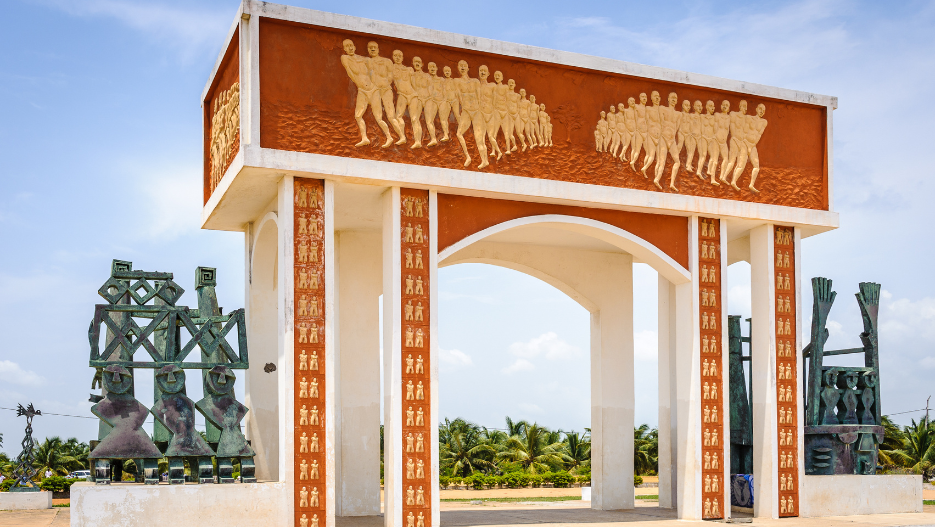
Benin is emerging as one of West Africa’s most interesting economic transformation stories
The Republic of Benin is entering a new phase of economic development. For decades, the country was primarily associated with agriculture, cotton production, informal commerce and the strategic Port of Cotonou, which serves not only the domestic economy but also neighbouring and landlocked markets across West Africa.
That model is changing.
Benin is increasingly seeking to position itself as a production, processing, logistics and services economy. Large investments in industrial infrastructure, the modernisation of the Port of Cotonou, the expansion of the Glo Djigbé Industrial Zone, improvements in electricity and digital connectivity, new tourism infrastructure and reforms intended to attract private capital are gradually reshaping the country’s economic structure.
The numbers are significant. Benin recorded estimated real GDP growth of 8.1% in 2025, compared with 7.5% in 2024, according to the African Development Bank. Growth in 2025 was particularly strong in public works, textiles and agribusiness. Inflation remained exceptionally contained at approximately 1.1%. The African Development Bank expects growth of around 7.0% in 2026 and 7.1% in 2027, while the Beninese government’s own projections are somewhat stronger, at around 7.5% for both 2026 and 2027.
This places Benin among the faster-growing economies in West Africa.
The World Bank estimates that Benin’s GDP reached approximately US$24.6 billion in 2025, with GDP per capita of approximately US$1,658.
These figures still describe a relatively small economy. Yet size alone understates Benin’s potential. Its geographical location next to Nigeria, its access to the Gulf of Guinea, its membership of regional economic organisations, its improving infrastructure and its increasingly explicit strategy of converting agricultural commodities into manufactured exports give it economic significance beyond the size of its domestic market.
The central question for investors is therefore no longer simply whether Benin can grow.
It is whether the country can transform several years of high economic growth into a sustainable private sector led economy capable of generating industrial jobs, exports, rising productivity and stronger purchasing power.
The evidence in 2026 suggests that this transformation is underway, although important structural constraints remain.
1. Benin’s economic position at a glance
Benin had a population of approximately 14.5 million in 2024, and its location gives it unusual strategic relevance. The country has approximately 121 kilometres of Atlantic coastline and borders Nigeria, Niger, Burkina Faso and Togo. It sits at the intersection of the Abidjan Lagos corridor and the Cotonou Niamey corridor, giving it access to one of Africa’s most densely populated coastal economic regions as well as the Sahelian hinterland.
Its currency, the West African CFA franc, is shared with other members of the West African Economic and Monetary Union and is linked to the euro. For investors, this provides a degree of monetary and exchange rate predictability that is absent from some neighbouring markets.
The economy is diversified across services, agriculture, construction and an increasingly important manufacturing base.
Services remain the largest contributor to growth. Trade, transport, logistics, telecommunications, financial services and public services play important roles.
Agriculture remains fundamental. Official investment promotion data indicate that agriculture accounts for approximately one-fifth of economic output and remains particularly important for employment, rural incomes and exports. Cotton is the country’s traditional flagship export crop, alongside cashew nuts, soybeans, pineapple, maize, rice, cassava and other agricultural products.
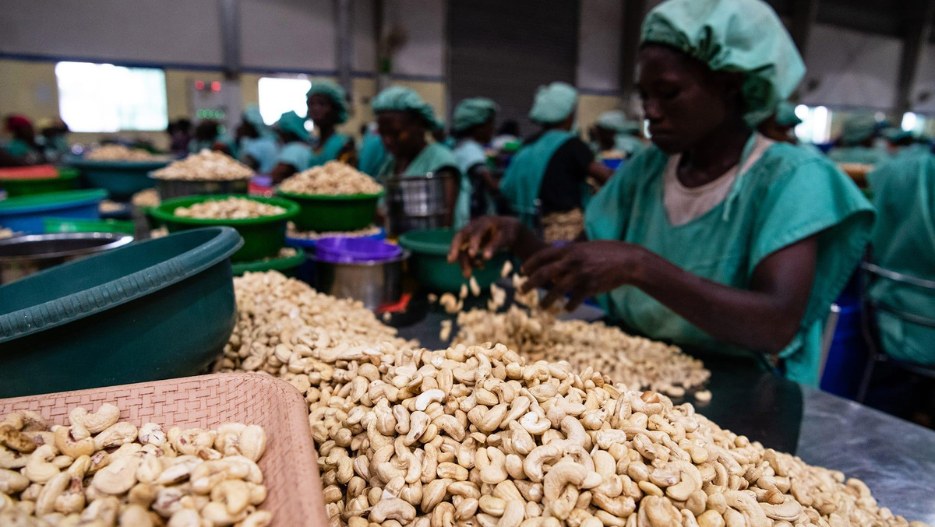
Industry is becoming more important. Textiles, food processing, construction materials and other manufacturing activities are increasingly being developed as Benin attempts to process locally what it previously exported in raw form.
That shift from exporting commodities towards exporting processed products is arguably the most important economic development taking place in Benin today.
2. Economic growth has accelerated significantly
Benin’s recent economic performance has been unusually strong.
Real GDP expanded by 7.5% in 2024 and approximately 8.1% in 2025. The African Development Bank attributes the 2025 performance particularly to public works, which grew by approximately 9.8%, textiles at approximately 9.3% and agribusiness at approximately 8.4%. Investment and stronger exports were major contributors on the demand side.
The World Bank similarly reports that services and industry have become major engines of growth. Trade and transport performed strongly, while manufacturing and construction continued expanding. Agricultural growth also remained positive, supported by crop diversification and modernisation.
This matters because Benin’s growth is becoming broader.
Historically, fluctuations in trade through the Port of Cotonou, agricultural production and commercial relations with Nigeria could have an outsized influence on economic performance. The economy remains exposed to all three factors, but industrialisation and infrastructure investment are creating additional sources of growth.
An IMF analysis of Benin’s structural transformation noted that private investment increased from roughly one sixth of GDP in 2016 to close to one third by 2023. Foreign private investment also expanded substantially from a relatively low starting point. The IMF found signs that Benin’s dependence on its traditional port centred economic model is gradually declining, although economic diversification remains incomplete.
That distinction is important.
Benin has not yet become a diversified industrial economy, but it is moving in that direction.
3. The economic outlook for 2026 and 2027 remains favourable
The outlook remains strong by both regional and international standards.
The African Development Bank forecasts real GDP growth of approximately 7.0% in 2026 and 7.1% in 2027. Its latest July 2026 country report expects the fiscal deficit to decline towards approximately 2.6% of GDP in 2026 and 2.4% in 2027.
The IMF also expects economic momentum to remain strong, supported by industrial zones, higher value exports, information and communications technology, tourism and infrastructure investment. Over the longer term, however, the IMF expects growth gradually to move closer to an estimated potential rate of around 6%.
This gives investors an important distinction between two periods.
Between now and approximately 2027, Benin could continue experiencing unusually high growth generated by major investment programmes, industrial expansion and infrastructure development.
Beyond that period, sustainable growth will increasingly depend on productivity, private investment, exports, skills, energy availability, competitiveness and the ability of local businesses to grow.
The next stage is therefore more difficult than the first.
Building roads, ports and industrial zones creates capacity. The challenge thereafter is to ensure businesses use that capacity profitably.
4. Inflation is one of Benin’s current macroeconomic strengths
Inflation has remained remarkably moderate compared with many African economies.
Consumer inflation averaged approximately 1.1% in 2025, following approximately 1.2% in 2024.
The CFA franc monetary framework, favourable agricultural conditions and relatively stable imported petroleum product prices have all contributed.
The African Development Bank expects inflation to remain below approximately 2.5% over 2026 and 2027, while the IMF expects inflation to remain close to the regional central bank’s 2% objective over the medium term.
Low inflation is economically important because it protects household purchasing power, lowers uncertainty for businesses and creates a more predictable investment environment.
For international investors comparing Benin with economies experiencing double digit inflation or major exchange rate depreciation, this monetary stability can represent a meaningful advantage.
5. Fiscal discipline has improved
Another notable development is Benin’s fiscal consolidation.
The fiscal deficit declined from around 3.0% of GDP in 2024 to approximately 2.8% in 2025, according to the African Development Bank.
This brings Benin broadly within the West African Economic and Monetary Union’s fiscal convergence target of 3% of GDP.
Tax administration has been progressively digitised and revenue collection has improved. However, government revenues remain relatively low for the country’s development requirements. The African Development Bank estimates tax revenue at approximately 13.9% of GDP in 2025, highlighting the continued need to broaden the tax base and formalise more economic activity.
This creates a delicate balance.
The state needs more revenue to finance infrastructure, education, healthcare, security and social programmes, but excessive taxation of formal companies could discourage precisely the private investment required to expand the tax base.
Greater economic formalisation, improved compliance, better customs administration and increased productivity therefore matter as much as higher tax rates.
6. Public debt requires monitoring, but remains manageable
Benin’s public debt position deserves careful interpretation.
Following an IMF statistical reclassification, public debt was revised to approximately 60.5% of GDP at the end of 2024. Importantly, the reclassification did not represent an equivalent new borrowing shock. It included certain external loans associated with public and semi public enterprises that were reclassified as central government debt.
The IMF continues to assess Benin as facing a moderate risk of debt distress.
The country’s access to international capital markets nevertheless remains comparatively strong.
In January 2026, Benin raised approximately US$850 million internationally. This included a US$500 million seven year international sukuk and an additional US$350 million reopening of its Eurobond maturing in 2038. The sukuk carried a euro equivalent coupon of approximately 4.92% after currency hedging.
This is important for two reasons.
First, it demonstrates international investor confidence in Benin’s sovereign financing strategy.
Second, the use of sukuk financing broadens Benin’s potential capital base towards investors in the Gulf, the Middle East and Asia.
For private investors, sovereign market access is not merely a government financing issue. It affects infrastructure development, banking liquidity, country risk perceptions and the availability of long term capital.
7. Benin’s greatest economic opportunity may be industrialisation
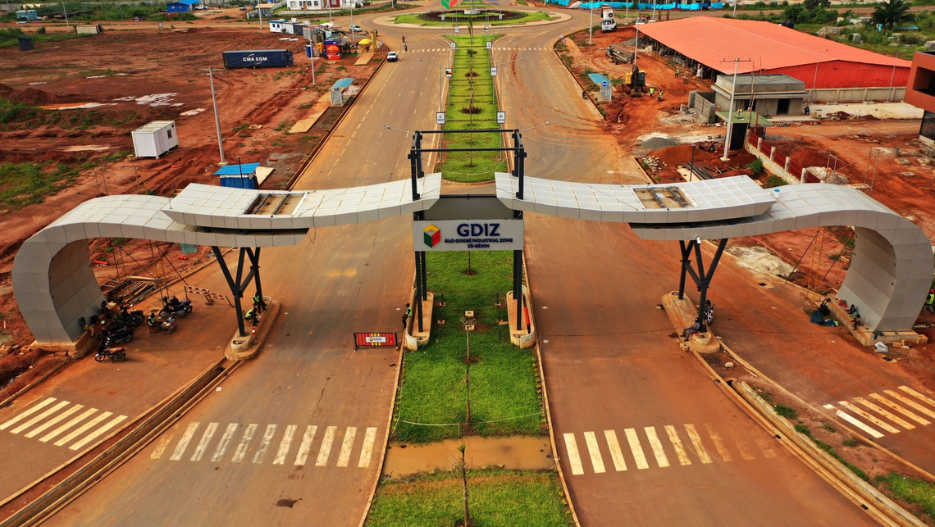
The Glo Djigbé Industrial Zone, commonly known as GDIZ, sits at the centre of Benin’s industrial strategy.
Located approximately 45 kilometres from Cotonou, the zone is designed to transform domestic agricultural and other raw materials into finished or semi finished products before export.
Cotton, cashew nuts, soybeans, pineapple, shea products and other commodities form part of the targeted value chains.
GDIZ operates through a public private partnership between the Beninese state and ARISE Integrated Industrial Platforms.
According to GDIZ, the first development phase is intended to mobilise approximately US$1.4 billion in investment, with a long term objective of creating more than 300,000 direct jobs by 2030.
The official investment portal currently lists companies operating or investing in activities including textiles, garments, pharmaceutical production, food processing, animal feed, cottonseed oil, furniture and pineapple processing.
This is significant because Benin’s industrial strategy is not based on creating manufacturing industries disconnected from the domestic economy.
Instead, the strategy attempts to connect agriculture, local raw materials, industrial processing, logistics and exports.
The economic logic is straightforward.
Instead of exporting raw cotton, Benin can increasingly produce yarn, fabric and garments.
Instead of exporting raw cashew nuts, processors can shell, package and potentially develop consumer products locally.
Instead of exporting soybeans, companies can produce oils, animal feed and other derivatives.
Every additional stage of processing potentially creates employment, industrial knowledge, tax revenue and export value inside Benin.
If successful, this could materially change the structure of the economy.
8. Agriculture remains one of the largest investment opportunities
Despite the excitement surrounding industrialisation, agriculture remains fundamental.
Agriculture accounts for approximately one fifth of GDP according to current official investment promotion data, while a much larger share of the population depends directly or indirectly on farming and related activities.
Cotton remains the leading traditional export crop. Cashew nuts, pineapple, soybeans, maize, rice, cassava and palm products offer additional opportunities.
The investment opportunity extends considerably beyond primary farming.
Processing plants, irrigation, agricultural equipment, cold chains, warehousing, packaging, logistics, fertiliser production, biological inputs, seeds, agricultural technology, financial services and export certification all have room to expand.
This is particularly important because the greatest value does not necessarily lie in producing more raw crops.
It lies in reducing post harvest losses, improving quality, raising yields and processing crops before they leave the country.
The World Bank is supporting agricultural competitiveness and export diversification through major programmes aimed at increasing productivity, facilitating private investment and improving market access. One programme includes additional financing for the development of irrigated rice and vegetable production in northern Benin.
There is therefore a strong case for investment in vertically integrated agricultural businesses that control several stages from production or sourcing through processing, packaging and distribution.
9. Textiles could become a flagship export industry
Cotton has historically been one of Benin’s most important exports, but the country’s new strategy is increasingly focused on retaining more of the cotton value chain domestically.
The textile industry expanded by approximately 9.3% in 2025, according to the African Development Bank.
Garment manufacturing within GDIZ is particularly important because apparel is considerably more labour intensive than many heavy industrial sectors.
For a young country that must create large numbers of jobs, garment production therefore has broader economic significance than its direct contribution to GDP.
Potential investors can participate across cotton ginning, spinning, weaving, dyeing, garment manufacturing, packaging, industrial services, logistics and export distribution.
The key challenge will be ensuring that Benin can compete not only on labour cost but on quality, delivery time, productivity, energy reliability and access to international buyers.
10. The Port of Cotonou remains an essential economic asset
Industrialisation does not diminish the importance of the Port of Cotonou.
It makes the port even more important.
Benin’s location enables the port to serve domestic businesses as well as regional trade towards Nigeria and landlocked countries farther north.
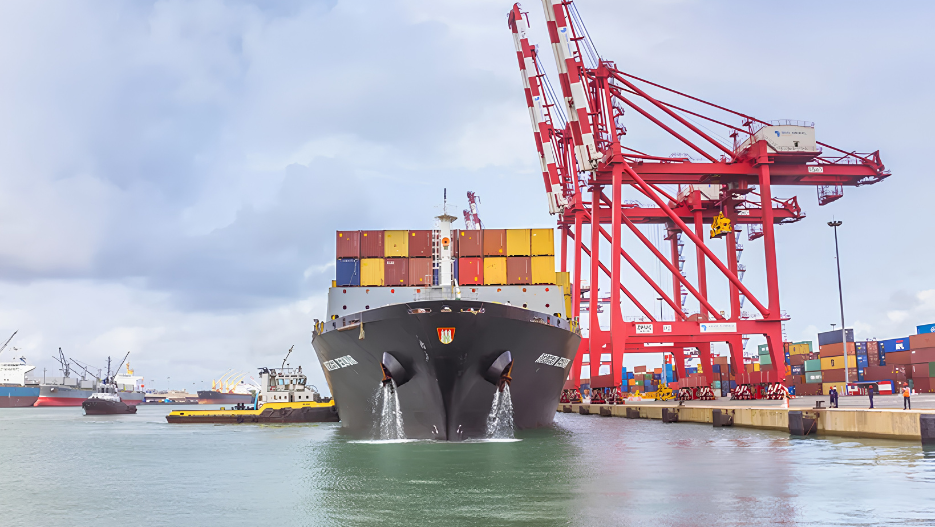
A major modernisation programme is underway, involving approximately a dozen structural projects and investment of more than €450 million in equipment and infrastructure over the medium term.
Infrastructure works include deeper harbour facilities, renovated quays, new terminals, improved truck access and logistics facilities.
Phase one of work on the extension of the harbour basin and renovation of northern and southern quays was completed in January 2026, including the construction of approximately 400 metres of quay.
The port is progressively becoming capable of receiving larger vessels. In January 2026, the MSC Shreya B, approximately 330 metres long and capable of transporting more than 12,000 twenty foot equivalent containers, became the largest ship to call at Cotonou at that time.
IFC is also financing the expansion of Bénin Terminal. Planned improvements include additional quay capacity, new cranes, 15 hectares of additional storage and a projected 33% increase in static container capacity. IFC estimates the expanded terminal activity could ultimately add substantial economic value to Benin and support thousands of indirect and induced jobs.
For investors, opportunities therefore exist in freight forwarding, warehouses, trucking, cold storage, customs services, container logistics, industrial logistics, maritime services and supply chain technology.
11. Benin can serve a market considerably larger than its population
Benin’s domestic population of around 15 million people is only one component of the investment equation.
Nigeria sits immediately next door and has one of Africa’s largest consumer markets.
Benin is also connected to Niger, Burkina Faso and the wider West African trading system.
Membership of ECOWAS, the West African Economic and Monetary Union and the African Continental Free Trade Area potentially gives businesses operating from Benin access to a much larger regional market.
Geography can therefore compensate partially for domestic market size.
However, regional market access should not be taken for granted.
Trade with Nigeria can fluctuate significantly because of Nigerian import policies, exchange rate movements and border controls. The depreciation of the Nigerian naira can also make Beninese goods relatively more expensive for Nigerian buyers.
The IMF specifically identifies the weaker naira as a potential constraint on exports from Benin to Nigeria.
Relations with Niger and security conditions in the Sahel have also affected traditional transit routes.
Consequently, an investor strategy based entirely on informal or re export trade to neighbouring countries would remain vulnerable.
The more sustainable opportunity lies in internationally competitive production that can serve West Africa while also reaching European, Asian, American and Middle Eastern markets through the port.
12. Foreign direct investment is increasing
International investment in Benin is gradually rising from a relatively modest base.
According to UNCTAD’s latest fully reported country figures, inward foreign direct investment increased from approximately US$443 million in 2023 to US$543 million in 2024, an increase of approximately 22.6%.
The absolute figure remains modest compared with larger African investment destinations, which is precisely why Benin still has substantial room to attract capital.
Manufacturing, logistics, agribusiness, tourism and infrastructure could significantly increase FDI if major projects move from announcements into operations.
International interest is also becoming geographically broader. In July 2026, for example, a Japanese business delegation organised through JETRO visited the Port of Cotonou as part of a wider investment mission. Nigerian investors have similarly been exposed to opportunities at GDIZ.
Benin’s growing financial relationships with Gulf investors through sovereign sukuk financing could create another channel for future investment.
13. The investment code provides substantial incentives
Benin has developed a relatively ambitious framework for encouraging private investment.
The country’s investment code provides several regimes depending on project size and sector.
Projects between approximately XOF 50 million and XOF 1 billion can qualify under Regime A.
Projects between approximately XOF 1 billion and XOF 50 billion can qualify under Regime B.
Larger investments above approximately XOF 50 billion fall under Regime C.
Separate regimes exist for priority sectors and specific infrastructure investments.
Depending on the investment structure, location and regime, incentives can include exemptions from certain customs duties, corporate income tax benefits, licence and business tax exemptions and reductions in employer payroll contributions.
Certain qualifying investments within special economic zone frameworks can obtain incentives lasting as long as 17 years.
The 2026 Finance Law also renewed provisions exempting certain new equipment imported for industrial and artisanal production from customs duties and VAT.
For serious investors, however, headline tax exemptions should not be the only consideration.
The more important questions are land access, electricity cost, labour productivity, logistics, access to foreign currency through the regional financial system, regulatory execution, taxation after incentive periods and the ability to repatriate profits.
14. Digital services represent a growing opportunity
Benin wants digitalisation to become another pillar of economic transformation.
The government has adopted a National Artificial Intelligence and Big Data Strategy covering 2023 to 2027, while official investment priorities include data centres, ecommerce, technology financing and digital services.
Digital public services have expanded substantially and administrative processes are increasingly being moved online.
In March 2026, the World Bank approved a US$137 million regional digital integration programme covering Benin, Liberia and Sierra Leone. The broader programme aims to expand broadband access, increase digital service adoption, support more than 140 startups and encourage digital employment across the participating economies.
Benin therefore offers opportunities in business software, payment technology, cloud computing, cybersecurity, ecommerce, fintech, artificial intelligence applications, telecommunications infrastructure and outsourced digital services.
Its relatively young population could eventually support a larger technology workforce.
The challenge remains skills.
Digital infrastructure alone will not create a competitive technology economy without engineers, developers, data specialists, managers and entrepreneurs capable of building exportable products.
Education and professional training will therefore be decisive.
15. Electricity is improving, but remains both a constraint and an opportunity
Energy is one of the clearest examples of a development challenge that simultaneously represents an investment opportunity.
Electricity access has improved significantly, but coverage remains below the level required for a fully modern economy.
World Bank data show access rising from approximately 16% around the beginning of an earlier country programme to approximately 35.9% by 2023, with further expansion continuing thereafter.
The Benin Electricity Access Scale Up project had by early 2026 connected approximately 145,000 households, 2,789 small businesses and 451 public institutions, while installing around 150,000 meters and 20,000 streetlights.
Benin is targeting universal electricity coverage by 2030.
In June 2026, the World Bank approved the first phase of a wider US$200 million regional programme supporting distributed renewable energy solutions across Benin and several other West and Central African countries. Solar home systems, mini grids and other decentralised technologies form part of the programme.
Investment opportunities exist in solar generation, mini grids, commercial and industrial solar systems, electricity distribution equipment, batteries, energy efficiency, smart metering and services for industrial users.
For manufacturers considering Benin, however, reliability and cost of electricity should still be examined carefully at project level.
16. Tourism is becoming an economic development sector rather than a peripheral activity
Tourism is receiving an unusually high level of strategic attention.
Benin possesses substantial cultural, historical and natural assets, including Ouidah, Ganvié, Porto Novo, Abomey, Pendjari National Park, Atlantic beaches, royal heritage and the country’s distinctive Vodun cultural history.
The government is investing heavily in museums, heritage sites, resorts and hospitality infrastructure.
Its tourism and cultural development strategy includes major projects in Ouidah, Ganvié, Abomey, Porto Novo, Nikki and other locations.
The 2026 tourism ministry budget was approximately XOF 37.9 billion, with nearly 73% allocated to capital expenditure. Projects include the Marina development, tourism infrastructure at Ganvié, museums and hotel developments.
Ouidah is emerging as a particularly important tourism investment cluster.
The Dhawa Ouidah resort project, part of the wider Banyan Group ecosystem, includes approximately 132 rooms and is connected to a broader plan incorporating additional higher category hotels.
Further plans include Banyan Tree and Angsana properties at Avlékété alongside additional resort development.
The opportunity extends beyond hotels.
Restaurants, tour operators, leisure activities, cultural venues, transport companies, travel technology, conference facilities, retail and entertainment could all benefit if international visitor numbers increase.
Tourism also provides a particularly useful mechanism for generating employment outside heavy industry.
17. Healthcare offers substantial private sector opportunities
Healthcare is another sector where unmet demand and government investment are occurring simultaneously.
Benin’s investment promotion agency identifies opportunities in specialist healthcare centres, telemedicine, pharmaceutical manufacturing, diagnostics and medical equipment assembly.
Current official investment information indicates that four major healthcare projects already under implementation represent approximately XOF 275 billion, while seven additional projects have been identified representing around XOF 175 billion.
Population growth, urbanisation and rising expectations regarding healthcare quality should support long term demand.
Private hospitals, specialised clinics, laboratories, pharmacies, health insurance, digital health and domestic pharmaceutical manufacturing therefore represent significant potential growth areas.
18. Construction and urban development should remain dynamic
Public works grew approximately 9.8% in 2025, making construction one of the country’s strongest recent economic sectors.
Urbanisation, industrial development, logistics infrastructure, hotels, hospitals, roads and housing all create demand for contractors and suppliers.
Investment opportunities include residential property, commercial buildings, warehouses, industrial facilities, construction materials, cement products, engineering, prefabrication, building systems and property management.
Cotonou and Abomey Calavi remain particularly important urban markets, although future economic development policies increasingly seek to expand activity into other regions.
In October 2025, the African Development Bank approved €117 million for a programme covering all 77 municipalities, intended to strengthen local economic development, digital transformation, private investment and climate resilience between 2026 and 2031.
This could gradually broaden investment opportunities beyond the country’s main coastal economic centres.
19. Financial services could deepen substantially
Benin’s banking sector has strengthened, and credit to the private sector increased by approximately 15% in 2025, according to the African Development Bank.
Nevertheless, access to finance remains one of the main constraints reported by businesses.
The World Bank’s private sector diagnostic highlighted limited financial depth and difficulties faced by smaller businesses in accessing affordable capital. It also identified opportunities in mobile money, digital financial services, leasing and agricultural financing.
This creates opportunities for banks, fintech companies, leasing businesses, factoring providers, trade finance institutions, investment funds and credit platforms.
A particularly important gap lies in financing small and medium sized businesses that are too large for microfinance but insufficiently established to obtain conventional corporate loans easily.
Private equity and growth capital could become increasingly relevant as more formal businesses emerge from the industrial, logistics, consumer and service sectors.
20. Benin’s labour force is both an opportunity and a challenge
Benin has a young and rapidly growing population.
In theory, this creates a significant demographic advantage.
Labour intensive industries such as textiles, food processing, tourism, logistics, construction and business services can potentially employ large numbers of young workers.
However, the labour market remains highly informal.
More than 90% of employment remains informal, according to both World Bank and African Development Bank assessments.
This explains why headline unemployment figures can appear very low without necessarily indicating strong labour market conditions.
Many people are working, but productivity and earnings remain low.
Industrialisation therefore needs to do more than create employment.
It needs to move workers from low productivity informal activity into better organised and more productive formal employment.
Training will be essential, particularly for machine operation, industrial maintenance, logistics, hospitality, digital technology, accounting and management.
Human capital may ultimately determine whether Benin’s industrial infrastructure produces sustained economic transformation.
21. The economy still faces significant structural risks
Benin’s investment story is promising, but it should not be presented as risk free.
Regional security
Security conditions across the Sahel remain one of the most serious external risks, particularly in northern Benin and areas neighbouring Burkina Faso and Niger.
The IMF and African Development Bank both identify regional security as a potential risk to economic activity and investor confidence.
Dependence on neighbouring economies
Nigeria remains economically crucial.
A slowdown in Nigeria, exchange rate instability, import restrictions or border controls can affect Beninese trade.
Relations with Niger have also demonstrated how quickly regional political tensions can disrupt established transport corridors.
Climate change
Agriculture remains highly exposed to rainfall variability, drought, flooding and extreme temperatures.
The World Bank considers Benin particularly vulnerable to climate change. Under a severe warming scenario, an exceptionally large share of the country could experience extreme temperatures later this century.
Climate resilient agriculture, drainage, irrigation, water management and coastal protection therefore have economic as well as environmental importance.
Informality
The dominance of informal economic activity limits productivity, fiscal revenue, access to finance and worker protection.
Formalisation needs to become economically attractive rather than simply administratively mandatory.
Energy access
Although improving rapidly, electricity access and reliability remain constraints, particularly outside major urban and industrial zones.
Access to finance
Financing remains difficult for many domestic businesses, particularly smaller companies.
Implementation risk
Benin has implemented substantial reforms, but the World Bank has previously noted a gap between formal reforms and their practical impact on individual companies. Access to finance, skills, markets and institutional support remain areas where businesses can encounter difficulties.
Investors therefore need strong local due diligence rather than relying solely on national level indicators.
22. The current account remains in deficit, although the outlook is improving
Benin continues to import significant volumes of goods, machinery and services associated with its development programme.
This contributes to a current account deficit.
The African Development Bank estimates that the deficit narrowed from around 6.2% of GDP in 2024 to approximately 5.7% in 2025, partly reflecting higher value exports from the country’s industrial transformation.
The IMF expects further improvement as exports from special economic zones increase and oil related activity contributes to external revenues.
Its 2026 projections envisage the current account deficit narrowing towards approximately 4.7% of GDP in 2026, before stabilising broadly around 4% to 5% over the medium term.
The long term solution is not to suppress imports.
A developing economy needs machinery, technology and capital equipment.
The real objective is to increase export capacity rapidly enough to finance those imports sustainably.
This makes GDIZ, agribusiness processing, textile exports, port services and tourism central not only to growth but also to external financial stability.
23. Oil and extractive activities could provide additional upside
Benin should not be treated primarily as an oil economy, but hydrocarbons could contribute additional growth.
The IMF has highlighted the resumption of oil production as one factor capable of improving exports and the current account.
The Niger Benin oil pipeline also provides transport related economic activity and potential fiscal revenues, although the project has faced regional security and political complications.
The prospective restart of production around Sèmè Kpodji represents another possible upside factor.
For investors, the opportunity extends beyond extraction to engineering, logistics, maintenance, environmental services, storage, transport and industrial support.
However, hydrocarbons should be considered an additional growth driver rather than the foundation of Benin’s long term economic strategy.
24. Why Benin can become attractive to international investors
Several characteristics distinguish Benin from other frontier markets.
First, economic growth is high and relatively broad based.
Second, inflation is currently low.
Third, the CFA franc provides regional monetary stability.
Fourth, the government has demonstrated relatively strong access to international financing.
Fifth, the country has a major seaport undergoing substantial modernisation.
Sixth, GDIZ gives investors access to an industrial ecosystem rather than requiring every manufacturer to construct basic infrastructure independently.
Seventh, large quantities of agricultural products provide feedstock for domestic processing.
Eighth, Benin sits next to Nigeria while also providing access towards Sahelian markets.
Ninth, investment legislation offers significant incentives for qualifying projects.
Tenth, the government has clearly identified private investment and industrialisation as central components of national development strategy.
The combination is unusual.
Many African economies have large populations but weak logistics.
Others have ports but small agricultural bases.
Others have raw materials but poor macroeconomic stability.
Benin is attempting to combine agriculture, logistics, industrial infrastructure and comparatively disciplined macroeconomic management into a single investment proposition.
25. The strongest investment opportunities in Benin from 2026 onwards
The most promising opportunities are likely to emerge where private capital aligns with structural changes already underway.
Agro industry
Cashew processing, soy products, pineapple processing, rice, oils, food products, packaging, cold storage and agricultural logistics offer particularly strong potential.
Textiles and apparel
Local cotton provides a natural base for spinning, weaving, garment manufacturing and export oriented production.
Logistics
Warehousing, freight forwarding, trucking, customs services, cold chains, container services and digital logistics should benefit from industrial and port expansion.
Renewable energy
Solar generation, distributed electricity systems, industrial energy services, batteries and energy efficiency address both an economic need and a national development priority.
Digital services
Data centres, ecommerce, fintech, cybersecurity, cloud services, software and artificial intelligence applications are emerging investment areas.
Tourism and hospitality
Ouidah, Cotonou, Ganvié, Porto Novo, Abomey and other destinations provide opportunities in hotels, leisure, culture, transport and visitor services.
Healthcare
Specialist clinics, diagnostics, telemedicine, pharmaceutical production and medical equipment represent substantial opportunities.
Construction and property
Industrial growth, urbanisation and infrastructure investment create demand for housing, commercial property, warehouses and building materials.
Financial services
SME finance, leasing, trade finance, fintech, payments, private equity and investment funds could expand alongside the formal economy.
Industrial support services
As manufacturing grows, businesses supplying maintenance, engineering, packaging, testing, certification, industrial cleaning, waste treatment, safety equipment and professional services should become increasingly important.
26. Vision 2060 and the longer term direction of the economy
Benin approved a new National Development Vision 2060 in 2025, which became the framework for future national development planning from 2026 onwards.
The direction is increasingly clear.
Benin wants to move from a low value trading and commodity economy towards a productive economy based on industry, modern agriculture, logistics, services, tourism, technology and human capital.
The World Bank’s new Country Partnership Framework for fiscal years 2027 to 2036 similarly prioritises employment, infrastructure and private sector growth, supported by approximately US$2.6 billion in planned financing across the World Bank Group framework.
This provides an unusually long investment horizon.
The country’s development challenge is no longer principally the absence of a strategy.
It is execution.
27. What could the Beninese economy look like by 2030?
If current reforms continue and major investments produce the expected results, Benin’s economy in 2030 could look materially different from that of a decade earlier.
Manufacturing should account for a larger share of exports.
A higher proportion of cotton, cashew nuts, soybeans and other agricultural commodities could leave the country in processed form.
The Port of Cotonou should have substantially greater capacity and efficiency.
GDIZ could host a much larger industrial ecosystem.
Electricity access should be considerably higher.
Tourism infrastructure around Ouidah, Cotonou and the country’s cultural destinations should be more developed.
Digital services should become more integrated into commerce, government and finance.
Formal employment could gradually increase as industrial and service companies expand.
Benin may also develop stronger financial links with Gulf, European, Asian and African investors.
None of this is guaranteed.
But the underlying direction of travel is increasingly visible.
28. The central economic challenge: turning growth into prosperity
Benin’s most important economic test will not be whether it can report GDP growth of 7% in another year.
It will be whether growth changes the lives and productivity of its population.
A country can construct ports, industrial parks and hotels while still maintaining widespread informal employment and low household incomes.
The transition becomes economically transformative only when infrastructure leads to productive companies, productive companies generate formal employment, employees develop skills, exports expand and household purchasing power rises.
Benin therefore needs to continue moving from public investment towards private investment, from raw exports towards processing, from informal employment towards productive enterprises and from infrastructure construction towards infrastructure utilisation.
This is the difference between growth and economic transformation.
Conclusion: Benin is becoming a serious investment market
Benin remains a frontier economy. Its GDP is still relatively small, household purchasing power remains constrained, informal employment dominates the labour market and significant infrastructure and human capital gaps remain.
Yet focusing only on these limitations would miss the scale of change taking place.
An economy that expanded by approximately 8.1% in 2025, while maintaining inflation near 1%, is attracting attention for good reason.
The combination of industrialisation through GDIZ, modernisation of the Port of Cotonou, agricultural processing, improving infrastructure, tourism development, digitalisation, renewable energy investment and a comparatively disciplined macroeconomic framework is gradually changing Benin’s economic proposition.
For investors, perhaps the most compelling opportunity is the transition itself.
Agriculture requires processing.
Industry requires suppliers.
The port requires logistics.
Cities require housing and services.
Digitalisation requires technology.
Tourism requires hospitality.
Manufacturing requires electricity.
Businesses require finance.
A growing population requires healthcare, education, food, consumer products and employment.
Each structural gap creates a potential market.
Benin’s economic future will depend on whether the country can connect these opportunities into a productive private sector ecosystem.
The latest evidence suggests that the foundations are being built.
For companies willing to enter a relatively small but rapidly transforming West African economy before many sectors become crowded, Benin deserves serious attention as an investment destination for the second half of the 2020s.
Research note: Economic statistics and projections in this article use the latest information available through August 2026 from the African Development Bank, IMF, World Bank, UNCTAD, the Government of Benin, APIEx, GDIZ, the Port of Cotonou and IFC. Forecasts are estimates and may differ slightly between institutions.